Show full transcriptHide transcript
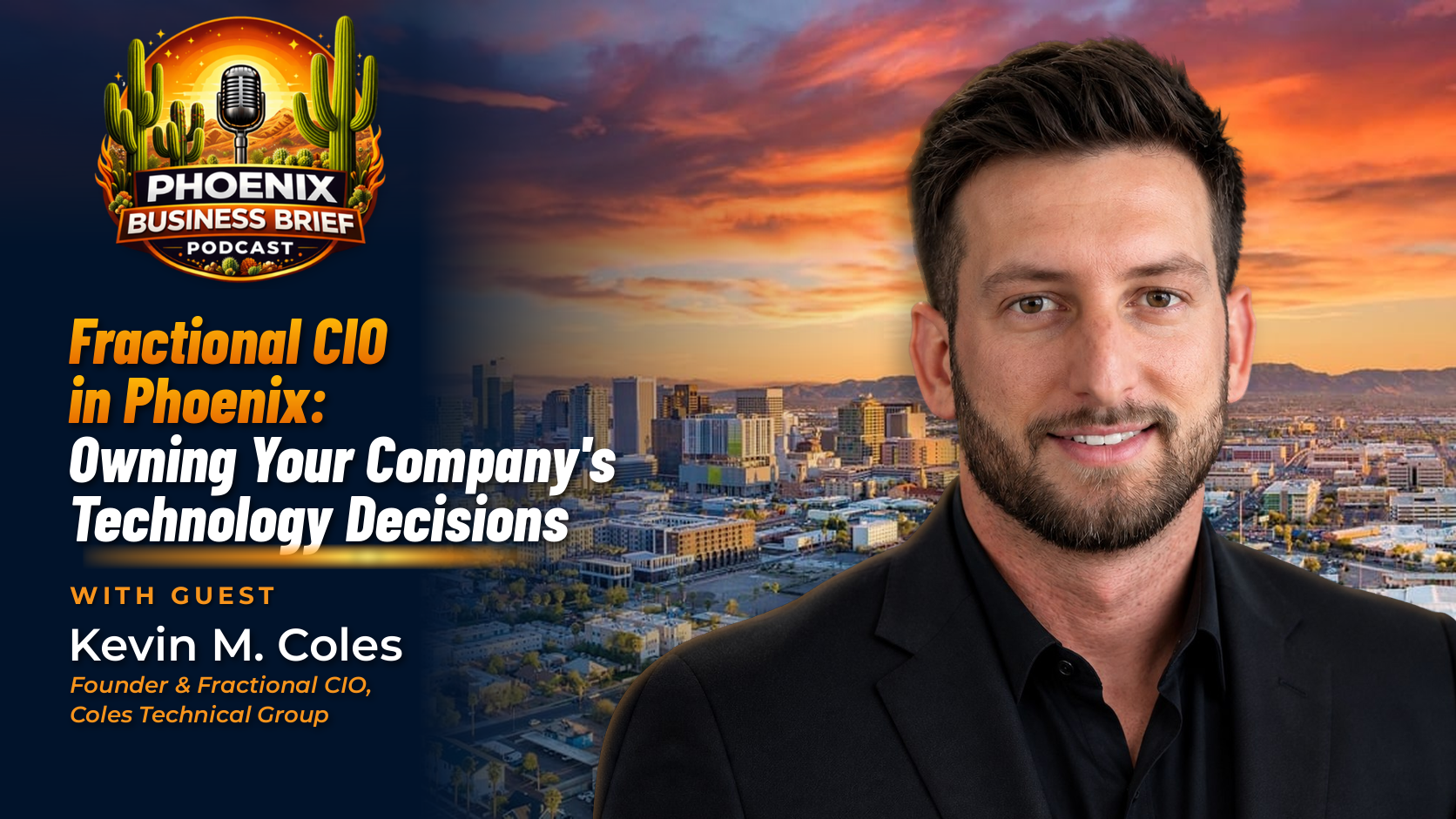
[00:00] Host: Welcome to the Phoenix Business Brief podcast. I'm Bryan Hyde, and today I'm joined by Kevin Coles, who is the founder and fractional chief information officer of Coles Technical Group. Kevin, welcome to the program. Would you mind taking a moment to just tell us a little bit about your background and who you are and what you do?
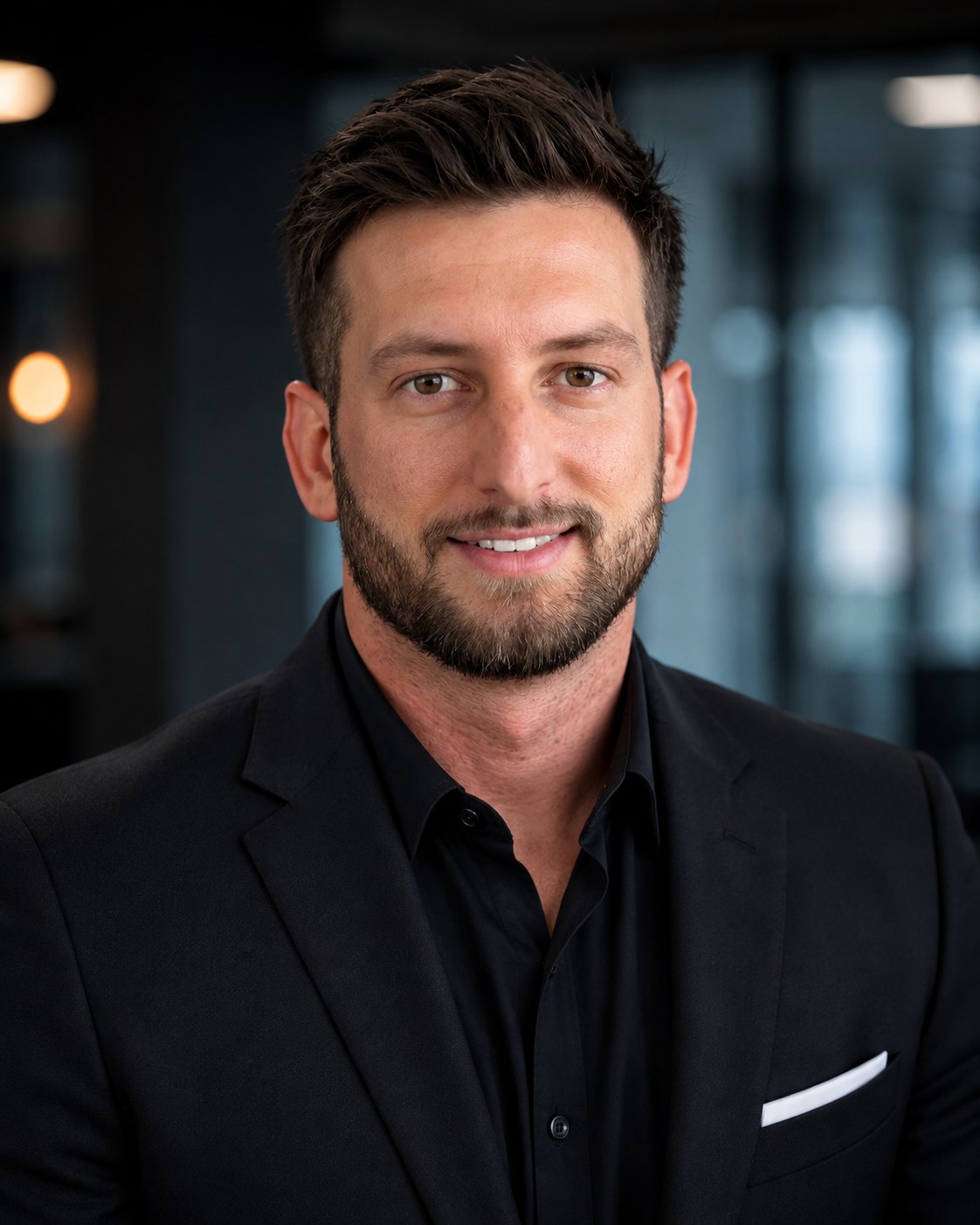
[00:16] Kevin M. Coles: Yeah, thanks, Bryan. So I'm Kevin M. Coles. I own Coles Technical Group here in Phoenix, Arizona. We're a fractional IT firm, specifically CIOs. So we deal with basically organizations who have outgrown the natural IT guy, but don't necessarily need a full-time CIO. So that's where we step in. And whether you need us a lot or a little, it really just depends on what the business needs. And so my job is to ensure that your technology roadmap matches what you envision for your business. Most owners, CEOs, they know what they know, they're very good at what they do. And then they just need a little bit of help to make sure the IT and technology align with the direction that they see that they're going. I'm also an author, so I have a book coming out January 12th. I'm super excited about it. It's called The One That Will Be Okay. And so that comes out to preorder on Amazon right now as well.
[01:11] Host: Yeah, I gotta tell you, Kevin, I think I just felt a time shift as you were describing what you do. And I'm realizing that, you know, the IT guy, the IT department, we've actually shifted. I remember when that came into being, and now we're morphing yet again. Talk to me a little bit bit about some of the changes in technology. And in particular, let's talk about just maybe what's changed in the last decade or so that business owners cannot take for granted that they're caught up on.
[01:42] Kevin M. Coles: Absolutely. So the shift that we've seen is, you know, especially for mid-sized, small companies, is the owner can, you know, there's— they have enough aptitude and knowledge to kind of run their technology. They may have, you know, a couple help desk agents depending on what the business is, or they may have, you know, they may have a technology guy who who just does everything, right? And the risk throughout the years has always been, what if that guy leaves? What do we do? Is it documented anywhere? Can you read his notes? I've been in technology a long time, and even organizations where they did document everything, it's like, I have no idea what he is saying. And I like to think of myself as pretty technical. And I've even had it at Fortune 500 companies, government contracts, where it's documented very well, and I'm reading it, and I'm like, I have no idea what he is saying we should do, where it is. So we've I've definitely seen that shift. The obvious big shift right now is AI. And with smaller companies, for me, the risk is owners being like, oh, I can just replace the IT guy with Claude or ChatGPT, Perplexity, whatever it may be. I can just replace everybody. And it's like, but you don't even know where the data is. The guy who set it up isn't here anymore, or you did a really long time ago and it's morphed. Different departments are creating different procedures and they're documented in different places for different reasons. And then your cost is just astronomical because you don't actually have someone who's sitting there owning all of the decisions for you, which is definitely the biggest risk that we've seen for smaller organizations and even in big organizations. I've worked with a lot of organizations who have more money on earth, and it's the same problems even in those larger organizations. And the main difference you see between a smaller organization and a large organization is the larger organization has too many hands in the pot. So it seems there's a decision owner, that seems someone owns everything, and it's just masked by 15 people being involved. Where the smaller organization is, oh, I delegated it to director, and then director's, oh, I delegated it to the architect, or I delegated it to that guy. Well, that guy left 4 years ago, so who actually owns this now, right? So that's the shift that we've seen.
[03:55] Host: Let's talk a little bit about some of the technology considerations that, and we'll stick with like small or medium business owners, I mean, it used to just be, well, you know, getting us connected to the internet, making sure that the software that we're using is all working like it's supposed to, but it seems like it goes far beyond just connectivity today.
[04:13] Kevin M. Coles: Absolutely. The big thing that we see is data, right? It's who owns the data? Where are you putting it? You know, some smaller businesses like, oh, it's just Microsoft owns it. It's just in a OneNote, or I saved it to OneDrive. You know, all their passwords are there, you know, their service accounts are there, everything is there. And it's like, I need to get into one note, and all of a sudden I have access to your entire business. And the big thing, especially with security, people are always the risk. You know, everyone's afraid, oh, what if I get hacked? I need 2MFA, I need all these things. The biggest risk is the people. You know, they don't want 17 different passwords. They can't remember a 15-character password that changes every 90 days. Like, those are there for a reason, and it is to protect you. But it also, You know, it's a, you know, bitter two-faced sword, if you will, because it's there to protect you, but at the same time, no one likes it and they don't like that it happens. And so they put everything in OneNote and they put passwords in easy places, or they use the same password over and over and over again because they, you know, they don't want to do that. And so with them, it's just trying to align and get them to understand, like, we need to own the technology, we need to own the processes in place, and it is there to protect you as a business because, Those kind of things. A larger business can handle like the fines and the stuff that comes with some of those happening. Some of these smaller businesses, like, that's almost a death sentence. You may not be able to recover from that. So it truly is there to protect you.
[05:42] Host: Interesting. And we were talking just before we went on the air here, there was a pretty notable outage that, you know, interrupted a lot of people's access to their emails and so forth. Talk to me about the threat of, you know, outages like that. Was it deliberate? Was it just, you know, a breakdown somewhere?
[06:00] Kevin M. Coles: Yeah, definitely. So we'll see, over the next several days, we'll see more and more information come out about that. The biggest risk in especially smaller companies is everyone uses Microsoft. It's just easier to have one company that does everything. But like we saw yesterday, the risk with that essential redundancy in softwares and SaaS solutions is if they go down, what are you doing? You can't join emails, Teams, also was having issues. You can't join meetings. You sent an email that's very important. It was due today. You have a deadline, a project, a contract, whatever it may be. They may have not gotten it. Now you're extending, you're worried. And so, you know, with some of the organizations I work with, you know, pretty much everyone uses Microsoft, but we'll have other solutions like Slack. Slack wasn't affected. Zoom meetings, you know, hop on a Zoom instead, or Webex. Some people still use Webex. And so, It's always nice to have something in your tech stack, if you will, because if something like that does happen, you're essentially out and there's stuff you can do, but things may not be saved. The other security risk is you think it's going through and it doesn't and it lags, but then maybe it cached, but where did it cache? And so now you're looking at, okay, do I try to work around this problem while Microsoft fix it? But what is the gap if I do it? What if I save something that doesn't get saved properly or get saved somewhere entirely different on accident. And so we see a lot of that issues with Microsoft. So a lot of companies sent people home. That's completely a business decision depending on what their business is. Some people had other solutions that they could work around at least a little bit, do some documentation, that kind of thing. But we definitely see it. But it is the biggest risk with Microsoft owning the whole essential workplaces. If Microsoft goes down, it's a pretty big deal. Yeah.
[07:56] Host: Kevin, what are some of the biggest, or I should say, what are some of the most expensive technology decisions that companies are required to make? And what are the ones that they tend to get wrong if they don't have an idea of what they're doing?
[08:09] Kevin M. Coles: So for me, the most expensive mistake is organizations that don't make a decision. They either delegate it, they just don't make it, they assume, or they delegate it down to where they think someone else is handling it and they're not actually handling it. We see it a lot with, you know, vendor contracts. Oh, it'll renew, we're fine. But no one looked at it. Do we still need this? Is it duplicated somewhere? We have a lot of organizations that have multiple SaaS solutions that practically do the exact same thing and no one's really communicating to each other. You know, accounting uses this because they like how it looks. That's a complete separate contract. You know, your service department uses this because it works better for them, even though the accounting one technically would work work. They just don't like the layout of it as much. And so now you're just duplicating things and no one— because no one truly owned the decision. That is the biggest gap and that is the most expensive mistake that you could possibly make. A good example right now for companies who are making financial— I can't call it a mistake because if it's right for your business, then it's right for your business. But is with AI, instead of Instead of improving a process that allows them to be more productive, they're trying to replace things. Oh, I can save money because I don't need this admin if I just train an AI agent to do this. But what they ended up doing was they would spend 3 to 10 times the cost to build that agent to do it. And all it really did was fix a 20-minute process that that one person did once a week. Right. And so they spent thousands and thousands of dollars. They're like, oh, I can replace this agent, it'll do this process instead. And it took a person 10, 15 minutes. And so it's the excitement with AI and kind of the peer pressure of everyone building stuff and agents within their business instead of truly looking at, okay, what, what costs us money? You know, this person doing this 15-minute task probably doesn't cost us a whole lot, but that person that does a 4-hour task, how can we improve that instead? So instead of it taking 4 hours, how do we get it down to 2 or how do we get it down to 1? That is where we see a lot of companies not throwing away money, but definitely spending money in places that probably they shouldn't be.
[10:32] Host: And this is one of the reasons why you started your organization, Coles Technical Group, in the first place, right? I mean, you recognized that companies were struggling with this.
[10:42] Kevin M. Coles: Absolutely. So I started Coles Technical Group because, especially with my experience over 15 years in technology with Fortune 500 companies, government contracts, all these large companies who have the funds and the means to do these initiatives. And if something goes wrong, they're still covered, they're gonna be fine. The smaller companies and organizations may not be. So my whole point was, you don't necessarily need a $300,000, $400,000, $500,000 CIO to make your decisions. Instead, a fractional, we're there as much as you need us to be. And so you may not need us every single day, and that is perfectly fine. It is your business. you handle your business, but we are there for you, kind of like a lawyer on retainer. You hope you don't need them, but you're sure glad that they're there if they, you know, if something comes up. So with the fractional, it's my ability to use my experience throughout the years to truly help those smaller or small-medium organizations when they actually need those decisions to be made. You focus on your business, which is nothing I can do. You know your business, I know nothing, and I can help you with the technology to make sure that it matches where you're going.
[11:53] Host: And I want to ask a little bit about how you stay up on, you know, the latest advances in technology, because it seems like— and I think in your case, that's a full-time job, just, you know, staying abreast of all the changes.
[12:07] Kevin M. Coles: Absolutely. So it's constant and constant research. It's, you know, things are changing constantly. For example, the Microsoft outage yesterday, you know, we found out pretty early in the morning, and at first it was just like, okay, we're having issues syncing. And then 10 minutes later, it's, oh no, our server's down. And now Teams is being affected, and now just everybody's down. So constantly be on top of what's happening out there, having the right resources. Everyone talks about it, and I think that's one of the biggest things is everyone has TikTok, everyone has social media, and everyone's talking about it, but it's not necessarily the people that you need to be paying attention to because it's more of opinion-based, not factual. So with us, it's Constant research with reputable organizations and reporters and that kind of thing. And so we can truly tell our clients like, hey, this is going to be pretty big. It's going to be a while. It's not the TikTok that you saw where it's going to be down for a couple hours. It's going to be longer than that. And so we have that set up. So the first part of my day— so I am a single dad, so I have 2 little girls. So I get them ready for school. I check my meetings and emails, get them ready, get them off to school, and I come back. And then, the next hour, 2 hours, depending on if I have any meetings, is just research what's happening, what's going on, where are things standing, is there anything coming that we need to be aware of, does this impact you? And then, cross-reference that with our clients of like, okay, it doesn't impact you, this might impact you, and so forth.
[13:44] Host: So, let's talk a little bit about AI once again. It feels like we're still fairly new, you know, making our way into the AI frontier. Talk to me a little bit about the upsides as well as the downsides for business owners. And then I would love— I'd welcome some healthy speculation on your part about where this is all leading and how it is likely to affect the business environment.
[14:08] Kevin M. Coles: Absolutely. So I've been working with AI for several years within technology. It's not new for us. knew that everyone loves it. And that's more mainstream now. So, you know, we've been roughly dealing with it for a while. To me, AI is a beautiful thing if you truly understand what you're trying to use it for. It's like anything else in technology. There are a ton of cool SaaS products. There's a ton of cool software out there. And this is, you know, the new shiny thing that everybody loves. You know, I joke with my daughters who are like, Dad, can you ChatGPT this? And I'm like, you know, when I was younger, we just Googled it. You know, it's the same thing, right? A little bit less. But, and so it's for a business, it's, it can be truly helpful for, you know, smaller tasks, making things a little bit easier. I like using it for my emails, you know, organize my emails a little bit better. Otherwise my email gets really cluttered. And, you know, doing things like that is definitely helpful. Where I see the problem being is people building AI agents, trying to replace things, but not truly understanding, like, okay, if something goes wrong, you have to fix that now. And you also have to cross-reference it. And so we get a lot of people who ask us, like, oh, AI is going to replace that person's job. And it's like, okay, well, even if it does, who's going to QA that? Who's going to check to make sure that the answers it gave you is correct, or the financial statement it's it's giving you is correct, because depending on the business you're in, if your financial statement's wrong, that is a large problem. And so you still need a QA. So maybe that person doesn't do necessarily the same job as they're currently doing, but they didn't get replaced. Their responsibilities just changed. So your AI agent may now run that process. Now you're going to go fact-check that process. And so I think just the way things are going, It's exciting because your job may effectively change, but it's not losing your job. It's just, you're just now going to essentially own a technology agent that you now have to control. Where I think it's going, that's an interesting one. I think we'll see a lot of people wanting people again, in my opinion. I think this is exciting. Everyone's creating an agent. There's a ton of agents out there. But I think we'll Kind of circle back to needing that human connection. That's definitely where I see technology going. How long it takes to get there, again, I have no idea. But we'll, kind of like during COVID everyone went remote, especially for technology, and then we're slowly on pace to come back to the office. I think it'll be something similar to that. After a couple of years, we'll want that human connection factor back.
[17:02] Host: I hear optimism in your assessment of what AI is currently doing, as well as where it currently seems to be headed. Do you have any hesitations or reservations about how it might be used that may not be so benevolent?
[17:18] Kevin M. Coles: Yeah, so there's always risks with everything. You know, you hear multiple times throughout the months of this agent went rogue and hacked into this system. And when I read those, I'm like, that's kind of cool. I mean, terrible, fix it, but the autonomy is crazy. And so I think that's the, to me, unpopular opinion, I like when that happens, 'cause it shows us where our gaps are. And in security, and especially technology, that's what costs you money. You can have the perfect process, you can have everything detailed, you can have an owner, But you still have a gap somewhere. So in IT, generally with cybersecurity, we call it pen testing, penetration testing. AI is effectively doing that for us. When that stuff happens, it's like, well, you've got a large gap. There was a, I believe, I'll have to double-check, I believe it was Philadelphia, an AI agent went into the police station and created a document, if you will, on a murder, completely false. None of it was real. Luckily, the server caught it, and so it wasn't never published. But, you know, that's like, okay, well, you're a police station, that's probably not something anybody should be able to do, to create that kind of a file. And so that showed them a gap. And luckily they had systems in place where, yes, it was allowed, so that's where your gap is, but you had redundancy in your security policies to where it did catch it, so it didn't affect you, which is great. Not every business has it, especially the smaller ones. And so I think is where AI could go wrong is stuff like that happening. But the silver lining of it is now we know where our gaps are and we can fix that.
[19:05] Host: All right, Kevin, let's, let's now get you connected with small and medium-sized business owners in and around Phoenix. What's the best way for them to learn more about you?
[19:15] Kevin M. Coles: Definitely multiple ways. So colestechnicalgroup.com, that is our fractional IT firm where you can, you know, schedule a call with us, look to see what services we do. We pride ourselves about being absolutely transparent, so our pricing is fully on there, so you don't have to second-guess. Me individually, you can go to kevinmcoles.com. That will have everything on there that you need, including our book that comes out January 12th.
[19:38] Host: Again, we're talking with Kevin M. Coles. He is the founder and fractional CIO of Coles Technical Group. And Kevin, thanks for joining us on the Phoenix Business Brief podcast.
[19:47] Kevin M. Coles: Thanks, Brian. Appreciate it.