Show full transcriptHide transcript
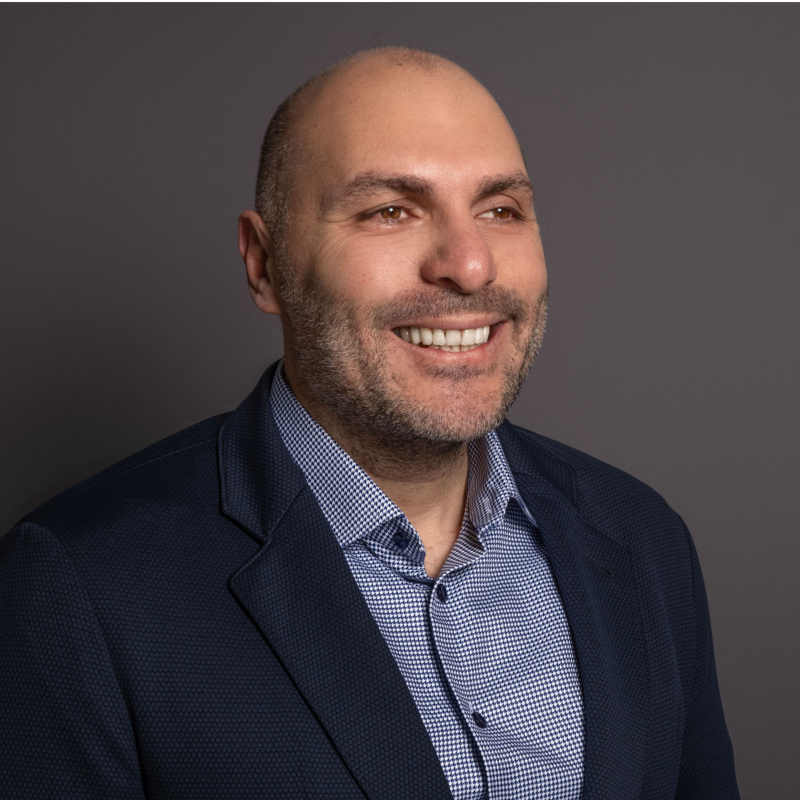
[00:00] Bryan Hyde: Welcome to the Phoenix Business Brief Podcast. I'm Bryan Hyde, and today I'm joined by Ali Fakih. He's the founder and CEO of Sustainability Engineering and AIAEC. And Ali, first of all, welcome to the show. I get this feeling that we're going to be talking to someone who is kind of on the cutting edge of where things are going. So with that in mind, tell us a little bit about who you are and what you do.
[00:25] Ali Fakih: Okay, I appreciate you. Thank you for having me, Bryan. You know, it's been truly a journey. So I have, I'm a civil engineer background. I have spent my last 20 years in development, planning, whatnot. I joke, a lot of people knows I'm your typical nerd. Okay, so I have your, I started, you know, I have my degree, diploma, I get into a master's and I did my PhD at ASU. I'm doing more business, like OPM at Harvard right now. So I've been studying almost all my life. So I'm like get to point where I took everything I have in my nerdiness and in my technical to start my own business about 20 years ago. And this is when I founded SEG. I moved into Phoenix back in 2007 and actually July 2007 in middle of the summer. Mm-hmm. And I came in and 12 months, the whole market crashed. I don't know if you recall, and I recall in August 2008, we were working 60, 80 hours a week to kind of like everything stopped. And this is when I moved, you know, in Phoenix, I was here for 12 months and this occurred. So I've seen it all through the good time and seen it through the crazy time. And I've seen it through the slow time. And I founded my company, SEG, in 2009. The focus for SEG, it's an engineering planning company. Company. We do a lot of land development, commercial. We get involved a lot on entitlement processes, a lot of due diligence, and obviously on the engineering part as well, civil engineering. Groozy Company, we have 7 total offices. We are headquartered here in Phoenix, and it's been, it's an amazing, amazing journey so far just to see how the business grow and where we're going. About 3 years ago, I get in to start AIAC. My wife joke says this is my midlife crisis, but I don't know if it's true, but she has a point. I get to point where when AI start rolling and you could see like this last 4 years been the more we start hearing about AI, even though been there for a while. I'm a believer that each one expert in our field will have to take the lead on what we do to implement our workflow using the AI. And I'm— this is my vision since I started the company. So I founded AIEC. We grew it, and today for about 52 people, uh, it's a platform. It's an AI platform focused on how we can address the pain of permitting and due diligence assessment for properties early on. This is the whole focus. And this is how we build those 4 products in one platform to kind of like collaborate in a way to address each one of the pain in a different level. Because as you know, the process could go in from early on, you're looking at the property, asking if you should proceed or not, all the way to open the project and start, you know, obviously operating it. So our intention is to cover several phases in this and contribute on expediting the process. And this has been my focus. So this is a little bit about me on the business side. I have 4 little kids, they're all under 10. So, and they see what I do and it's been really exciting for them as well. So this is, I think, the other part of my story that I'm really proud of on how, you know, like what I'm doing has been really good. Case study for my kids as well to see it. If there is a failure or there is a win, it's been an amazing journey just going through this with them as young as they are, so.
[04:21] Bryan Hyde: I know that we probably take a lot of things for granted, nothing so much as watching things be developed and growth take place around us, infrastructure growing, you know, and, you know, we appreciate it. Hey, the lights are working, the water's on, you know, the traffic is flowing smoothly. But that doesn't begin to give a person an understanding of the amount of planning and thought and the different hurdles that have to be, you know, overcome in order to make that happen. So I want to start by asking you, what do you wish more people understood about what either, you know, a civil engineer or a developer or someone who is, you know, striving for sustainability, what do you wish that people understood more about the kind of work that you do? Yeah.
[05:08] Ali Fakih: You know, I think a lot of it, I wish people knows how much goes behind the scene on the processes. And believe it or not, what we do on the technical, let's say you hire an engineer to do a plan for you. Okay. And believe it or not, the time spent on the plans is not what's the longest time the project takes. So you could, you know, maybe the technical part could take 50%. The remaining are more focused on communication, coordination, and processes. And I think this is a big part of it. So when you think about it, you say, oh, I hire a great engineer. He could be a great technical person. What about the other 50% that you need to get your project done? What about the communication? What about the follow-up? How about the organization? How about you get in to create processes? How about the other 50%? Yeah. Related to build relationship to expedite your project as well. So I think I wish people realize this part because the technical is a component, but it's definitely not the component that will make a project happen. And I think sometimes this gets to be missed along the way, and rightfully so, right? I mean, you hire a technical person, sometimes you're thinking this is what the technical is, what you're getting from them. But there is a lot of bigger aspect of deliveries go beyond technical and go beyond the skill. Yeah. That you went to school for, which is pretty interesting. You know, I mean, so this is the truth.
[06:44] Bryan Hyde: It's interesting that you mentioned the communication and I can see where that would tie into, you know, there are costs associated with every step of these processes.
[06:53] Ali Fakih: 100%.
[06:54] Bryan Hyde: And so, you know, a small miscommunication, I guess, would end up, could end up, you know, having very large costs, you know, as it has to be sorted out and, you know, perhaps corrected.
[07:07] Ali Fakih: From all sides. I mean, think about it, a project usually, the persona or the, the parties involved in the project could be at any time more than 10 different parties. Okay, you're talking about, obviously you have some municipalities, you could have a state sometime, you have the designer, architect, engineer, you know, and whatnot. And then you come in, you have the developer, you have the operator, end users. Okay, you have the attorney, the land use attorneys, you'll have the banks, the appraisal involved in the project, you have the contractor ready to build. So I mean, when you come into the core, and this is just a few of the ones involved in the whole, like, ecosystem of project, right? So you think about this communication across the board of everyone, how much of it get to be lost sometime, how much of it get to be create a challenge, and how many of it can make it to the whole team, right? And, you know, the other, the other part is each one of the parties are doing similar work to figure out the project. You know, so there is so much repetition on the assessment that gets to be done by each one of those parties, you know, so kind of like, and you go back sometime to communication, you may, I mean, kind of like, and this trust in the process, trust into the information they're getting. So it creates a lot of duplicates. And yeah, I mean, this is a big part of it for sure.
[08:30] Bryan Hyde: Let's talk a little bit about AI. Again, this is one of those things that has been taking place largely behind the scenes for a lot of people, but it sounds like in the industry in which you're operating, AI has clearly found a place. How does it help you to accomplish what you are doing?
[08:48] Ali Fakih: Yeah, I think what's going back to what I said earlier, that us experts going to have to take the lead on how AI works and how AI gets to be managed. Okay. Now you think about it, you have the smartest individual you hire, right? I mean, the first task you need to do, if they don't have a standard, if they don't have a process, if there is no training, if there is no guardrail on what they could do and there is no help to build experience, okay, what can they do? They're very limited, right? So the experience adds so much value to the power of AI today. So you come in and I think, you know, like what the biggest thing for what I'm trying to do and what I implemented here is take all of our workflow for the last 20 years, okay? And take it in every phase of the project. It starts early on when you're looking at the property, when you're doing the feasibility and assessment, okay? There is a lot of questions based on fragmented data that exists all over the place that could affect your project, you're going in to go and find all of this data, cross it, and then you're going to share it with different parties to get their opinion on it too. So what AI give you is if you're able to control the data, if you're able to understand the data and add a value for your guardrail and experience to the data, now you're creating a very solid workflow to get accurate information. And I think this is the research part of it. AI is going to make a huge difference on it. Like any type of research, any type of assessment early on, you're going to be— I could process thousands of pages document within a second, where this could take 8 hours sometime or 4 hours a day just to digest all of this information. And then you have to summarize it and then you have to share it.
[10:44] Bryan Hyde: Right.
[10:44] Ali Fakih: So digesting Data is a big part. Second to it, you can have the data, you could read it, right? How can I give you the right recommendation? How can I give you the right assessment? This is where us experts come in. This is what we should provide. This is what we did for the last 20 years for you. We're going to give it to you and faster right now, it's a lot faster. But the accuracy has to be there because what we do, you cannot afford to have any inaccuracy. So the accuracy have to be there and it's only will be there By combining those two very closely and keep repeat and train, repeat and train. And this is, I think, the biggest part that I see changing. And, you know, and communication, going back to communication, you get a project today, you know, like you're emailing to get status on it, right? You're emailing to get reports on your project or you're requesting update on, you know, a code section. Right. So imagine now all of those get to be available for you instantly. Okay. You're able to see what the project status is. You're able to do your assessment really quick. How much this will help, how much this will make your decision even quicker on selecting property or no. It's, you know, honestly, the opportunity is massive, is out of this world. And in every step of it, there is so much opportunities that getting undiscovered. I'm focusing on entitlement, planning, and obviously permitting. There is a lot of tools out there that focusing on construction, construction estimation. There is some tools focusing on real estate assessment and pro forma, right? But our niche is more what we've done, you know, like in our past experience here, how we can take this and make it a platform that people could tap into, you know, still have their engineers, still have their planner, planner. All of the ecosystem will still exist, but will facilitate the access to them for my goal here.
[12:47] Bryan Hyde: Talk to me a little bit about sustainability. I know that you are a sustainability advocate, and I guess I'd first like to just have a good working definition. When we hear the word sustainability, what does that refer to?
[13:01] Ali Fakih: You know, I appreciate you asking this because, you know, like when sustainable— when I started SEG, this is back in 2009, sustainability was a big in front of every project because there was a lot of green building movement. UHBC was doing a lot of credits and it's still important. So, and this was my focus and this is part of my technical experience too. So at one point of time, my approach for sustainability was, and early on when I start the company, was more linked to the technical.
[13:36] Bryan Hyde: Okay.
[13:36] Ali Fakih: So I see sustainability, I'm a civil engineer, I'm going to figure out sustainability on how I can sustain, you know, re-use of your rainwater, for example, right? Sustaining water. How can I do item related to the environment, to air quality, right? All of this related to ecosystem sustainability. Down the line when you develop, I see sustainability right now as linked to the whole ecosystem, right? Sustainability come into development as well. Sustainability come in not just implementing green initiative into your project, it's sustaining the project to be a successful project where it doesn't get to be an empty building 10 years from now.
[14:13] Bryan Hyde: Right.
[14:15] Ali Fakih: Right. And this is go back to the economic part of it. It go back to the technology part of it. It go back to the vision down the future. So I think sustainability in each one of the stakeholders has its own piece. But in the overall umbrella, the intention, especially on development for us, is to look into how you make a project sustainable, not just from the environmental piece. Environmental is a big component of it. So this is not just a focus. There is a lot more related to the overall, you know, ecosystem for a project. I don't know, just answer your question, but I mean—
[14:52] Bryan Hyde: Yeah, no, that's, and now I wanna bring it back to the use of AI. It feels like we're still kind of early on in adopting AI into our day-to-day life. And I'm not asking you to predict the future for me, but I would like to get your take on Where do you see this going in the next 10, 20 years? Is this going to become a much bigger part of, you know, civil engineering or development? And I'm curious what you see on the horizon that either you find exciting or, you know, maybe even cautionary.
[15:26] Ali Fakih: I tell you two things, and I'm going to focus on AI related to what we do on the engineering planning and development. AI definitely, definitely is a revolution of how we do things. And I do see it playing a big role on how the process works, how to reduce the bureaucracy of the process, 100%. I do see it playing a role on a lot of the technical aspect of project. I mean, you get in today and you hire an engineer, a planner, to do a layout for you, right? There is a lot of research they do that is going to be cut into a very little time where they get the information. The challenge we have in our field, why it takes longer, two things. First, obviously you have a credential, you have licenses for anything you do. So there is a lot of big liability. So this has to be taken into consideration. What this lead to is sometime the skepticism on that and creating the trust. It's going to take a trust for licensed people to say, I can trust this. And what is the level of the trust? Can I trust it blindly to send it in? Can I trust it 50% and make an expectation that there is 50% as of today I have to look into? Can I trust it? Can— should I not trust it at all and keep doing how things I'm doing, right? And I think all of these are coming in play right now. The people who doesn't trust it at all, they start getting to be pushed to 50%. The people that start using it and they're building trust to it, it's similar to what, how you build trust with human individual or consultant. And they start with skepticism at 50%. Now they're going up sometime to 70, 80, depend on their experience and their expertise. And I think at one point of time we're going to get all, we have to all get to be close to 90 to 100%, maybe 90%. So we get in a field where we all align. And I think this will happen really quick. I think, you know, this is not going to be 10 years. Okay. I think this could happen in the coming 3 years. We all use AI today, or majority of us do. And people who don't use AI today, they definitely missing a lot. I mean, in every aspect of it and every field, you know, I mean, so this is, I think it's going to develop really quick. It all depend on how quick also our municipalities, how quick also our licensees play a role on it. Because again, it's all related to trust. We have to build the trust. With the accuracy and the time will tell. Now, 10 years from now, 15 years from now, 20 years from now, how I see this AI affecting us, it's going to affect all of us. What's not going to take from us is the creativity and the critical thinking. Even today, you and I could come in, we do a prompt for AI, you will get completely different answer than I do. It's completely how we're asking the question on, am I going to ask an open-ended question? Am I going to ask an open question and— Yeah. Gives them exactly what the requirement I have in my mind and what are the guardrail and restriction I would like this resource to be in, we're going to get completely different answer. So I think the critical thinking will be there. The creativity definitely will be there. A lot of the time that we spend today on data entry, researching, getting in on like Google, I think Google will be something that from the past. Yeah. Coming soon, and I'm not talking about Google company, I'm talking about the search engine. I think, you know, I don't know about you, Brian, but for me right now, if I have, if I'm searching something, I go into an AI platform. I don't go to a search engine, internet search engine anymore, right? So this tell you what's going to happen to those internet search engine. What's going to happen to websites? You know, what's going to happen to our services If we don't tell our client we're incorporating efficiency in our process, if I have a client and say, hey, I'm implementing AI and this is how fast this is helping me and this is how fast I would be able to create this communication and visibility for you, is this going to be an added value? And it started becoming an added value because people trusted in it. People see, okay, you know what, this could make a huge difference. So it's, you know, I had a podcast the other day with a very respectful city manager. And, you know, like, I was— we're talking about an overall AI picture, not just permitting, right? So we used to go to those conferences 10 years ago, and you'll have people talking about autonomous vehicle, flying drones, uh, people— I mean, it seems also people are crazy, will laugh. It's like, yeah, right. I mean, this will happen, and hopefully we'll see it like the Terminator movie. You go back to the Robot Cop, you see, you know, like these smart cities that, you know, like see everyone coming in, everyone out. You know, you're— I mean, it's insane, right? It was out of our world to even imagine it. This is just 10 years ago, even 5 years ago. You know, it's kind of like, I mean, so you look at those today, all of those happen. So you think about it, when you ask me a question about 10 years from now, it's It's impossible to imagine because everything is doable. You could have any idea today, Brian, and the majority of people will not question it. It's like, maybe, you know, maybe we're talking about building on Mars, right? I'm not questioning it anymore. I think it's doable, right? And I think this is where we at right now for the vision of 10 to 15 years. It's going to open our creativity to completely different level. And this is what I'm excited about. I don't think people will lose— Yeah. Job per se. I think people will be involved in some very interesting open-ended opportunity. And I truly believe it. It's so exciting, you know.
[21:22] Bryan Hyde: And given the amount of growth and the speed of growth in, you know, in and around the market of Phoenix, I could see where this would be very exciting. What you're doing would be applicable to business leaders and economic development and people in real estate as well. Where can people, contact you?
[21:41] Ali Fakih: So we have our website right now is AIEC.com. Our first product is Chat AEC. Okay. And it's already on our website. People, it's a chatbot and a reporting tool. So it's AIEC.com, our, our platform. Our first tool is Chat AEC. We have other tools related to plan reviews that is on pilot right now. The one that, going back to ChatAEC, it's a chatbot. You can come in and ask any question about the project you're looking at. You could be a single home family residence. You could say, hey, can I do an ADU here? Am I allowed to do some senior living in my property? My neighbor building a house, what's the maximum height? What's the setback? Going into a broker early on, looking at the property, it's like, okay, what the zoning for this property? What's allowed use here? Who could be my potential client to send this property to? What are my restrictions? You know, what, what could be the process of entitlement? What are the fees? To go to a developer where they're getting in to say, okay, we need to do a due diligence report. This is our template of 100 questions that usually take 80 to 120 hours. Can you do it for me in 4 minutes? Yes. Let's, let's make it happen. To developer trying to finalize a deal and reviews our title report, reviews our soil, review their traffic, and have a tool that's able to summarize this in one report to him or to any, you know, like party. And it's like, okay, this is some of the challenge. This is what an engineer will look at. This is what the planner will look at. This is based on the code section. And to do this within minutes, I mean, literally, we have a project, we have due diligence template that we do in 120 to 200 hours. Wow. Literally. Okay. We're doing it in 6 minutes.
[23:31] Bryan Hyde: Wow.
[23:33] Ali Fakih: So it's insane. And when you do it in 6 minutes, do you review it? Yes, we do review it. And guess what? When I do it in 200 hours, do we review it? Yes, we do review it. And when you do it in 200 hours, do you get the section of every code and question? Sometimes you don't. Sometimes you get in people, people hate references and they hate looking into to every give you, you know, like track back everything they searched. Well, when we do it in 6 minutes, every one of these questions you have, you're going to have a section where you click on it and you see exactly where this came from. So I mean, so even your confirmation is faster. So I mean, this is a revolution of how entitlement due diligence happen, and it's so exciting. And we're getting so much good feedback about ChatAEC right now. Yeah. And I love those discussions, Brian, because as you could tell, I'm so passionate about it. I mean, I just like, I went in from being this technical person to creating the thing where I could see it, how much difference it's going to make. And it just, it's been, it's, it's been an amazing, amazing journey for sure.
[24:38] Bryan Hyde: We are speaking with Ali Fakih. He is the founder and CEO of Sustainability Engineering Group, as well as AIAEC. Thank you so much for joining us today on the Phoenix Business Brief podcast.
[24:50] Ali Fakih: Thanks, Brian. I appreciate you having me, and I, I hope, uh, I answer your question, and I love your approach to the podcast. I really do. Thank you very much.