Phoenix Business Brief Podcast logo
← Phoenix Business Brief

2026-07-08 · The Dojo

Mastering Discipline: Oscar Cruz on the Transformative Power of Martial Arts

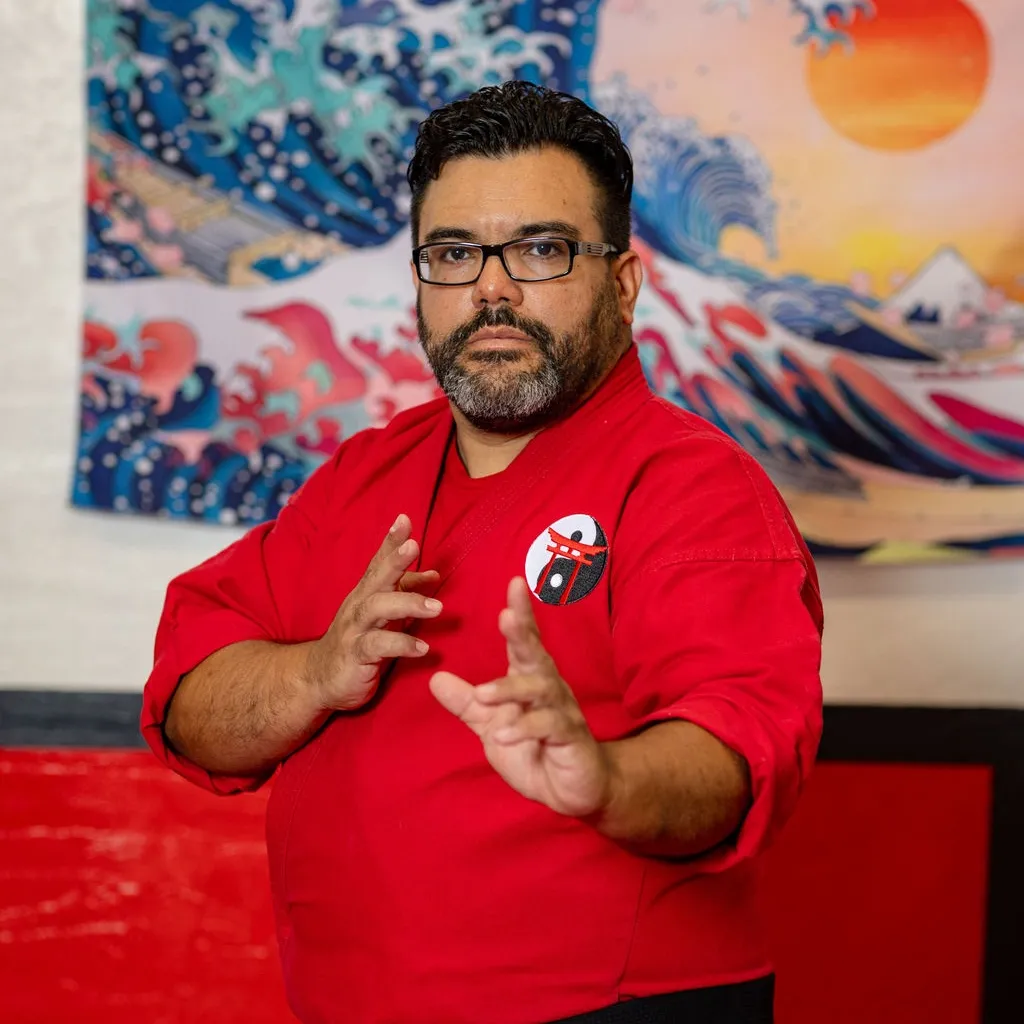
with Oscar Cruz, Owner//Head Instructor — The Dojo

Phoenix Business Brief Podcast episode featuring Oscar Cruz discussing Mastering Discipline: Oscar Cruz on the Transformative Power of Martial Arts

Oscar Cruz, founder of The Dojo Martial Arts in Phoenix, discusses his journey in martial arts and the importance of discipline and self-awareness in the latest episode of the Phoenix Business Brief podcast. With over 20 years of experience, Cruz highlights his training in various martial arts styles, including American Kenpo and Tai Chi, and emphasizes the mental and physical benefits of martial arts for students of all ages. The Dojo offers classes for children and adults, focusing on personal growth, leadership, and self-defense skills.

The Discipline of Martial Arts with Phoenix Martial Arts Studio Founder Oscar Cruz

0:00 / 0:00

The Discipline of Martial Arts with Phoenix Martial Arts Studio Founder Oscar Cruz

Phoenix Martial Arts Studio Founder Oscar Cruz Discusses Discipline and Growth in Martial Arts

Oscar Cruz, founder of The Dojo Martial Arts in Phoenix, has dedicated over 20 years to martial arts, using his experiences to teach discipline and self-control. Cruz shared his journey and insights during an interview on the Phoenix Business Brief podcast.

Cruz began his martial arts training as a child after his parents enrolled him in classes due to his frequent fights and struggles with anger. "I learned how to control my anger," he said. After taking a break in his late teens, Cruz returned to martial arts, eventually opening his first studio in Texas in 2017. The studio closed due to the COVID-19 pandemic, prompting Cruz to relocate to Puerto Rico, where he taught tai chi on the beach.

In 2023, Cruz opened The Dojo Martial Arts in Phoenix, where he focuses on instilling discipline and focus in students of all ages. "The first couple of years were a struggle, but last year we really blew up," he said. The studio has since produced a world champion and several national champions.

Diverse Martial Arts Background

Cruz's martial arts journey began with American Kenpo, a self-defense-based system. He trained under Barry Barker, a disciple of Ed Parker, the founder of American Kenpo. After earning his brown belt, Cruz took a break before returning to achieve his black belt and explore other martial arts styles.

He became a certified USA Boxing coach and learned tai chi, qigong, and kung fu from a friend who studied in China. Cruz also trained in Jeet Kune Do, a martial arts philosophy developed by Bruce Lee that combines elements from various styles, including Wing Chun, Silat, and Muay Thai.

Each martial arts style has distinct characteristics. For instance, American Kenpo emphasizes multiple strikes and linear movements, while tai chi focuses on health through slow, intentional movements. "The difference between kung fu and tai chi is the intentionality," Cruz explained, noting that tai chi aims for health rather than combat.

Life Lessons Through Martial Arts

Cruz emphasizes that martial arts training extends beyond self-defense. "The biggest part of martial arts is teaching you not to fight," he said. He encourages students to develop awareness and de-escalation skills to avoid confrontations. Cruz believes that respect and discipline learned through martial arts can prevent conflicts.

Training in martial arts requires dedication and time. Cruz noted that it took him nearly a decade to earn his black belt, which he views as just the beginning of a lifelong journey. "It takes years of practice and constant sharpening of your mental and physical skills," he said.

Teaching All Ages

The Dojo Martial Arts caters to a wide age range, from children as young as four to adults in their seventies. Cruz aims to create a supportive environment where students can learn at their own pace. "It's never too late to start," he said, highlighting the importance of adapting teaching methods to individual needs.

Cruz also focuses on leadership development within his classes. He encourages students to grow not only as martial artists but also as leaders in their communities. "I don’t look at martial arts as just for this particular place. It’s a life thing," he said.

Community Engagement

Cruz has made The Dojo Martial Arts accessible to families, including those in the ESA program, by streamlining the reimbursement process for classes. He believes in setting goals for each student, often without their knowledge, to help them reach their full potential.

The Dojo Martial Arts is located at 13466 N 7th St, Phoenix, Arizona, 85022. More information can be found on their website at www.thedojo.ma.phx.com or through their Instagram account.

Cruz’s commitment to martial arts reflects a belief in its transformative power, both physically and mentally, for individuals of all ages.

Interview Q&A

Q&A: The Discipline of Martial Arts with Phoenix Martial Arts Studio Founder Oscar Cruz

The Discipline of Martial Arts with Oscar Cruz

Q: Can you explain your background and what you do?

A: I started martial arts at a young age due to frequent fights and anger issues. My parents enrolled me in martial arts to help me control my anger. After taking a break in my late teens, I opened a studio in Texas in 2017, which closed due to COVID. I then moved to Puerto Rico, taught tai chi, and later returned to the States to open my own studio in 2023. We've had significant success, including world and national champions.

Q: What types of martial arts have you studied?

A: I began with American Kenpo, taught by Barry Barker in Poway, California. After earning my brown belt, I took a break but returned to earn my black belt. I also became a certified USA Boxing coach and learned Tai Chi, Qigong, and Kung Fu. Additionally, I studied Jeet Kune Do under Master Sifu Crow in Texas.

Q: Can you describe the distinguishing characteristics of American Kenpo?

A: American Kenpo is a self-defense-based system that emphasizes multiple strikes and linear movements. It combines elements of kung fu and Japanese karate, starting with strong straight-line movements and gradually introducing circular movements.

Q: What is Tai Chi, and how does it differ from kung fu?

A: Tai Chi originated as a way to train soldiers without injury. It focuses on health and intentionality, emphasizing slow, elongated movements that build muscle tension. In contrast, kung fu is a martial art with a focus on combat.

Q: What are the characteristics of Muay Thai and Silat?

A: Muay Thai features powerful kicks, knees, and elbows, making it a very effective and aggressive style. Silat, an Indonesian martial art, is designed for multiple attackers and focuses on striking vital points, developed in response to colonial threats.

Q: How do martial arts shape a person's life beyond self-defense?

A: Martial arts teach awareness and de-escalation, helping individuals avoid fights. The focus on respect, discipline, and mental control allows practitioners to stay out of conflict. My goal is to help students understand the importance of these principles.

Q: How long does it take to master martial arts skills?

A: It typically takes 8 to 9 years to earn a black belt, which signifies mastery of the basics. Achieving this requires years of repetition and mental preparation, as a black belt carries significant responsibility in decision-making during conflicts.

Q: Do you accept students of all ages?

A: Yes, we accept students from ages 4 to 67. The majority of our students are between 6 and 12 years old. We keep class sizes small to provide personalized attention and ensure that each student can progress at their own pace.

Q: How do you approach teaching martial arts to children?

A: I find a balance between traditional methods and modern needs. Each student has different goals, and I tailor my teaching to help them achieve those. We also focus on leadership skills, preparing students for real-world situations beyond the dojo.

Q: What is the name of your studio, and how can people contact you?

A: The studio is called The Dojo Martial Arts, which signifies a place for sharing knowledge and experiences. Our website is www.thedojo.ma.phx.com, and we also have an Instagram account with the handle @dojo_ma.

Q: What is your philosophy on martial arts training?

A: I view martial arts as a lifelong pursuit. It's not just about self-defense; it's about personal growth and developing skills that can be applied in everyday life. I aim to instill confidence and leadership in my students.

Q: How do you support students who are part of the ESA program?

A: We accommodate ESA students by providing class wallet-approved receipts at the beginning of the month, simplifying the reimbursement process for them. Our goal is to ensure all students progress and reach their individual objectives.

Key takeaways

  • The biggest part of martial arts is that I'm teaching you not to fight.
  • If I can keep myself out of a situation where I don't need to be, then the likeliness of me getting into a fight are slim to none.
  • It took about 8 to 9 years for me to get my black belt, and a black belt is just the beginning.
  • Repetition. I have repeated my movements so much that it's ingrained in my body and the way I move.
  • I don't look at martial arts as just for this particular place. It's a life thing.

About the guest

Oscar-Cruz-The-Dojo-Phoenix

Oscar Cruz

Owner//Head InstructorThe Dojo

Oscar Cruz is owner and head instructor at The Dojo. He brings over 20 years of Martial Arts experience to The Dojo. Throughout his career, he has owned and operated multiple studios, teaching a variety of styles. His journey began with American Kenpo Karate—his first love in Martial Arts—which ultimately inspired him to open The Dojo. Oscar is deeply committed to developing students both physically and mentally. His teaching emphasizes personalized instruction, discipline, and a strong respect for Martial Arts tradition. In addition to group classes, he offers private instruction in Tai Chi, Striking, and Kenpo, providing a well-rounded and customized training experience for each student. His experience, dedication, and passion make The Dojo a welcoming place where students of all ages and levels can thrive.

Full transcript

Show full transcript
[00:00] Bryan Hyde: Welcome to the Phoenix Business Brief podcast. I'm Brian Hyde, and today I'm joined by Oscar Cruz. He is a martial artist with over 20 years of martial arts experience. And actually, Oscar, first of all, welcome to the program. I think I'm going to ask you to explain your background and maybe tell us a little bit about who you are and what you do. [00:18] Oscar Cruz: Thank you. It's a pleasure to be here. So my background, realistically, I started martial arts when I was young. Um, I actually got into fights a lot, and, um, and so my parents actually put me in martial arts because, uh, not only did I get into fights a lot, but I was angry all the time and I'd, I'd lose the fights. So, um, so they put me into martial arts. Um, and so throughout that time, getting into martial arts and learning the discipline, uh, I actually stopped getting into fights in general completely. Uh, my anger I mean, didn't go away completely, but I learned how to control it. So, you know, I was doing martial arts. I decided to take a break when I was in my late teens and then decided to come back later on. When I came back later on, I decided to open up my own studio in Texas. And so, in Texas, we opened up in 2017 and then we closed with COVID So when COVID happened. And after we closed down, we actually moved to Puerto Rico. And in Puerto Rico, we did— I actually taught tai chi on the beach to kind of keep my skills up, but also just be able to enjoy the martial arts still. From there, we decided to come back to the States. And when we came back to the States, I couldn't find work. It was right at the end of COVID I was a chef for 20 years, and so it was hard to find work. And a martial arts studio gave me an opportunity to instruct, and so I went and instructed there for about a year. And then it still wasn't quite what I wanted as far as bringing the discipline and the focus back to kids and to adults. And so, I decided to open up my own studio. So in 2023, we opened up our own studio, um, and first couple years were a struggle, but last year we really blew up and started doing really well. And we started doing competitions, and we have actually some— like, we have a world champion and some national champions. And so we've been doing really well. [02:39] Bryan Hyde: So there's, there's a couple of stories at play here then, Oscar. One is the entrepreneurial side of starting your own studio, and, and we're going to go into some more detail in that. I want to step back though to, to talk— I want you to talk to us a little bit about, um, the types of martial arts that you studied and the influence that that had on, on your life. Um, tell me, where did your journey begin? [03:01] Oscar Cruz: Okay, so the first martial arts I did was American Kenpo. Um, it was taught by Barry Barker, um, in Poway, a little town in San Diego called Poway. Um, and so, uh, Barry Barker is actually one of the disciples of Ed Parker who created American Kenpo, which is that style. And so, I did that until I got to Brown, and then that's when I took my break. After that, when I decided to get back in and I got back, I went and got my black belt. But then, I also decided that even though I loved American Kenpo, I loved martial arts in general. So, I decided, "Let's, what else can I learn?" And so, I became a certified USA Boxing coach. I had a friend that had went to study TCM in China and he went and learned an actual family style of Tai Chi and Qigong and Kung Fu. And so, he actually, when he brought that back to the States, he actually showed me and the style is called Hua Dao, but it's over 300-year-old. It's a, when it was strictly a family style. So, not many people know that system, that style other than us. And then, I decided to learn Jeet Kune Do under Master Sifu Crow. He's in Texas. So, he's my Jeet Kune Do instructor. And, Jeet Kune Do is actually— it's a mixture. It's Bruce Lee's system, but it's a mixture of 5 different styles. So, it's Wing Chun, Um, Silat, Kali, Muay Thai, and then, um, and then Bruce Lee's actual, um, kung fu style. [04:54] Bryan Hyde: Can I ask, and this is just for the sake of people who, who may recognize the names but they're not sure, what do each of those styles represent? For instance, uh, could a person recognize if they saw one who was a Kenpo practitioner? What, what would they be seeing them? Uh, what, what would be the, the primary, uh distinguishing factors of that style? [05:14] Oscar Cruz: Uh, so really, I mean, when you see the style, it would be more like you see as they fight. Um, and so American Kenpo is more of a self-defense-based system, um, a self-defense style. And so it's more about multiple strikes, straight line and linear, because it's actually a mixture of kung fu and Japanese karate. So, we start out learning stronger straight-line movements and then we start to introduce the kung fu part of the way into it. And so, then that's when you start to get the more the circular movements. And so, when you look at the movements for a kung fu— for a Kenpo artist, our stances are a little bit deeper. We do a lot of circular movements with our hands and then straight line to finish. [06:04] Bryan Hyde: That makes sense. Uh, you mentioned, uh, Wing Chun as well, and, and, and Tai Chi. Um, Tai Chi actually caught my attention just because I— look, I've seen the— I've seen commercials on TV. I think David Carradine back in the day used to, you know, have, you know, tapes of the— um, what, what, uh, what's the distinguishing characteristic of, for instance, Tai Chi? [06:26] Oscar Cruz: So Tai Chi was So, a little history on Tai Chi. Many, many years ago, basically the Emperor of China said, "Our people, our soldiers are getting hurt and we need to find some way to be able to train but not get hurt." And so, he sent this out to the people and then the main family, one of the Yang families, they're the ones that basically are credited with the beginning of it. But they started, they basically told us, they said, "Well, let's take our kung fu," and let's slow it down and change the intentionality of it. So, intentionality is the big key when it comes to the difference between kung fu and tai chi because in kung fu, kung fu is a martial aspect. That's your intentionality. For tai chi, your intentionality is health. And so, it's more about stretching the movements and elongating the muscles and putting tension on the muscles, not so much tension like where we lift weights and but tension of our own body weight on it. And so, when you see them do this big long movements, it's slow because we're adding tension to those muscles and we're holding that tension as we go through those movements. And so, the difference to make that into a martial is just change the intentionality of it. [07:45] Bryan Hyde: Oh, that's actually one of the best explanations I've heard for Tai Chi. You mentioned Muay Thai and also Silat. What are the characteristics of those styles? [07:57] Oscar Cruz: So, Muay Thai, a lot of people have seen Muay Thai. It has more to do with— they have the big kicks and knees and elbows. Very violent style, but very effective style. It's kind of like a kickboxing on steroids. And then, the Silat. Silat, I love Silat. Silat is an Indonesian style martial arts and it is designed for multiple attackers. So, Silat and Kali were created back when the French uh, had colonized, um, colonized the Philippines and Indonesia. And so it was basically, it was a way for them to defend themselves against all of, uh, the invaders. Well, these invaders had armor, and so all these strikes were designed to go for vital points at all times and to attack multiple people. [08:47] Bryan Hyde: Okay, I look, I appreciate you going into the background of this. I just, I want people to understand that, um, There is no one style, and it sounds like you, you've been exposed to many of these styles. Let's talk a little bit about the, the mental and, and even spiritual— what— let's talk about how, how it becomes a life-shaping kind of pursuit when one starts to study these martial arts. It's not, it's not just strictly self-defense. What are the other things that come along with that? [09:17] Oscar Cruz: So the biggest part of, of martial arts, and that's— and I I always tell my students this as far as the self-defense aspect. Yes, I'm teaching you to defend yourself, but the biggest and most important thing is I'm teaching you not to fight. I'm teaching you to be aware of situations and stay away from situations where you might get into a fight. Personally, I'm 43 now and I've had one fight since I started martial arts and I was 13 at the time. So, and a lot of it has to do with I stay out of situations because I understand and I can view situations that might be starting to get agitated, or I understand how to de-escalate situations. But so, the biggest part of that is throughout my martial arts journey, and this is the same journey I want for my students, is that I learned that most of the things that people get into fights for don't really matter. And so, if I can keep myself out of a situation where I don't need to be or out of a place I don't need to be, then the likeliness of me getting into a fight are slim to none. And so, there's that aspect of it. And then, the other aspect of it is the respect, the discipline, the focus. If I'm disciplined and I respect others, then I stay out of situations where I'm going to get into a fight or I'm going to have to use self-defense. I mean, personally, I hope that if I ever do have to use the skills, that they're used to maybe defend somebody else, not defend myself. And so, but when you look at all of these situations and everything that happens, if we just have a little bit of respect and understanding, a lot of things can be de-escalated. And that's one of the biggest things I teach the students is to de-escalate. Because it doesn't— like, a lot of situations, it doesn't take us having to— we don't need to be agitated because what's the point? And so I teach the kids under— to try to keep as even keel as they can, because the, the more even keel that they are, the more they're able to actually sit back and view the whatever situation they're in objectively. [11:37] Bryan Hyde: You had mentioned the discipline that comes from doing this earlier, and, and I just, I want to kind of put some context on here. How long does it take? I mean, this is not something that, well, somebody showed me once and then, you know, I was doing it like a natural. What kind of price has to be paid for a person to really own these skills? [11:56] Oscar Cruz: Uh, it takes years. Um, I mean, it took about 8 to 9 years for me to get my black belt. Um, and a black belt is just the beginning. And because black belt is basically says I've mastered all my basics. Um, but, um, your question actually reminds me, during my black belt test So, my black belt test took 2 days and it was a giant test. I actually had to write a thesis on something based off martial arts and like attributed to martial arts. And, one of the things that one of our grandmasters actually asked me during my presentation of the thesis was, "How do you feel confident as a martial artist that you could walk down the street and you don't have to maybe shy away or or look like you're not confident? And my first react— my first word literally just popped out of my mouth was repetition. I have repeated my movements so much that it's ingrained in my body and the way I move. And to do that repetition, that takes years. And so there, there are some schools that they might take— like, every school is different on how long it takes to get their black belt. And the way I look at black belt in— at my school, it has to do with multiple things. One, do you know the, the curriculum? Two, you— can you physically move the way I'd expect a black belt to move? Can you defend yourself? Basically, if somebody were to attack you, can you defend yourself in a, in a reasonable manner? And then three, are you mentally capable of being a black belt? Because it's a big responsibility. When you're talking about being a black belt, you have to weigh the consequences of your actions, and sometimes in a split second. And so you have to be able to say, "You know what? This isn't worth it," or, "I need to adjust. Yeah, maybe I can beat this person up, but do they really need that?" 'You know, maybe this person had too many drinks and they're not really a threat to me. So what can I do to end this conflict in the least amount of damage possible, not only to him but to myself?' Because you get damaged when you give damage. And so it takes years of practice and constant sharpening of your mental and physical skills. [14:32] Bryan Hyde: I love that you included the mental aspect because there's a price that has to be paid there for the kind of discipline to keep after it until you can't get it wrong. And it sounds like essentially that journey gets you to a point where you don't— you've proven to yourself that you can make the journey, that you can accomplish those milestones and attain the goal that you set out to, whatever that may be. You don't really have anything to prove to anybody else. It's the guys who have something to prove that are out there, you know, trying to start trouble. [15:02] Oscar Cruz: Exactly. [15:04] Bryan Hyde: So let's, let's relate this to, to your students. And then, um, is there a particular age group? Do you, do you take on students of all ages? I mean, do you teach families, for instance? [15:14] Oscar Cruz: A little bit of everything, actually. So my youngest is 4 years old, so the youngest we do is 4 and up. My oldest is 67 currently. Um, prior to that, actually, 73 was, was the oldest. So really, it's never too late to start. Because the way I teach is very, you understand you, your body, and so you do what you can handle. And then it's my job to help push you where I can push you as far as the older. As far as the younger, so the typical demographic at my studio is about 6 to 12. That's my biggest age group. And, but like I said, we have the younger ones and we do have the older ones and their goals are different. And one of the things we do is we have smaller age groups or smaller classes. So, we have 8 to 10 students per class specifically so that I can make sure that I have a bigger impact on those that are there with us. [16:19] Bryan Hyde: Tell me a little bit about, you know, when it comes to— I'm just going to take for instance teaching young people martial arts, for instance. Kids, uh, kids who are, you know, part of ESA families, you know, and they're— they want that to be part of their education. There's a couple different ways they could go. On the one hand, you've probably got some schools that are very old school and they go for the traditional, uh, styles and, and methods of teaching. And then you've got others that, you know, may be preparing somebody, you know, for, for their UFC debut. Uh, where do you fall on that spectrum? [16:49] Oscar Cruz: Um, honestly, I fall right in the middle. Um, so one of the things I've, I've worked— I've, I've taught at a place where, um, it's what people what I call a belt factory where it's just they get a belt every 2 months and that's it. I've also— I've learned in, hey, you're going to hit hard, you're going to hit each other all the time, you're going to make contact because that's what you have to do to really get prepared to defend yourself. And even though American Kenpo is not as traditional as old school Okinawan karate, the teacher that I went to was a little bit more disciplined as far as it was fairly strict. And so, I try to find a balance. I understand that kids are different nowadays. People are different nowadays. Society has changed from when I was young going through martial arts. And so, even though I want them to still get the lessons that I learned going through martial arts, they need to have a different hand helping them along. And each person is different, and that's why we do have the smaller classes, because it makes it easier for me to be able to adjust things to each person. And so when we would talk about the ESA, we make it super easy for ESA kids. We actually work class wallet approved. I give them the receipts at the beginning of the month and everything goes through. And so it just, it makes it a little bit easier for them because they don't have to worry about trying to get reimbursed themselves. But overall, the whole point is, is these— all of our students need to progress and improve and reach their goals. And like I said, each goal is different, and, you know, some kids, you have your goals, and then I actually have goals for them myself. They don't even know what goals I have for them, but I analyze, and each student as they're progressing, and I say, okay, well, you know, this student's maybe a little bit quieter, so I— my goal is to get them to be a little bit more outgoing, to get them to be a little more vocal. Or, you know, every time I bring them up to the front of the class to lead— because we, we do a lot of leadership. We actually have a leadership class that the kids get to do when— once they've become intermediate rank, and where they learn about being a leader. Because I don't look at martial arts as just for this particular place. It's, it's a life thing.. And so if I could help them be a better leader when they go out into the world and they get a job and they, they, those are practical skills that they can call upon to use. Um, and so whether it be ESA, whether it be a regular student, whether it be an adult, those are all skills that, that we're constantly working on and trying to get better at. [19:35] Bryan Hyde: Okay. So how do people get ahold of you? First of all, tell us the name of, of your studio. [19:40] Oscar Cruz: Okay, so the name is the dojo martial arts, and the reason we called it that was in Japan, the dojo is a meeting place where people gather to share information and to share knowledge. And so, that's where we came up with the name because I wanted people to understand that that's what we do is we share knowledge and we share experiences. Um, and so our website is, uh, www.thedojo.ma, for martial arts, phx for Phoenix, dot com. Um, and then we also have Instagram, um, where— with the underscore dojo underscore MA. [20:24] Bryan Hyde: Very good, Oscar. I really appreciate you taking the time, uh, to talk with us. I, I hope this is enlightening for people. It's— I'm excited to hear about it, not only from the standpoint of, you know, um, you know, it's a real confidence builder, but also, um, it, it's, it's, it can be a lifelong and should be a lifelong pursuit. So I wish you the very best. Thank you for joining us today on the Phoenix Business Brief podcast. [20:47] Oscar Cruz: Thank you. I appreciate you.

Filed under

Related episodes