Phoenix Business Brief Podcast logo
← Phoenix Business Brief

2026-06-10 · The Nature Kinship

Phoenix Educator Natalia Carnevale: Teaching Resilience Through Nature

with Natalia Carnevale, Founder — The Nature Kinship
Phoenix Business Brief Podcast episode featuring Natalia Carnevale discussing Phoenix Educator Natalia Carnevale: Teaching Resilience Through Nature

In the Phoenix Business Brief podcast episode, educator Natalia Carnevale discusses her initiative, The Nature Kinship, which focuses on teaching children resilience and lifelong learning through nature-based experiences. Carnevale emphasizes the importance of practical skills, community involvement, and the integration of folklore and bushcraft in education, aiming to foster self-regulation and situational awareness among participants. The program encourages children to appreciate their environment while developing essential life skills.

Phoenix Educator Natalia Carnevale Uses Nature to Teach Resilience and Lifelong Learning

0:00 / 0:00

Phoenix Educator Natalia Carnevale Uses Nature to Teach Resilience and Lifelong Learning

Phoenix Educator Natalia Carnevale Uses Nature to Teach Resilience and Lifelong Learning

PHOENIX — Natalia Carnevale, an educator and entrepreneur based in Arizona, is transforming the way children learn through her initiative, The Nature Kinship. Carnevale focuses on teaching children of all abilities, particularly those on the autism spectrum, using nature as a classroom to foster resilience and lifelong learning.

Carnevale, a mother of three, began her journey into alternative education when her son was four and a half years old. She describes her approach as nurturing children through nature rather than adhering to a traditional school structure. “I wanted to be organized as a way of being,” she said. “A kinship is about stewarding the land and nurturing the idea of learning.”

The Nature Kinship offers hands-on experiences where children learn practical life skills, such as whittling, plant identification, and primitive survival techniques. Carnevale emphasizes that the curriculum is designed to help children develop self-regulation skills and resilience. “We are merging the divide between Minecraft and reality,” she explained. “Children can have real-life experiences and connect to their culture.”

Carnevale believes education should not have a defined endpoint. “I think learning is lifelong. It’s a journey and a process,” she said. She encourages children to embrace the idea of continuous learning, noting that perspectives can shift throughout life. “If you’re willing to lean into that learning ability, that’s the best part of being a learner and a student.”

The Nature Kinship’s approach emphasizes the importance of learning how to learn. Carnevale and her husband, who co-teaches, encourage children to explore different methods and share their findings. “It’s more about the journey and not the destination,” she said. “You learn a lot about yourself when you focus on the objective.”

Carnevale also highlights the value of nature as an educational tool. “Nature is often overlooked because it’s so simple,” she said. “There’s never a bad day to be out in nature, and nature is always a constant for us.” She advocates for a symbiotic relationship between humans and nature, emphasizing the need for coexistence rather than separation.

Community plays a significant role in The Nature Kinship. Carnevale reflects on her upbringing, where she was surrounded by family and community support. “When we’re all out in the world doing our own thing, we still believe in this together,” she said. “A community holds standards and values, and when you’re around individuals with shared values, you uphold yourself too.”

Folklore is another component of Carnevale’s educational philosophy. She uses folklore to connect children with their cultural heritage and encourage critical thinking. “It’s about diving deep into what your culture once believed,” she explained. “Where did these stories come from? Why does this plant work this way?”

Bushcraft, or the ability to utilize natural resources for survival, is a key aspect of The Nature Kinship’s curriculum. Carnevale teaches children practical skills, such as knot tying and plant identification, to help them navigate their environment safely. “We want to rise within the child,” she said. “There are so many skills that can build confidence and resilience.”

Carnevale’s approach is not about instilling fear of the natural world but rather fostering awareness and appreciation. “We are teaching situational awareness,” she noted. “It’s about enjoying life and feeling connected and grounded.”

The Nature Kinship also emphasizes the importance of teaching others as a way to reinforce learning. Older children are encouraged to mentor younger ones, creating a collaborative learning environment. “Every person on this earth has a lesson to share,” Carnevale said.

For those interested in getting involved, Carnevale invites individuals to visit The Nature Kinship’s website and connect through social media. “First and foremost, connect with nature,” she advised. “Everyone ends up finding us, often with a story to tell about how they discovered us.”

Natalia Carnevale’s innovative approach to education through nature is reshaping how children learn essential life skills while fostering a sense of community and resilience.

Interview Q&A

Q&A: Phoenix Educator Natalia Carnevale Uses Nature to Teach Resilience and Lifelong Learning

Phoenix Business Brief: Q&A with Natalia Carnevale

Q: Can you tell us about your background and what you do?

A: I am Natalia Carnevale, and I work with children on the autism spectrum across all ages and abilities. I am a mother of three and an entrepreneur. I created The Nature Kinship, which focuses on nurturing children through nature-based education.

Q: What is The Nature Kinship?

A: The Nature Kinship is an educational experience that uses nature to teach children life skills, such as whittling, plant identification, and primitive survival skills. It emphasizes building resilience and persistence through hands-on experiences in nature.

Q: How do you approach learning in your program?

A: We focus on teaching children how to learn rather than just specific skills. We encourage them to explore different methods and solutions, fostering a journey of discovery rather than a rigid endpoint.

Q: Is there a specific age when learning should stop?

A: I believe learning is a lifelong journey. The idea that we stop learning at a certain age is a misconception. Perspectives shift throughout life, and being open to continuous learning is essential.

Q: Why is nature an important classroom?

A: Nature is often overlooked because it is readily available and simple. It serves as a constant teacher, offering valuable lessons about our environment and our role within it.

Q: How does community play a role in The Nature Kinship?

A: Community is crucial for fostering accountability and shared values. It creates a support system where children can learn from one another and apply their skills in real-world situations.

Q: What is folklore, and how does it relate to your teaching?

A: Folklore encompasses cultural stories and beliefs that connect children to their heritage. It opens discussions about identity and critical thinking, allowing children to explore their cultural background in a meaningful way.

Q: Can you explain bushcraft and its significance in your program?

A: Bushcraft refers to the skills needed to survive and create using natural resources. It helps children learn practical life skills while fostering confidence and resilience through hands-on experiences.

Q: How do you ensure children are aware of their surroundings?

A: We teach situational awareness, encouraging children to appreciate the beauty and complexity of their environment. This includes recognizing both potential dangers and the wonders of nature.

Q: What do you say to those who believe they only need to learn a skill once?

A: Mastery requires practice. Just like any skill, whether it’s cooking or a sport, you need to practice consistently to become proficient. One-time exposure is not enough for true competence.

Q: Do children have opportunities to teach others in your program?

A: Yes, teaching is a core part of our model. Older children mentor younger ones, reinforcing their own learning and developing their teaching skills in the process.

Q: How can people get involved with The Nature Kinship?

A: Interested individuals can visit our website at thenaturekinship.com or connect with us on social media. We also partner with various nonprofits, so engaging with nature is a great first step to finding us.

Key takeaways

  • I think learning is lifelong. It's a journey and it's a process.
  • It's more about the journey and not the destination because you learn a lot about yourself when you're focused on the objective.
  • When there is something so readily available, it is underappreciated.
  • We are teaching them, in short, situational awareness. It's about appreciating the beauty and the bounty and the abundance of what's around us.
  • The best way to integrate the lesson is to teach it.

About the guest

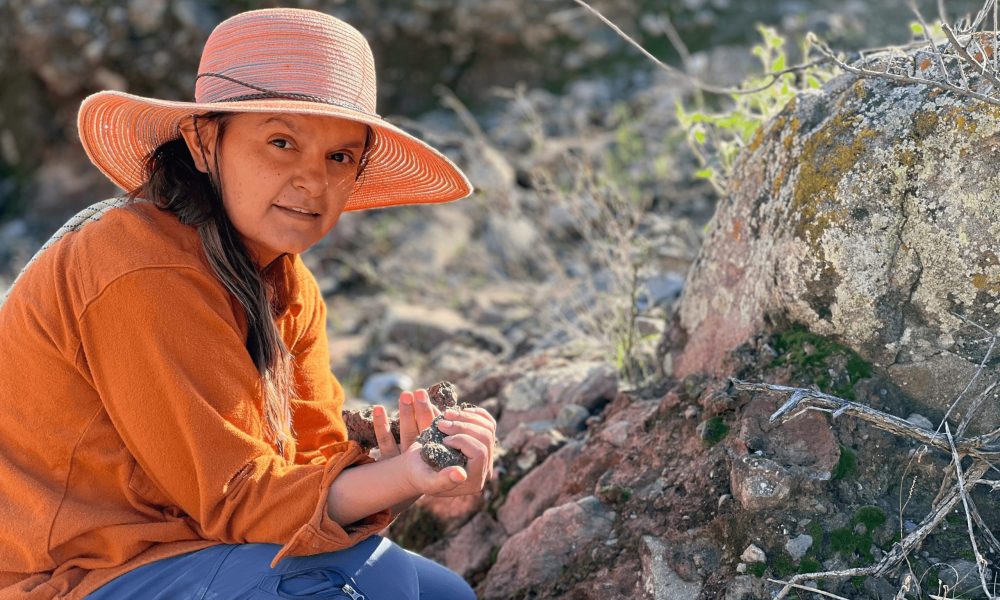
Headshot of Natalia Carnevale, Founder at The Nature Kinship

Natalia Carnevale

FounderThe Nature Kinship

Natalia Carnevale is an Arizona-based educator, entrepreneur, homeschool mother of three, and founder of The Nature Kinship. Through her work with children of all ages and abilities, including those on the autism spectrum, Carnevale focuses on helping young people develop resilience, self-regulation, confidence, and practical life skills through hands-on experiences in nature. She is a strong advocate for lifelong learning, community engagement, and reconnecting children with the natural world through experiential education.

Full transcript

Show full transcript
[00:00:00] Welcome to the Phoenix Business Brief podcast. I'm Brian Hyde. Today I'm joined by Natalia Carnevale. She is the creator of The Nature Kinship. Natalia, wonderful to have you on the show, and I'm gonna first ask you, before we talk about The Nature Kinship, give us a little bit about your background, who you are, and what you do Absolutely. Thanks for having me. I am Natalia, and who I am is a facet of many things, but I think I'm a typical person just trying to orient this world in a not so typical way. I work with children on the spectrum, and when I say on the spectrum, it's all ages, all ranges, all abilities. So I am a mother of three. I homeschool my children, and I am an entrepreneur. And, and we're talking about the Nature Kinship in the context of this is an educational experience based in nature. Please feel free to expand [00:01:00] on that and, and let's, let's talk a little bit about what you do on a day-to-day basis. Yeah. The Nature Kinship idea came to me in regards to being able to nurture children through nature. Uh, my son was four and a half years old when I began this journey of AtypicGal, which typical gal, nurturing, learning in typical ways, and I decided that as a facet, I didn't want to be organized as a school. I wanted to be organized as a way of being. And a kinship is you're stewarding the land, you're stewarding this idea, whether it's land or, you know, maybe there's another idea out there. But for us, for the Nature Kinship is we take children, and I s- I say all children. Maybe it's your inner child that needs to be nourished as well. But we take these young beings as our primary focus, and we teach them life skills. We teach them how to use knives through whittling. [00:02:00] We teach them how to identify plants in their environment, and we teach primitive survival skills. But it's not just that. It's not apocalyptic. It's this idea of giving such autonomy to build that persistence and resilience that is often a disconnect between ourselves and nature. And in that, we get to share the symbiotic relationship between ants and, oh, we left our lunch out, so that looks like we may have to figure out a solution for that. Or, why did the ants come? Because our lunch is out. Those different questions pop up in such an organic way, but then you get deeper into the curriculums that we're teaching and I've created, and it comes down to maybe a five-minute fire. Why is it possible to do a five-minute fire? It's because you want to make sure that you can stay calm, and when there is a lot of energy going around you and like, oh, wait, there's an [00:03:00] emergency, that five-minute fire is teaching a child not only how to start a fire, but to stay calm in a situation where maybe you're the only one that's cognizant in the a traffic accident. Maybe you're the one that's trying to help a special needs child find their parent because they wandered off. But these children are learning to have self-regulation skills in such practical ways. When there's a world of a clear divide of Minecraft versus reality, we're merging the two together so that children can, uh, have real-life experience and be connected to their culture as well. I love to hear you describe this because i- it's clear that a lot of us have been trained to view education or learning as, as a very rigid, "Well, you know, you go to the classroom, and then you, uh, complete this grade, and you get this certificate or this diploma at the end of it. And then you're ready to go out and get a job and earn a living." But it's, it's much, much more than, than just, you know, s- getting us ready for the job market. [00:04:00] I mean, the skills that you're just describing, um, this is about learning. And, and I just have to ask you, how long are we intended to learn a- as human beings? Is, is there an endpoint, you know, age 18, 24, whatever- Yeah where we're, where we're supposed to be done? I, in full transparency, I think that I had this belief as a child that, "Oh, once I'm an adult, I'm gonna know everything." And the school system kind of failed me in that regard. Like, oh yeah, once I'm 18, I'm set up for life. Oh, no. I, I think learning is lifelong. It's a journey and it's a process and, you know, sometimes I feel like I'm going in a circle, but I remember that it's more like a spiral. And so even when I know something, I learn a little deeper. When I think, "Oh, I've got this down," even for Nature Kinship, I'm like, "Oh, there's a child coming around that's teaching me a little more about myself and how I can bring that edge out a little more." So no, it's a lifelong possibility, and your perspectives shift throughout your life. And if you're willing to lean into that learning ability and not [00:05:00] above it, that's the best part of being a learner and a student. And, and Natalia, please correct me if, if, uh, if I h- am not hearing this correctly, but as I, as I heard you describe some of the exercises, you know, that, that, uh, you know, participants in the Nature Kinship, uh, take part in, this is, this is less about, well, you're gonna learn this skill, and you're gonna know how to make a fire or, you know, how to forage for, for food in the wilderness or something. Mm-hmm. This is more about teaching them to learn and to continue- Yeah ... to learn and develop skills, correct? Absolutely. We teach them how to learn. It's learning to learn. Uh, there's no system, so we might show them the way that I will do it. But my husband, he co-teaches with me, and we will be transparent and say, "Oh, he has a different way," or, "I have a different way." And it's a beautiful process because then at the end of the time together say, "Oh, who found another way to do this?" And it opens up all [00:06:00] these different conversations that we get to have with one another because how did we get from point A to C, D, E through that journey together? How did we get there all with the same ending? And I always like to say that it's more about the journey and not the destination because you learn a lot about yourself when you're focused on the objective and understanding, oh, okay, you know, I might wanna tie this knot- But if I know how to troubleshoot this idea, I can get there. And we just work with where we're at right now because maybe three years from now looks different. Why is nature such an overlooked and, and magnificent classroom? You know, for me, I think that it is overlooked because it's so simple. It- when there is something so readily [00:07:00] available, it is underappreciated. And as you see it dissipating, there is this aspect that, oh, it's not me contributing to this chaos, it's global warming. Oh no, it's something that's bigger than me. Because it is so abundant I think that it can be such a valuable teacher in regards to how we show up as humans. Uh, there's never a bad day to be out in nature, and nature's always a constant for us. But we're not constantly showing up for nature. That bird that might need some water or the tortoise that's trying to cross the road. We, we want to be helpers, but in turn we're martyrs for nature, and really we should be coexisting with nature. We think that we're separate. Let's talk too about, uh, community and how that becomes a part of this learning process through the Nature Kinship. Mm-hmm. [00:08:00] Oh, uh, community has such a soft spot in my heart, especially in the aspects of having such secular homes and the single-family homes. I g- I was so blessed to grow up with my grandparents on the same property as me, and then I had my own children and I was like, "Oh, wait. My, my parents are highly involved in my life, but what does that look like for my community, for my children?" Because they live in Colorado and I live here. And so for community for us, that, that's a driving point. It's a point to make sure that, hey, when we're all out into the world doing our own thing, we still believe in this together. We get to hold each other to a standard. And when they steward other people, it has a ripple effect. There are so many times that children have come from a trip and said, "Oh, my goodness. I used this knot [00:09:00] when I went on my cruise." Or, "Hey, my friends were running around with their pocketknife and I told them they have to follow the blood circle rule." And, you know, all these different things. It's very exciting, um, to cultivate a community because a community holds standards. It holds values. And when you're around individuals that hold a value that is important to you, you get to uphold yourself too. It's a- an accountability. And, and this is a word, folklore is a word that I hear and I think, "Well, I kinda think I know what it means," but you know what? I'd be hard-pressed to give a definition for, for what it is. Could you tell us a little bit about folklore and, and the role that it plays in this type of, of education? Yeah, absolutely. I have a sweet spot for folklore. There's folklore for community, and I use it often because we have children from all ethnicities coming in and may- it's so much more than the Easter [00:10:00] Bunny and Santa Claus and fairies and all unicorns, all those different types of folklore. For me, it is the idea of diving deep into what your culture once believed. Where are these stories coming from? Why does this plant work in this way? Where did that come about? Where did your name come from? Where are these family crests coming from? What is the lore behind, oh, if you have salt around you? Like, all these things open up a very fun and playful opportunity to connect with your children in a way that's like, oh, wait, it's so much more than this mythical creature. It's also a conversation between why is it okay to believe in something like dinosaurs, and it's not okay to believe in this, and where is the deviation? Where do we have these critical thinking conversations? And that's why we utilize lore, is to give a sense of place [00:11:00] and to give an identity to those that feel disconnected Talk to me too about, uh, you know, bushcraft. Um, again, that's a word I think... Well, I kinda think I might know what that means, but again, I'd be hard-pressed to give you a definition. I know you use this as part of the, the, um, nature kinship. What is bushcraft? How does it help, you know, build lifelong learners? A great question, Brian. The bushcraft is the ability to utilize what is on your person to survive or to create and craft something out in the wild, and that, that is the way that we coin it and that's the way that we use it as a term. It's primitive survival skills. So we utilize bushcraft in regards to teach a lot of life skills. So let's say knots. We're utilizing the knots on your shoes as in every day inside your house going amongst the community, 'cause we're [00:12:00] tying them, right? But then we share, "Oh, you like to camp, so we're going to learn how to tie this knot to secure your food away from bears." Okay? And that's as simple as it can get, all the way to maybe we're learning about the plants that you can process, but when we're teaching about the plants, then we're teaching, "Oh, wait. What are the fibers that are in our clothes? What are the baskets that you're using for Easter?" Those different things. And then as it progresses, the five-minute fire I talked about briefly before in regards to why would it be important to know how to do a fire. They're... Children are curious, and rather than leaning away from the curiosity, we lean in and we teach them how to safely put out fires, so that way we don't have adults starting wildfires. And we want that ability to rise within the child, because there's so often, especially in the Valley, we hear about adults [00:13:00] taking children out, and we can't help what adults do, but we can help steward, uh, children to be able to hold a safe place for themselves. And so in bushcraft we teach that, how to identify, um, lots of different things, but poisonous plants for one. Um, a widowmaker. You know, just the other day we were at the park and the kids wanted to climb the tree, and they used their bushcraft skills to let other people know at the park, "Hey, this tree isn't safe to be under. There's a widowmaker." 'Cause the branch could've fallen on somebody. And then they also know how to safely take it down. And we're talking like three to 13 that are able to have these skills because we made learning possible in a very fun and integrative way through bushcraft. So many people get hyped about like Alone and Survivor and all [00:14:00] those things, but it's not about apocalyptic thinking. It's in our everyday. It's in our backyard, you know? And so to be able to utilize bushcraft in that way has been so magical, and it's saved a lot of kids in regards to learning how to use a knife in the kitchen, um, being able to stay calm and regulated if they got in a car accident, to be able to say, "You know what? I've been in a stressful situation before, and I know that I need to know my personal information." So we utilize those skills to build confidence and resilience. Now, as, as I hear you describe this, you know, I think, um, this... You're not teaching the kids, "Oh, look what a scary world i- we live in, you know, with widowmakers hanging in the tree or, you know, this, this plant that could give you a terrible rash or whatever." Yeah. You're, you're, you're teaching them, though, to notice what's around them, and I, I'm guessing they become very good at spotting the beautiful and, and the interesting- Oh ... and the unusual things. Absolutely. Like, we We love to bird watch as a [00:15:00] community, and we all get excited even during, like, story time. Like, "Oh, my goodness, did you just see that bird that flew over?" Things like that. They are incredibly aware, and I love that you pointed out that we are teaching them, in short, situational awareness. And it's not about being aware of just the bad things. It's about appreciating, like, the beauty and the bounty and the abundance of what's around us, and inviting people in, having those hard conversations with other people because you know how to lead. You know when it's time to follow, when it's time to kinda surrender and compromise on what needs to be done. And, um, I've found a great deviation between my previous experience to now of, like, just being able to enjoy life because we feel connected and grounded. And there are times where kids are like, "Oh, I need to take off my shoes. I'm feeling a little frustrated right now." And so they [00:16:00] regulate themselves a bit and have a great, a great time. You know, the, the skills that you've shared here, um, to me from a practical standpoint, they sound like th- these would be, would be good things to, to know just in case you ever need them. But, uh, what happens when you encounter people who say, "Okay, show me once and that's all I'll ever need," you know? "I've seen it before. Now I should be able to do it perfectly." Tell me what's wrong with that thinking. We get that often actually, and we think about it just in the way of math or writing, reading, cooking. Okay? These are skills that maybe you did see it one time, and there'll be a nugget of it that you can hold onto and it'll help you in a pinch. But I can't pick up a paintbrush and then call myself a painter. Like, I'm, I'm going to practice these skills so that way I know in any scenario I'm gonna be able to do the best I can. So if you [00:17:00] take one class, you're gonna do the best you can in that one class, but it's not going to match somebody that's done 10, 15, 20 years of bushcraft. And so we do offer, like, one-off workshops and stuff for those people that are like, "Hey, I just kinda wanna dabble in this." And then we have people that have been with us since we started, and it's seeing the benefits just roll over. So it just matters of like, yeah, sometimes they'll take a one-time self-defense class, right? And then call it a day. But then there are people that do monthly, weekly practices at jujitsu, and so it's just diff- different accessibilities. And do the, do the kids have opportunities to, to help teach as well? It seems like nothing cements your own competency like teaching it to someone else. Oh, that's in our model. So we let people, as they advance [00:18:00] through, one, before they move on to the next skill is you've gotta be able to teach it, right? The best way to integrate the lesson is to teach it. So a lot of our older children actually take our younger children underneath them, and they will go around and they will teach. And then, of course, we support them. They're learning a skill, too. They're learning how to teach. And so sometimes we'll say, "Oh, no, there's an injury. There's an injury on the field. So-and-so lost their legs, so they can't move to you to give you directions." And so we make it really fun, and it's not like, "Oh, don't, don't help them in this way." It's more like, "Oh, no, now you have your hands stuck, and you have to figure out how you're gonna communicate your needs to them." And so maybe it's a walkie-talkie because they lost their legs or something like that. But yes, it's built in. It doesn't matter how old you are. We have [00:19:00] five-year-olds that sometimes lead our 10-year-olds. And I, I hold the philosophy that every person on this earth has a lesson to share, and they're welcome to share it. One final question for you, Natalia. Talk to me about how people, um... I, I'm sure this is striking a nerve in, in someone. If they wanna get more involved, how do they do that? Uh, you're welcome to check out my website at thenaturekinship.com. Uh, we can be found on social media. And we are connected to a lot of different nonprofits because we also believe in giving back. So you'll see us popping around in social media, podcasts. But first and foremost, connect with nature, and then I feel like everyone ends up finding us, and they have some crazy story to tell me about how, uh, they found me if someone didn't refer them, so.[00:20:00] Again, we are talking with Natalia Carnevale. She's creator of The Nature Kinship. Natalia, thank you so much for joining us today on the Phoenix Business Brief podcast. Thank you so much for having me.

Filed under

Related episodes