Phoenix Business Brief Podcast logo
← Phoenix Business Brief

2026-04-01 · Daffodils Bloom Life Coaching

Transform Your Emotional Health with Anjana Nambissan's Life Coaching

with Anjana Nambissan, Founder — Daffodils Bloom Life Coaching

Transform Your Emotional Health with Anjana Nambissan's Life Coaching — Anjana Nambissan, Daffodils Bloom Life Coaching

Anjana Nambissan, founder of Daffodils Bloom Life Coaching, discusses emotional health and life coaching in the Phoenix Business Brief podcast. Nambissan, a board-certified integrative neuro-somatic practitioner, shares her journey from a career in IT to helping others transform their lives through tools like neurolinguistic programming and emotional release techniques. She emphasizes the importance of self-love and the impact of childhood experiences on adult emotional health.

Phoenix Neuro-Somatic Coach Anjana Nambissan Discusses Emotional Health and Life Coaching

0:00 / 0:00

Phoenix Neuro-Somatic Coach Anjana Nambissan Discusses Emotional Health and Life Coaching

Phoenix Neuro-Somatic Coach Anjana Nambissan Discusses Emotional Health and Life Coaching

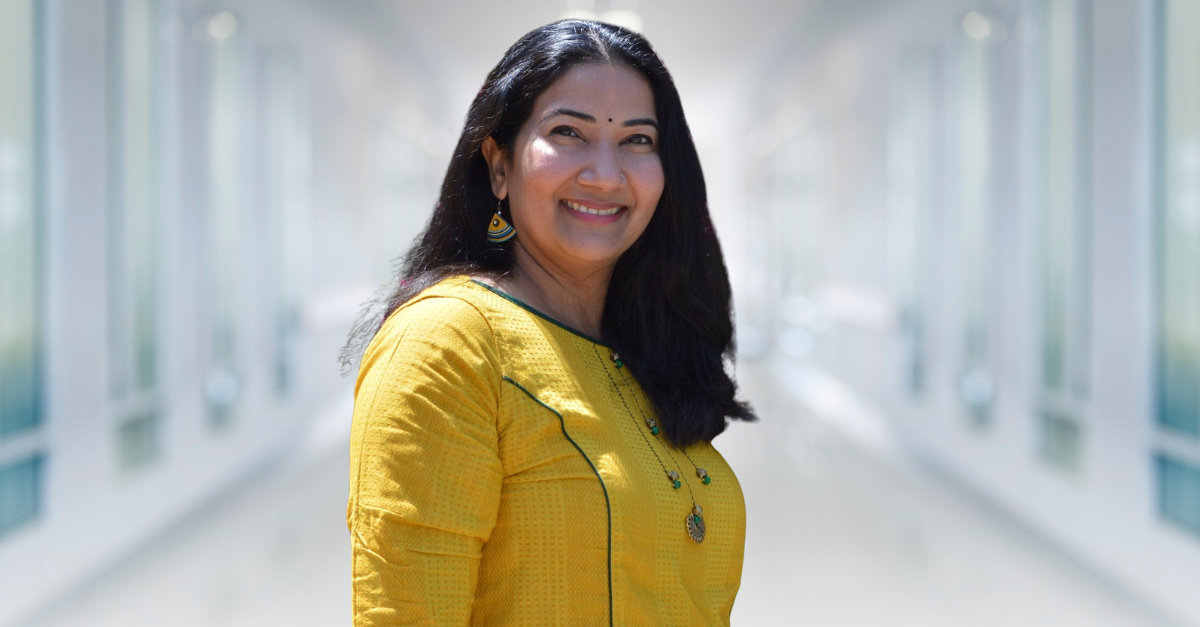
PHOENIX — Anjana Nambissan, founder of Daffodils Bloom Life Coaching, shared her journey from a career in information technology to becoming a board-certified integrative neuro-somatic practitioner. In a recent episode of the Phoenix Business Brief podcast, Nambissan discussed the importance of emotional health and the transformative power of life coaching.

Nambissan, who grew up in India, worked as an IT developer for over 20 years before experiencing a personal crisis that led her to seek help from a life coach. She described her sensitivity as a child and the emotional struggles she faced as an adult, which included depression and physical symptoms like migraines. “I didn’t know I was going down that path,” she said. “I started having all the physical symptoms, and every time the doctor would remind me, ‘You are having depression.’”

After five years of working with a life coach, Nambissan found healing and realized her experiences could help others. “I understood, oh, I went through all that pain, not for nothing,” she said. “There must be other women out there who are feeling intensely just like I was.”

In 2020, Nambissan pursued life coaching certifications and later trained in neurolinguistic programming (NLP) and quantum tools for emotional health. She aims to provide her clients with immediate tools for transformation, rather than making them wait years for relief.

Nambissan explained that many of her clients come to her when they experience difficulties in relationships, parenting, or career fulfillment. “We carry a lot of emotional baggage from childhood,” she said. Often, clients do not recognize that their inner emotional pain is affecting their relationships. “That was my symptom,” she noted, referring to her own struggles in marriage.

The tools Nambissan employs include NLP, which allows clients to reprogram their thoughts and behaviors through conversation. She emphasized that emotional pain can manifest physically, stating, “We store these emotions in our body at a cellular level.” Nambissan believes that by addressing the root causes of emotional pain, clients can achieve physical healing.

She also advocates for self-love, which she defines as more than just self-care activities. “Self-love is way more than one spa day or doing your nails,” she said. “It is about understanding and forgiving ourselves for past mistakes and embracing all parts of who we are.”

Nambissan’s coaching practice, Daffodils Bloom Life Coaching, symbolizes the potential for personal growth and transformation. “Wherever we are in our life, we can always start anew,” she explained. Her six-week breakthrough program focuses on emotional cleansing, helping clients release past traumas and rewire their thinking.

Clients can book a free consultation through her website, anjananambissan.com, where they can explore whether her services are a good fit for their needs. Nambissan also maintains a presence on social media platforms such as Facebook, Instagram, and LinkedIn.

Through her work, Nambissan aims to empower individuals to overcome emotional pain and lead fulfilling lives. “Life can bloom for anybody,” she said, reflecting on her own transformative journey.

Interview Q&A

Q&A: Phoenix Neuro-Somatic Coach Anjana Nambissan Discusses Emotional Health and Life Coaching

Q&A with Anjana Nambissan on Emotional Health and Life Coaching

Q: What is your background and how did you become a life coach?

A: I have a background in computer science and engineering. I grew up in India and worked as an IT developer for about 20 years. My journey into life coaching began after experiencing intense emotional pain and depression, which led me to seek help from a life coach in 2015.

Q: What motivated you to start Daffodils Bloom Life Coaching?

A: After my own healing journey, I realized there are many women who experience similar emotional pain. I wanted to provide them with the tools and support to overcome their struggles quickly, rather than waiting years for improvement.

Q: What are some common symptoms that lead people to seek your help?

A: Common symptoms include struggles in relationships, parenting challenges, and feeling stuck in one's career. Often, individuals do not recognize that their emotional baggage from childhood is affecting their current situations.

Q: Can you explain the tools you use in your coaching?

A: I use neurolinguistic programming (NLP) to help reprogram the way individuals think and behave. This involves conversation-based techniques to rewrite thought patterns. Additionally, I employ quantum tools to access the unconscious mind, addressing deep-seated beliefs and emotional baggage.

Q: How do emotional issues manifest physically?

A: Emotional issues can manifest as physical symptoms because we store emotions at a cellular level. Traumas and emotional pain can lead to physical ailments, but with the right tools, these can be released in a single session.

Q: What does self-love mean in the context of your coaching?

A: Self-love goes beyond superficial acts like spa days. It involves recognizing and accepting all parts of oneself, including those we may not be proud of. It’s about forgiving oneself and understanding that past behaviors had reasons behind them.

Q: Why is our internal voice often unkind?

A: Our internal voice is shaped by childhood conditioning. From ages zero to seven, we absorb information without critical thinking, leading to automatic negative self-talk based on past experiences and beliefs instilled by others.

Q: What is the significance of the name "Daffodils Bloom"?

A: The name symbolizes the idea that no matter where we are in life, we can always start anew. Just like a daffodil blooms from the dirt, people can create a new life and transform their circumstances.

Q: What does the six-week breakthrough program entail?

A: The six-week breakthrough program focuses on emotional cleansing, helping clients release their emotional baggage from childhood. This foundational work prepares them for further growth and transformation.

Q: How can people connect with you?

A: People can find me at my website, anjananambissan.com, where they can book a free consultation. I also have a presence on Facebook, Instagram, and LinkedIn under the same name.

Q: What is your approach to coaching after the initial breakthrough?

A: After the breakthrough, I offer NLP coaching sessions to help clients change their inner dialogues and address any remaining emotional issues. This is tailored to their individual goals and needs.

Q: How do you ensure a safe environment for your clients?

A: Building trust is essential. The initial consultation is designed to help clients feel safe and comfortable. We discuss their needs and determine if we are a good fit for working together.

Q: What is your ultimate goal as a life coach?

A: My ultimate goal is to empower individuals to transform their lives and achieve emotional well-being. I want them to feel capable of creating the life they desire.

Key takeaways

  • I was always an extremely sensitive person from childhood. I didn't have any emotional support or anybody in my life who could support me through like the intense emotions that I was feeling.
  • We also store these emotions in our body. In a cellular level, we store everything.
  • When I started realizing it, I understood, oh, I went through all that pain, not for nothing. It has to be a reason when I felt there must be other women out there who are feeling intensely just like how I was doing.
  • Self-love is way more than the one spa day or one doing the nails. It is way more than that.
  • The symptoms can come in so many different ways. One can be their marriage, their relationship with their partner can be very painful.

About the guest

Anjana Nambissan

FounderDaffodils Bloom Life Coaching

Full transcript

Show full transcript
[00:00:00] Welcome to the Phoenix Business Brief Podcast. I'm Brian Hyde. Today I'm joined by Anjana Nambissan. She is a, uh, I'm, I'm gonna have to, to look at this carefully. Board certified integrative neuro somatic practitioner and, uh, and Jonna. We're welcome to the program. First of all, that is quite a title. Tell me a little bit about what that means, and tell me a little bit about who you are as, as well as what you do. First off, thank you so much, Brian, for like having me over and this amazing opportunity. I love this. Thank you. So, and, uh, yeah, let's, first of all, if you wouldn't mind, let, let's talk a little bit about, uh, about your background and, and, and how you became, um, I, I'm, I'm gonna, I'm gonna simplify and say you, you offer life coaching services, um, through Daffodils Bloom life coaching. But tell me a little bit about your story and what, what brought you to this place? Sure. So my background was in computer science and [00:01:00] engineering. Interestingly, and I grew up in India until like my early twenties. And after getting married and I came over here, I continued my career as like an IT developer for about 20 years. And the interesting fact about my life is I was always an extremely sensitive person from childhood. I was always like that. I didn't have any emotional support or anybody in my life who could support me through like the intense emotions that I was feeling. I didn't know what was happening, but I could just feel it. And being an adult with that sensitivity was no joke. It was extremely painful. I got married, I still had my career. I have like two beautiful girls. And with all the responsibility added on me and the, uh, emotional side, like it became like so unbearable. And before I knew, I started going down like the path of [00:02:00] depression and I didn't even know I was going there. And I started having like all the physical symptoms, like migraines and everything, and every time doctor will remind me, you are having, you are having depression, so take antidepressants. That was the only thing, and I was not ready to go that route. And luckily when things were like really going down, fortunately this is the divine intervention I would call it. My friend asked me to start talking to a life coach. And this was, uh, back in 2015, and I worked with her at least for five solid years, like talking to her every single week, sometimes like multiple times a week because it, like, I was beeped down in that place, right? So she had to really pull me up. Well, she helped me a lot. And after starting, starting to feel better and like, oh, my life is not that bad after all, it's actually good. [00:03:00] When I started realizing it, I understood, oh, I went through all that pain, not for nothing. It has to be a reason when I felt there must be other women out there who are feeling intensely just like how I was doing, and they do need some support. They do, uh, the tools and like all the support to come out of that emotional pain and they can live their life. That made me research about all the life coaching certifications and everything that I can learn, and I did like two life coaching certifications starting in 2020, and I wanted to do something more. I, instead of just coaching and like giving awareness to my clients, I wanted to learn more. And if they are in deep emotional pain, I needed tools to help them come out like instantly if, like, I didn't want them to wait for five years, I wanted something in as little as one session or like within a few weeks so that they can really start [00:04:00] living their life. That is what made me go up, like find this, um, training that I was doing for last year, more than a year actually. Where I learned all the NLP master practitioner tools and the quantum tools for emotional health. All of those things I learned, and that is how I became a, an integrative neuros somatic practitioner. So in, in a nutshell, you help other people transform their life. Is that a safe way to say it? Oh yes. What are, what are some of the things that bring people to you and, and what are some of the ways in which people recognize, you know, the way I'm doing things isn't working, I, I'm in need, uh, of transformation? What are some of the symptoms of that? Well, the symptoms, uh, can come in so many different ways. Like one can be their marriage, their relationship with their partner can be very painful and more often than. Not like we don't recognize it is our own inner world or [00:05:00] inner pain that is causing that relationship to fail or like even struggle. We do not recognize that we all carry like a lot of emotional baggage from childhood and kind of like that pain is being projected onto our partner. So that is like one, that was my symptom. Like I couldn't handle our relationship with my husband. And similar to that, like other people when they are like really going through like a very tough time in their marriage, that is like one of the biggest signs that they do need emotional health support. Another one is like when we are parenting, um, our kids, and especially if the kids are in teenage, which I do have two teenagers by the way. They know a way to like poke all our buttons or one of our emotional buttons. Our kids know how to do that so that I get like moms coming in and saying like, my kid need your help. And more often than [00:06:00] not that, not it's the mom or the dad who need the support more than the kids. Um, what else? Like career, like people feel like so stuck in their career. They don't feel like purposeful and they don't feel it as like fulfilling. And that is all a symptom or like a, what is the word for that indication? That their emotional health is actually at risk and that needs help. Let's talk about some of the tools that you use because what, what you're describing here, um, some people would say, oh, so you must, you must sit in council and talk with people and listen with them. But actually you bring some very interesting tools to, to the table when it comes to, to helping people transform their lives. Talk to me about neurolinguistic programming and, and some of the quantum tools that, that you use in your work. For sure. So neurolinguistic programming is where we can really. Reprogram the brain, [00:07:00] the way that we think and the way we behave. Everything can be reprogrammed in like simply this is all like conversation based. I'm not using any medicines or anything else, but in conversation itself there are like amazing tools that they can slow somebody's thinking very slowly and then rewrite like the way that they think. That is like one of the amazing tools that we do. And the quantum tools, the beauty is like we really get to go to the root of unconscious mind, wherever all the beliefs that are that we are holding on, that is all in the unconscious mind. We plan things, we set goals, everything using our conscious mind, which is only 10% of who we are, 90% of who we are is our unconscious mind. And our unconscious mind carries every single memory, everything from our childhood all the way till now. [00:08:00] So the two, the quantum tools specifically are to go really deep into the unconscious mind, understand all the patterns, all the behaviors, all the beliefs and incidents, and there can be traumatic experiences. The emotional baggage is that that is all stored in our unconscious mind. So I had those tools are like the best, actually, I love them the most. Like I said, like one single session of forgiveness that is like one of the quantum tools I use. It really releases the extreme emotional pain that we are carrying, and it's not just like emotionally healing. As soon as that tool is used on somebody, it's a longer session though. It is like two to three hours session, but as soon as like that is done, the person is completely, energetically free, create the life they want. Okay, so you have me captivated here, especially when you, when you talk about, uh, um, emotional release. Um, and, and correct me if I say this [00:09:00] wrong, but, but a friend of mine recently went through, um, some type of, uh, emotional release training and therapy. And, and so the, the idea that he introduced, and I'd like to get your take as to whether this is, this is a real thing or not, is that we carry, uh, we carry trauma with us. Physical trauma that, that, that affects us physically, but, but it has an emotional basis and, and through releasing that emotion, um, it, it frees us from things that to otherwise, you know, we we're not sure where, where this is coming from. Why is it that I'm always tired? Why is my back always hurting? Things like that. Uh, would you comment on that, please? Of course. Like, you won't believe, like, like I said, like in the unconscious mind, we store everything. We also store these emotions in our body. In a cellular level, we store everything. And that is how like we create the, these like physical symptoms, like many of the physical diseases when we talk about it, they are not just diseases. They are [00:10:00] coming from like our emotional, um, illness or the pain that we carried or like sometimes it can be physical or emotional trauma that we went through. It is actually stored in our physical body. That is so scary and leaving at the same time. Because even if you experienced a trauma in the past, that does not mean you have to live with that trauma forever. We have the tools we can completely release that traumatic experience, the emotional pain and the physical thing from the body and from the unconscious mind in one session. That means can actually make you. Heal, whatever the physical symptoms that you're carrying. That is like extremely unbelievable. But that is true because I experienced it, so I have to believe now. Well, there's, there's nothing like personal experience, you know, to, to back it up. What about self-love? I, I noticed I was looking at your website to Daffodils Bloom life [00:11:00] coaching, and, and you, you talk a little bit on that website about, um, how, how self-love is missing in many people's lives. First of all, what exactly do we mean when we say self-love? Self love is way more than the one spa day or one doing the nails. It is way more than that. I did not know what self flower was like 10 years back. Honestly, I did not even contemplate that word until then. But the thing is, what I understood is all the pain, like the relationship or any pain that we experience that is all coming back to. Some kind of question like, am I really good enough? Am I worthy enough to experience the life, the relationship that I'm really craving for? It always comes back to me. Am I good enough? Am I beautiful enough? Am I smart enough? So the reason for introducing self love is my [00:12:00] healing journey. Took me to all the deeper depths of my own psyche, my own emotions and everything. And it reminded me that there were so many parts of me that I was not loving myself. And that is the reason, like right. Love to call myself as a self flow advocate because self flow is the best medicine out there, and it means a lot like you asked, right? It is a very, very in depth topic to go into, but the thing is like we have like so many parts that we love and many parts that we don't like. They're like ugly and really bad, and all of those right. But we do get to see those spots that we were hiding and maybe we were not like very proud of like, oh, first part existed in me. Still looking at that with love, with compassion and understanding. Yes, at that time I did something really bad, but [00:13:00] is okay. I can forgive myself. I can love that part of myself. And there is actually a valued reason, like why certain things happened in my life, certain ways I behaved in the past. It, it all has reasons. So instead of judging and criticizing and being the biggest critic of my own life, I can actually become the cheerleader of my life and say, you know what? I really, really love myself. That comes from a very deep place. I know that we all have, we all have a little internal voice that, uh, that, uh, tells us things from time to time, and I, I'd love to get your take on why is it that voice so often is, is unkind. We let that internal voice say things to us that we would never let anybody else say to us and get away with it. That comes from like our childhood conditioning. There is like a period, zero to [00:14:00] seven years of any its life is called like an imprinted. So that time we look the conscious and unconscious mind, it is all unconscious mind back then zero to seven years without any critical faculty, without any logical thinking, we are receiving an absorbing any information that is happening around us when believing those. So that, that is one part of it. So if our parents or if our, um, I don't know from school or anybody was talking to us in any unkind way, uh, or you are useless or anything, right? It can get to like real extremes, but whatever experiences, whatever words that young kid heard, they believe it without questioning it, there is no logic in it. We just believe that. But the thing is, once those gets built into our unconscious mind, then it becomes like an automatic replay. [00:15:00] So now like if we can actually slow down and listen to that inner critic, we understand something. We do think that we are the ones talking that nasty to ourselves, but somebody in the past. Set something on that line and we did like some kind of translation and stored that as the truth within ourselves. And that truth is being replayed as a tape over and over and over again. That is our tic and always, always it is a lie. But the thing is we don't realize it is a lie until, and unless we go back there understand what is going on, who said what to us. And what happened back then? How did I translate that? So all that pieces come into picture when this inner critic comes? So in NLP, like we have like a topic called NLP communication model. [00:16:00] So what that says is we translate everything, every, um, information that is coming to us. We do like a big level of trans translation within us, uh, deletion, distortion, and generalization based on whatever information we already have. Like that can be, we can even be influenced by our parents' beliefs or their pain points, whatever we saw in them. Yeah. That all influences our, like in internal talk. Let's talk, talk briefly about, uh, daffodils Bloom life coaching. Um, what would you want people to know about the services that are offered through through this? Sure. So the name Daffodils Bloom came from like, like wherever we are in our life, we can always start new as like a new flower blooming from dirt or whatever, right? We can completely create a new life. This is so true in [00:17:00] my life. I thought like my life has done 10 years back. And from there, I am right here, right now, like doing this, wanting to support everybody. That means life can bloom for anybody. So just to give like the emotional aspect of Definitely's Blue and uh, the services I offer. More people do need like a really emotional work before I can use the normal coaching tools to put some forward and be the accountability partner for them. So my first, um, work that I would like to do with my clients is to do the six weeks breakthrough program and that breakthrough program really just like. I really like to call it as like a trash cleaning, because like that is what we carry from childhood, like you said, whatever. Um, contributing to my inner, uh, inner critic, right? That is all the trash that [00:18:00] I'm carrying from childhood. So the first six weeks of my work with my clients will be about the trash cleaning, completely rinsing and cleaning, and then, um, rewiring their brain to think differently in betterment of their life. And after that. If and when they're ready to take it to the next level. If they're like dreaming big, if they want to like achieve something. In that case, I provide like purely NLP coaching. That is like changing their, uh, inner dialogues. Any remaining, um, trash can be cleaned up and like inner dialogues changing and everything happens in the following, uh, life coaching sessions or NLP coaching sessions moving forward. But I always love to start with the six weeks breakthrough and johnna. Where can people find you? Um, you, you have a website, uh, where, where can they find that and, and, and how can they connect with you? So my website is angina [00:19:00] sen.com and there is like a book a call with me. So that is like the free consultation, no obligation consultation because I know the work I do is extremely vulnerable place. So my clients have to feel extremely safe and they have to trust me. So to build that trust and to understand if we are a good fit, you can always come and book a call with me from my website. And after that we decide, okay, we are comfortable, we can move forward. Then I do, um, offer like another detailed discovery session to understand like whatever is going on, deep dive into the unconscious mind and like we can plan out the next sessions based on that. And I do have, um, a Facebook, Instagram, and LinkedIn pages as well with the same name, so you can find me there as well. Again, we are talking with Anina Nason. She's a board certified integrative neuro somatic practitioner. Thank you so much for joining us today on the [00:20:00] Phoenix Business Brief Podcast. Thank you so much. Frame.

Filed under

Related episodes