Phoenix Business Brief Podcast logo
← Phoenix Business Brief

2026-08-12 · Globe Life, Family Heritage Division

Navigating Life's Uncertainties with Travis Driggs: Insurance Insights

with Travis Driggs, Licensed Agent — Globe Life, Family Heritage Division
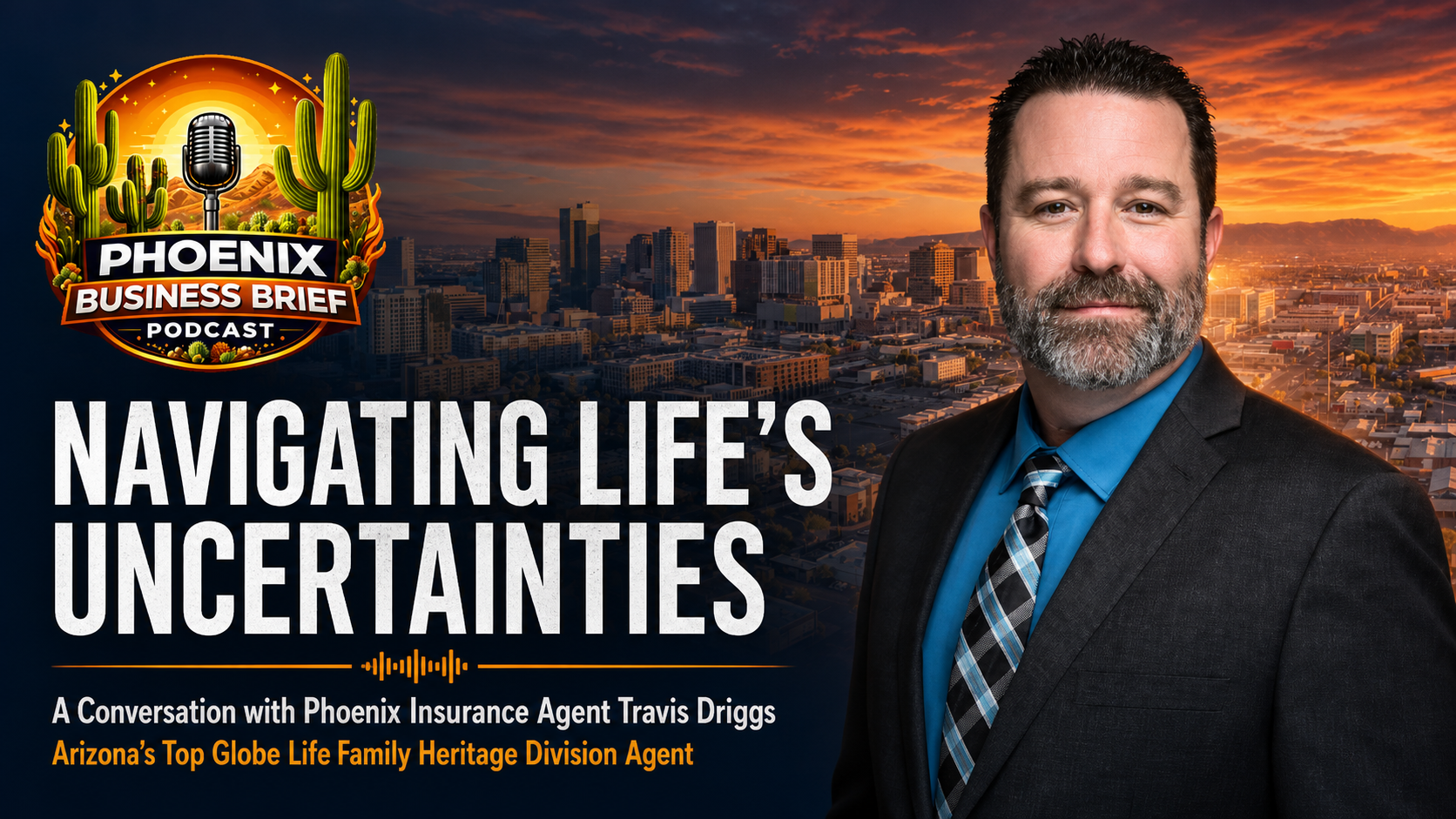
Phoenix Business Brief Podcast episode featuring Travis Driggs discussing Navigating Life's Uncertainties with Travis Driggs: Insurance Insights

In the latest episode of the Phoenix Business Brief podcast, host Bryan Hyde speaks with Travis Driggs, a licensed agent at Globe Life's Family Heritage Division. Driggs, recognized as the number one insurance agent in Arizona, discusses the importance of supplemental insurance for unexpected life events, sharing personal experiences that highlight the financial protection such coverage can provide. He emphasizes the need for awareness and education regarding insurance options to help individuals prepare for potential health crises and related expenses.

Navigating Life's Uncertainties: A Conversation with Phoenix Insurance Agent Travis Driggs

0:00 / 0:00

Navigating Life's Uncertainties: A Conversation with Phoenix Insurance Agent Travis Driggs

Navigating Life's Uncertainties: Insights from Phoenix Insurance Agent Travis Driggs

PHOENIX — Travis Driggs, a licensed agent with Globe Life's Family Heritage Division, has become the top insurance agent in Arizona by focusing on educating clients about the importance of supplemental insurance. In a recent interview on the Phoenix Business Brief podcast, Driggs discussed his journey, the impact of unforeseen health issues, and the necessity of financial preparedness.

Driggs specializes in supplemental insurance, which covers significant life events such as cancer, heart attacks, strokes, and accidents. He emphasized that many people underestimate the likelihood of these events affecting their lives. “It’s not if it’s going to happen to you or all of us, it’s when,” Driggs said. He highlighted the increasing prevalence of serious health issues, noting that “cancer is just—the numbers are skyrocketing.”

His personal experiences have shaped his commitment to the industry. Driggs became involved in insurance after caring for his father, who suffered a broken hip during the COVID-19 pandemic. He realized that supplemental insurance could have significantly eased the financial burden during that challenging time. “For literally pennies a day, he would have had over $180,000 in claims,” Driggs explained.

Driggs also shared a poignant story about his mother, who fractured three vertebrae in her back. Thanks to her insurance coverage, she received financial support that allowed her to maintain her independence. “The money from her claims enables me to hire people to help her,” he said, illustrating the peace of mind that comes from having adequate coverage.

The conversation shifted to the common misconceptions surrounding insurance. Driggs noted that many people are either underinsured or unaware of their options. “The most common thing I see is underinsured people who have no health insurance,” he said. He urged listeners to consider the financial implications of unexpected health issues, emphasizing that having insurance is about peace of mind rather than fear.

Driggs explained that evaluating one’s insurance needs requires a personalized approach. He often asks clients about their financial situation and potential risks. “What would it look like if you had six months off work?” he poses to clients. This tailored approach helps individuals understand their unique needs and the coverage options available to them.

The agent also stressed the importance of obtaining insurance at a younger age, as rates are typically lower and remain stable over time. “The younger you are, the less it’s going to cost you monthly,” Driggs said. He provided an example of how a 24-year-old could secure comprehensive coverage for under $300 a month.

Driggs acknowledged that many people are hesitant to consider insurance because they believe they are invulnerable to health issues. “It’s just an assumption immediately of this is insurance. I don’t need it,” he said. He emphasized the need for education in overcoming this mindset, noting that many clients express regret for not having coverage sooner.

The discussion also touched on the financial strain that medical issues can impose. Driggs shared his own experience with a car accident that resulted in substantial medical bills. “Medical debt is the number one cause of bankruptcy in America,” he noted, highlighting the urgency of having supplemental coverage.

Driggs recounted success stories from his clients, including a woman named Marella who faced a life-threatening allergic reaction after eating a peach. Thanks to her insurance, she received over $8,000 to cover her medical expenses. “Had she eaten that in the middle of the desert, it could have been a completely different story,” he said.

As the conversation concluded, Driggs encouraged listeners to take action and seek out insurance options. He provided his contact information, inviting anyone interested to reach out for more information. “Education is key,” he said. “I’m just trying to educate you on what is available.”

Travis Driggs continues to advocate for financial preparedness in the face of life's uncertainties, emphasizing that insurance is not just a safety net but a crucial component of overall well-being.

Interview Q&A

Q&A: Navigating Life's Uncertainties: A Conversation with Phoenix Insurance Agent Travis Driggs

Navigating Life's Uncertainties: A Conversation with Travis Driggs

Q: Who is Travis Driggs and what does he do?

A: Travis Driggs is a licensed agent with Globe Life, specifically in the Family Heritage Division, where he provides supplemental insurance for major life events such as cancer, heart attacks, strokes, and accidents.

Q: How did Travis Driggs become the number one agent in Arizona?

A: Driggs attributes his success to educating the public about insurance and building strong connections within the community, including partnerships with local businesses like Valle Luna.

Q: Why is it important for people to consider supplemental insurance?

A: Driggs emphasizes that it is not a matter of if a major health issue will occur, but when. He notes that many people underestimate the financial impact of events like cancer or accidents.

Q: Can you share a personal experience that motivated Travis to enter the insurance field?

A: During the COVID-19 pandemic, Driggs cared for his father who suffered a broken hip. He realized that supplemental insurance could have significantly eased the financial burden during that time.

Q: How does Driggs help clients evaluate their insurance needs?

A: He conducts personalized assessments by asking questions about potential life scenarios, such as the impact of being unable to work for six months, to tailor coverage to individual needs.

Q: What are the costs associated with the insurance policies Driggs offers?

A: Coverage can start as low as 5 cents a day for minimal protection, with maximum coverage options around $12 a day. Driggs highlights that these policies can provide substantial payouts during critical times.

Q: How do life stages affect insurance needs?

A: Driggs explains that insurance needs change over time. Younger individuals typically face lower premiums, and securing coverage early can lead to long-term financial benefits.

Q: What should someone do if they want to start the insurance process?

A: Driggs encourages individuals to reach out to him or another insurance agent to get educated about available options and the value of coverage.

Q: What are some common misconceptions people have about insurance?

A: Many people assume they do not need insurance because they believe they are financially secure or that bad things won't happen to them. This mindset poses a challenge for insurance agents.

Q: Can you share a success story from your clients?

A: Driggs recounts a client named Marella who, after being protected by his insurance, faced a severe allergic reaction. The coverage allowed her to claim over $8,000 for her hospital expenses.

Q: How does Driggs view the current medical industry?

A: He acknowledges the high standard of care but believes the system is flawed, citing medical debt as a leading cause of bankruptcy in America.

Q: What is the best way for people to contact Travis Driggs?

A: Individuals can reach Driggs at 602-303-6528 or via email at tdriggs.fhl@gmail.com. He is also active on Facebook.

Q: What motivates Travis Driggs in his work?

A: Driggs feels a moral and ethical obligation to educate people about insurance and help them secure financial peace of mind in the face of life's uncertainties.

Key takeaways

  • It's not if it's going to happen to you or all of us, it's when.
  • The money from her claims enables me to hire people to help her, to give me the ability to do what I do and get back out there.
  • It's really just a matter of giving you that peace of mind that if and when something does happen to you or your loved ones, you're not going to have to worry about that.
  • Most people hear insurance sales, that's 2 bad words just right there. Shut down, guards up.
  • Medical debt is the number one cause of bankruptcy in America with health insurance, even because of the lost wages.

About the guest

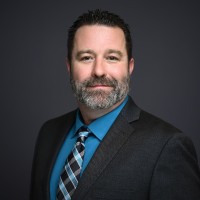
Headshot of Travis Driggs, Licensed Agent at Globe Life, Family Heritage Division

Travis Driggs

Licensed AgentGlobe Life, Family Heritage Division

As the #1 agent in Arizona Travis educates countless people on how to best protect themselves against financial ruin due to major health issues. He chose GL/FHL ad they absolutely care about people and help countless families.

Full transcript

Show full transcript
[00:00] Bryan Hyde: Welcome to the Phoenix Business Brief podcast. I'm Bryan Hyde, and today I'm joined by Travis Driggs. Travis is the number one agent in Arizona. And Travis, when I say the number one agent, I don't mean secret agent. You, you, you sell insurance. In fact, let me, let me ask you, I don't mean to put all the burden on you, but tell us a little bit about who you are and, and how you came to be the number one agent in, in Arizona. [00:24] Travis Driggs: Absolutely. I appreciate that. And yeah, I don't want to be a secret agent. I want to be an agent that everybody knows. That, that's the antithesis of what I want. So love that. Basically, I am with Globe Life, a division called Family Heritage. What we do is we provide supplemental insurance. So cancer, heart attacks, strokes, accidents and injuries, the big life events that seem to get so many of us nowadays. Becoming the number one agent in Arizona is simply just something that I'm proud and honored to do that's for our team, for Globe Life and Family Heritage. I did that in a couple of ways. One, getting out and educating the masses the best that I can, trying to share what we do and simply educate people. And then I've made some pretty good connections here as well. I don't know if it's allowed for me to say or not, but there's a local legend restaurant, Valle Luna, or Valle Luna to some people. They're a partner of mine. I know them very well, and I've gone in and worked with a lot of their employees and a lot of their people. And It's just given me growth that's, you know, something I, I didn't see coming here in Phoenix, but has been a wonderful thing. And it just took me up in numbers and volumes and clients and really helped me out in that regard. [01:40] Bryan Hyde: Now, when you talk about protecting people against financial ruin, um, you mentioned a few scenarios. I mean, cancer or major illnesses and injuries or things like that. Um, nobody really expects that that ever is going to touch their life, right? [01:55] Travis Driggs: Right. Absolutely. And it really is a matter, Brian, of it's not if it's going to happen to you or all of us, it's when. Unfortunately, in the world we live in nowadays, cancer is just— the numbers are skyrocketing. Heart issues, it's genetic, it's hereditary, it runs in your family. Accidents and injuries, nobody wakes up and says, gee, I'm going to go break my leg today and spend a week in the ER and have surgery. So one or the other is going to impact everybody at some point. And That's part of what got me into it. During COVID my father fell and broke his hip. I didn't know this existed back then, and I was his caretaker. Like, I was working a full-time corporate job at that time and cooking and cleaning and caring and just doing everything for him. He never really walked again. And when I started looking into this field, working the numbers for literally pennies a day, He would've had over $180,000 in claims in the 18 months that I took care of him. That would have changed his life and changed my life, take that burden off of me. I hate to say that, but it's hard caring for parents in that situation. And then my mother, God bless her, and thankfully I was doing this shortly after I got into the industry, she simply just stood up from the couch, fell forward, and fractured 3 vertebrae in her back. [03:16] Bryan Hyde: Ooh. [03:17] Travis Driggs: Same situation except she was covered and I was able to help. So what that looks like for her, rather than still being a widow on Social Security trying to figure out how am I gonna pay my bills this month and taking care of her and helping with the cleaning, the cooking, and all of that, the money from her claims enables me to hire people to help her, to give me the ability to do what I do and get back out there. And it's not a matter of, hey, congratulations, Mom, you broke your back. But the fact that she had one of these policies changed the entire rest of her life. her financially stable now to be able to take care of herself and move forward. So that really keeps me going at what I do, you know. [03:57] Bryan Hyde: I, I can see why, you know, we tend to live, you know, with blinders of everything is great, it's going to stay this way indefinitely, until something happens. And so let's, let's make the case for why people need to— not so much to, to scare themselves or to be paranoid, but why do they need this awareness that This kind of coverage, first of all, is available, and secondly, it is going to be needed at some point. [04:21] Travis Driggs: Absolutely. Um, I agree with the— it's not a matter of wanting to scare people into this, and there's so many benefits and ways to help. But the people— and the most common thing that I see is either A, underinsured people who have no health insurance, they're living week to week. You got the, the single mom with 3 kids that I, I talked to who had lost a child from leukemia. She's working her 3rd job at Subway just to make sure she can pay the rent this month. You've got the people who as well are very well off and hey, 6 months, 8 months not working is not gonna hurt them. At the same time, you've worked hard for that, you've earned that, you've made that life. Do you really want to have to give that all away and your security simply because life happened and you got hurt or you got sick? It's not a matter of you've gotta have it to make sure you can survive or you gotta have it so you don't lose your money. It's really just a matter of giving you that peace of mind that if and when something does happen to you or your loved ones, you're not going to have to worry about that. You can focus on recovering. You can do what you need to do to get better, to heal, and not have that additional stress of the financial situation looming over your head. [05:30] Bryan Hyde: So, Travis, walk me through the, the process of how one evaluates the likely risks that they'll face. I mean, look, I got a pretty good imagination. There's a lot of stuff I could imagine going wrong. But how do you help people find, you know, realistically, how much coverage they're going to need, you know, to have the peace of mind of knowing, hey, I'm covered? [05:50] Travis Driggs: Absolutely. That's, that's a great question, and I love that. And that's part of when we would sit down with somebody and go over what we have. You know, I've got the presentations, I've got the numbers. A lot of it is personalized questions. So if it were you and me sitting here going over this, Brian, it would be, you know, what would it look like if you had 6 months off work? What kind of protections do you have in place? Would that impact you? How would that impact you? impact you. What kind of bills do you have? What kind of savings and investments do you have? To really understand you and your personal needs and make sure that I'm tailoring it the right way for you. With the policies we have, there are so many different levels of coverage where it can literally be 5 cents a day to give you minimal coverage, or it can be $12 a day if you need maximum coverage. A lot of people don't understand as well, and that's part of the educating the masses. This is not your normal health insurance. This is not a $2,000 a month, a $1,500 a month thing. It literally can be $20, $30, $40 a month that can result in 5, 6-figure payments to you as you're going through this process. One thing I want to throw out there before I, I forget it or get sidetracked with it— family heritage as well. Our policies are all included a 100% return of premium. What that means to you is at the term of your policy, we give you back 100% of the money you have put in. If you have had claims that is taken out, for example, if you've contributed $20,000 and you've taken $5,000, we still give you that $15,000 back. If your payment over those years was $20,000 and you've taken out $250,000 in claims, you don't get anything back, but you don't owe anybody anything either. So that's another amazing thing about the company that really got me invested in this is all insurance companies I feel should be that way. They're out there doing very well and taking the money from so many people and paying those that need it. But our company is understanding and kind and caring enough to actually give it back to those if they're not using it. And that's a beautiful thing. [08:00] Bryan Hyde: This may seem like kind of a strange question, but I'm curious, with the different stages of life, does a person need to evaluate, you know, what kind of coverage they need? I mean, when, when they're, for instance, young married couple just starting out versus, you know, a couple that's now providing care for elderly parents, it seems like those needs be different? How, how do you go about making sure they have the coverage that they need? And does it actually change over the course of their lives? [08:26] Travis Driggs: Yeah, that's another great question. I can look at that from so many different angles. First answer I would have is, of course, there are different needs and different things that come with age and with careers and occupations. However, at the same time, the younger you are, the less it's going to cost you monthly. your rates never increase. A 23-year-old, so for example, my son, he's a 24-year-old veteran, has the VA, has health insurance, is going to nursing school. When he got out of the Army, I set him up with everything we've got, top tier max that I can. That's costing him less than $300 a month. With our company in 25 years, he's gonna get that all refunded. And at 48 years old, he's gonna be able to stay at less than $300 a month. And God willing, he goes another 25 years, comes 73 years old, not only does he get the money back, but he stays at $200-some per month. A Big Mac's going to cost us $200 a month in 50 years. So to answer your question, yes, there are different needs, different ways people should be protected by age, career, et cetera. But the younger you do it, the better off you're going to be because again, something some way is going to happen at some point. [09:39] Bryan Hyde: And for those who— I know you had mentioned earlier that sometimes just getting people to listen, to understand. We don't want to believe anything bad is going to happen, but for those who do hear that and recognize, you know what, this makes sense, what's the first step that they need to take to get that process started? [10:00] Travis Driggs: Of course, reach out to me if that's somebody that, you know, sees Who I am, what I do. You have my information, I'm assuming, through this podcast. If it's not me, reach out to somebody. There are people that do this in every corner of the world. I'd love you to at least be educated. Of course, I'd love you to be my client and be able to help you and take care of you. I do what I do because I feel morally and ethically obligated to do it at this point. But education is key. Most people hear insurance sales, that's 2 bad words just right there. Shut down, guards up. I don't want to hear it. I'm not trying to sell you. I'm not trying to pitch you. I'm just trying to educate you on what is available because most people don't even know this exists, let alone the value behind it and what it can do for someone. [10:47] Bryan Hyde: I imagine you have probably talked to a pretty good cross-section of people through the course of your work. What are some of the common reasons they give you for why they never get around to considering this kind of stuff? Is it just optimism or is there something more at play? [11:03] Travis Driggs: A little bit of optimism. Yeah, that's not going to happen and I'll be okay. Or, oh, I can survive a couple of months without work. Or, oh, I've already got insurance. I'm fine. My husband has it. My wife has it. It's again just an assumption immediately of this is insurance. I don't need it. I don't want it. I'm okay. And that is a big thing for us to overcome in our industry. That's probably the biggest hurdle. Is again, just to be able to educate and give 5, 10 minutes to talk and explain. And the other part is just getting to people before it's too late. Every single day when we're out doing what we're doing, we talk to one or more people where it's, gosh, I wish you were here a month ago. I wish you were here a year ago. When people have experienced it and lived it, they understand and they'll listen. Those that haven't felt that hard time yet most often just shut it down from optimism and faith that it's going to be okay. [11:59] Bryan Hyde: You know, I don't mean to bag on, you know, the medical industry. I, you know, we have some miraculous things available to us, a standard of care that is the envy of the world. However, if you have not had to go through a major medical issue, I think a lot of people really don't understand just how quickly the expenses can pile up. [12:20] Travis Driggs: Absolutely. And I have to be careful with not wanting to bag on the medical industry as well. I agree with what you said in the positive, but it is a broken system in my opinion. There are a lot of things that just don't sit right for so many people. Medical debt is the number one cause of bankruptcy in America with health insurance, even because of the lost wages. Myself, for example, I tell you this, this is something I've experienced the last year that has just blown my mind. Last July, I was sitting at a red light just heading home after my day, and a lady who was playing on her phone just Came into me from behind going about 60 miles an hour, they said, didn't even try and stop. Put me in the hospital for maybe 8 hours. Like, I was not severely hurt, but I had torn ligaments, the concussion, blown out eardrums, 10, 12 minor injuries. When I left the hospital, they give me the statement that says, you owe us $27,000. But since you're poor, because I don't carry private health insurance because I just don't believe in that part. Since you're poor, we'll take $7,000 in call it a deal. Going through my lawsuit and with time while my lawyer is out there trying to resolve all of this, just last week I got a collections letter from the hospital that will settle that for $600. How many people pay that $27,000 upfront? How many people without insurance pay that $7,000 upfront? For the record, the claims from that accident for me were under, just under $13,000. [13:57] Bryan Hyde: Wow. [13:58] Travis Driggs: You do the math and tell me who's winning and who's losing in that situation. So yeah, that, that's a tough one, man. I could go on for a long time on that. [14:06] Bryan Hyde: Talk to me about the people who you have connected with who have taken the steps to have these safeguards in place and who ended up needing it. What— I'd love to hear some of the success stories or, you know, the triumph of people who had it before they needed it and then were grateful for that. [14:25] Travis Driggs: Absolutely. I've mentioned just personally my mom, myself. One of my favorite stories, so to say, if that's the right word to use here, but it's a client I have named Marella. I met her very early on in this career. Marella has since had me protect 7 of her family members. She's had me come over for family dinners for Thanksgiving. She's just become a friend. Marella and her husband were driving back from California on vacation. This is probably 7, 8 months now at this point. She's 50 years old and she has never eaten a peach. She's about an hour outside of LA, I think it was, where they were coming back, middle of nowhere. She took a bite of the peach and was like, eh, I don't really like it. So she set it down. A few hours later, as she's getting closer to home, she's really hungry. She's like, I need something, getting that hangry thing going on. So Mirella finished that peach about 15 minutes from home. [15:18] Bryan Hyde: Wow. [15:19] Travis Driggs: 5 minutes from home, Mirella could not breathe. She was extremely allergic to that peach, was not able to breathe. Thankfully, she waited until she was in town. They got her to the hospital. She spent 2 days in ICU over that. She ended up getting a claim of just over $8,000. So that covered every expense she had. The point of that one is that's just a pretty miraculous story where I see the hand of God in it, that had she eaten that in the middle of the desert, 2 hours away from nowhere, Could have been a completely different story. I have a friend from high school that got set up with me just out of the faith and the trust of, I get it, I hear what you're saying. He got diagnosed with colon cancer shortly thereafter. He's 3 months into that, still filing claims with me. I've got another friend that unfortunately didn't call until after a heart attack, so that's a hard one to deal with. But It just goes on and on. Those are my personal stories that stand out, but we've got thousands of clients all across the country and stories, and it's just, it's unbelievable how much amazing and good this can do for people. [16:26] Bryan Hyde: Travis, it really strikes me that a lot of the stuff we spend our lives worrying about, you know, there's, you know, a comet is going to hit the Earth. I don't know, the big, big stuff that we worry about that keeps us up at night. It's not that. It's the stuff like you're describing. These are things that just out of the blue on a Tuesday afternoon, boom, You know, the lady on her phone hits you from behind, or, you know, allergic to a peach. I, I guess the, the, the key here, what I'm asking is, since we don't know what's going to happen, you know, we do have options. This doesn't mean that we're, we're helpless. Um, tell people the best way to get a hold of you through Globe Life Family Heritage Division. What's, uh, what's the best way to reach out to you? [17:07] Travis Driggs: Absolutely. First and foremost, I don't know if a lot of people nowadays still know how to use a phone, but when you dial a number You can call me. I'll likely answer unless I'm sitting with the client, but my phone number there, it's 602-303-6528. You're more than welcome to text as well. That's fine too. My email for business is tdriggs, so T for Travis, driggss.fhl@gmail.com. I'm also on Facebook. I've got a business page out there. The Check Moon Valley group is there. I'm involved in that. So you'll find me on Facebook a lot. I don't do a whole lot of the other social media stuff because I don't have time for it. And I'm of that older generation that Facebook's just the one we got stuck with. So that's where we're all at. [17:54] Bryan Hyde: Again, we are talking with Travis Driggs. He is a licensed agent with Globe Life Family Heritage Division. I'm going to throw this out there again, number one agent in Arizona. Travis, thanks so much for joining us on the Phoenix Business Brief podcast. [18:07] Travis Driggs: Thanks for having me, Brian. It was a pleasure and appreciate your time as well, sir.

Filed under

Related episodes