Show full transcriptHide transcript
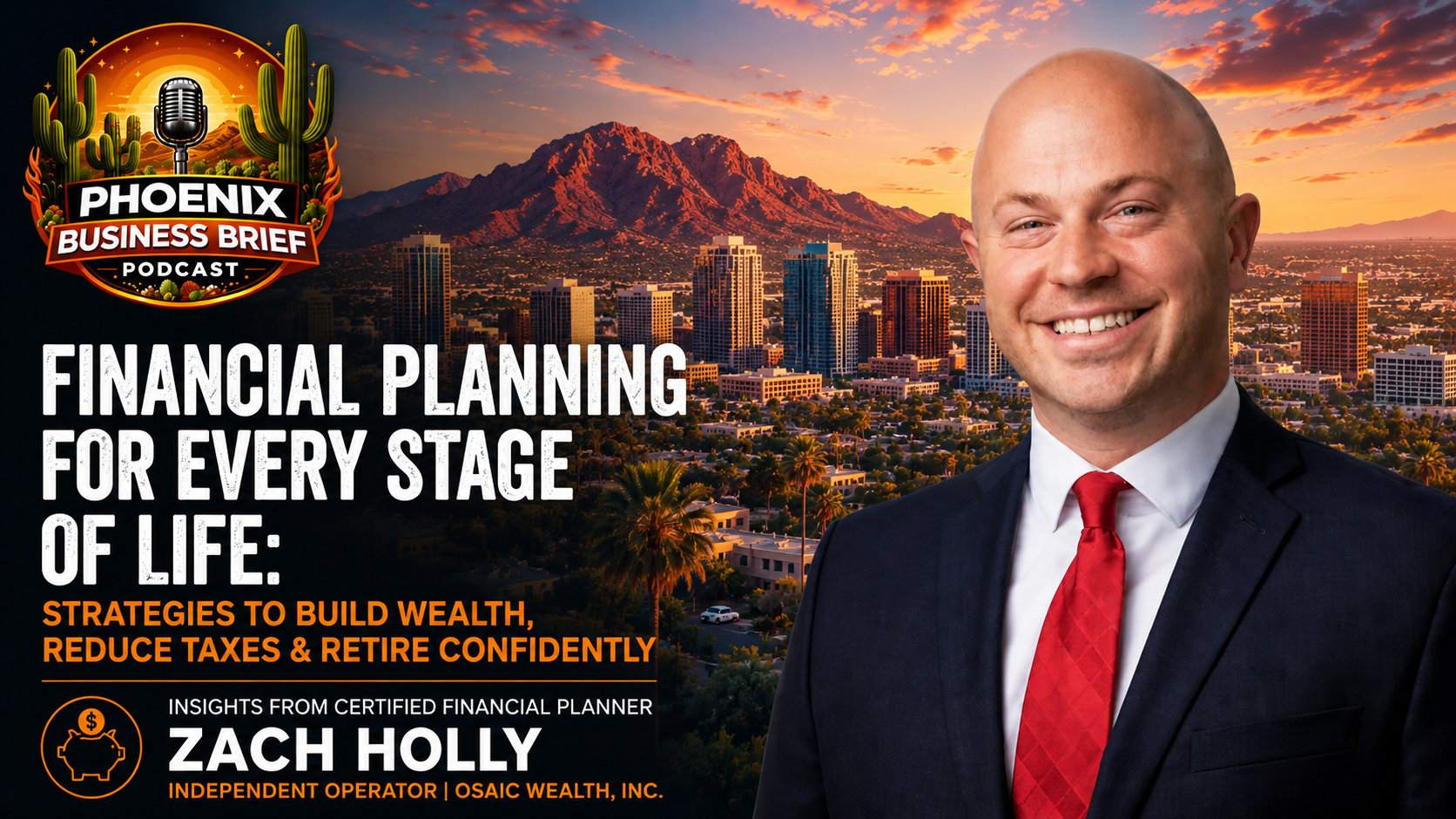
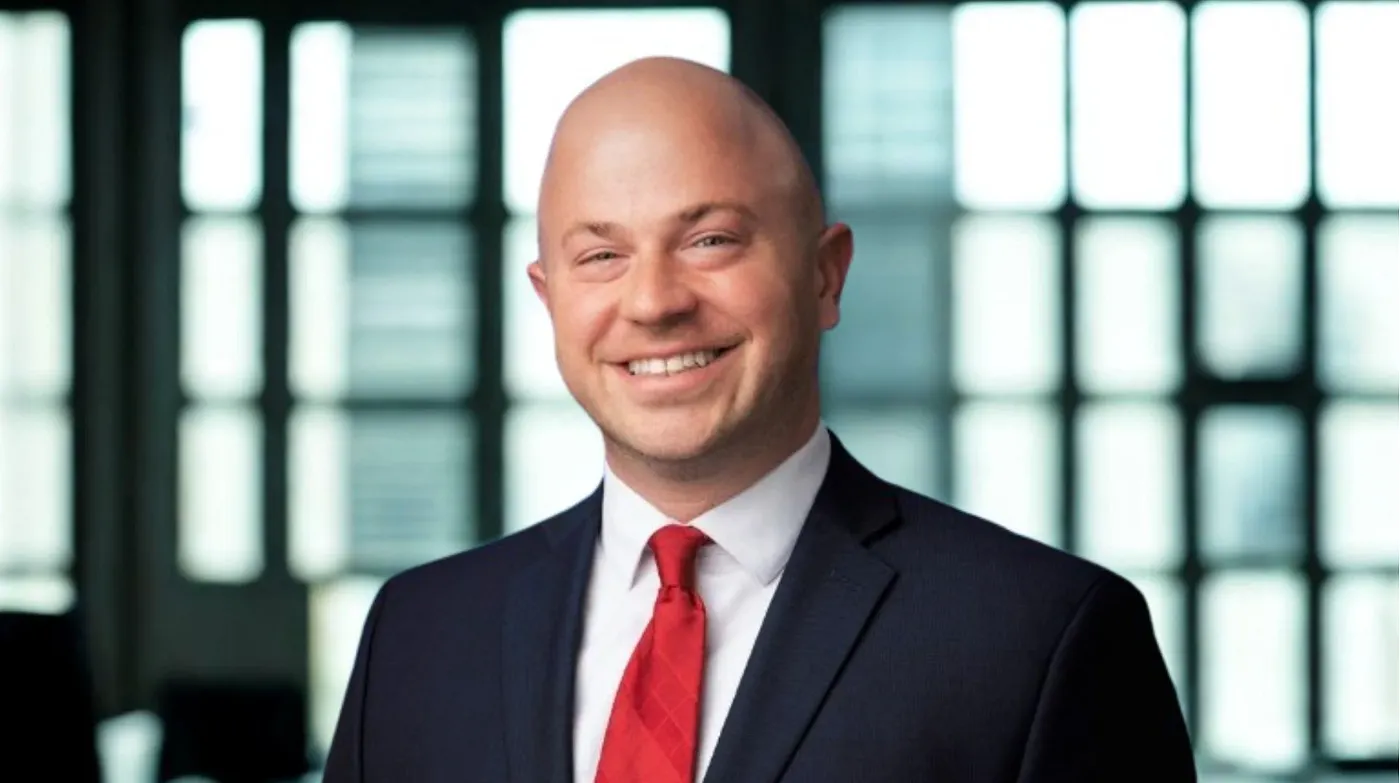
[00:00:00] Welcome to the Phoenix Business Brief Podcast. I'm Brian Hyde. Today I'm joined by Zach Holly. Zach is an independent operator for Oaic Wealth Incorporated. Did I say that right? Did I give you the right title there, or do, do you need a battlefield promotion here? No, that sounded great to me. A, a certified financial planner, as I did do a lot of work to, to earn that designation for myself.
And, and let's talk a little bit about your background for, for people who were meeting you for the very first time. Zach, tell us about who you are. Tell us about what you do. Well, I've been in the business for about 13 years now. Um, started with a company called Edward Jones, where I had an office in Chandler, Arizona.
Um, really just worked on improving myself as a financial planner, um, growing up. It's something my father has done. He's been in the industry as a financial planner for 40 plus years. Um, I saw the experiences he got to go through and. And really what a career it's turned out for him and his [00:01:00] family and, and realized it was something I'd like to do.
Um, so the past decade of my life has really just been improving my, my financial knowledge, my, my planning knowledge to help my clients, you know, reach the retirement goals that they're, they're really looking for. Yeah, this is a pretty broad topic. So when we talk about helping people reach their financial goals, um, let's, let's give this some structure in terms of, um, different stages of life probably mean different financial goals.
Um, do you wanna walk me through some of the things that need to be on the top of people's minds, regardless of where they are, what stage of life they happen to be in at the moment? Happy to. And if you're 20 in your twenties or thirties, even forties, um, what a great time to start. You know, time is your friend with investing and that's what I help people do.
Help out, help them set up an investment plan that will get them the growth they need if they're young and just starting out. Um, for my clients that are in their fifties to sixties, seventies, I help them get the [00:02:00] growth while. Balancing income to make sure they can replace the income, um, that they had in their working life, in their retirement life.
Um, I help out with 4 0 1 Ks, which are company and retirement accounts, or individual IRAs, um, which are retirement accounts for self-employed business owners and small business owners, which are really. Some of my favorite people to help out are those small business owners that, that don't have a corporation forcing them to save for retirement.
Um, where I can put together a financial plan, help the owner as well as their employees, start saving for retirement with an IRA. So, Zach, as I look around and, and I'm not a certified financial planner, so I'm, I'm seeing this through a different lens than you are, but I get the perception that, that financially.
It feels like the, the earth is kinda shifting under our feet a lot of the time. We, we don't know, you know, with, with inflation and, and just some economic uncertainty, uh, it can be hard to know what you can count [00:03:00] on. Are there some tried and true things that to that are principles that apply regardless of what is going on economically at any given time.
Uh, there are, and one would be to avoid the noise of these different news stations. You know, every day there's something new that could keep you from investing or, or make you want to move, you move your money to the sideline. But if you look back over the years, the decades there have always been. Issues like that in the world economy, that would make you pause and maybe not want to invest.
But if you take a look out and work with someone like, like myself, who is gearing a financial plan towards how long you have towards retirement. The best thing to do would just be patient if, if you have quality investments and somebody watching over your investments for you, patience is the key. It's my favorite Warren Buffet quote is the stock market is where patient people go to take [00:04:00] money from.
The impatient and, and my job is really to help people be patient with their investments. I suppose everyone has different goals too, financially, um, is. It, I obviously there, there can't be a one size fits all approach, but, uh, but is there, is there kind of a common goal line that, that people should be striving for?
Whether that's, you know, either a comfortable retirement or just knowing that, uh, you're, you're going to be debt free when you reach that stage, or I, I don't even know what, what the other possibilities might be. Definitely, and really both, you know, a comfortable retirement is different to everybody. Uh, a lot of times it means matching your income.
You know, where we're building a plan where you can keep your current income, because that's the lifestyle you're used to in retirement. And if we can get you the growth you need some guarantees that you need, uh, to help replace that income, um, then you're, you're doing really well and you're on the right track.
So talk to me about, uh, you [00:05:00] know, you had, you had mentioned that, uh, you know, you, you help people with, with different retirement goals and different, uh, uh, accounts. I wanna ask you about, uh, taxes and, and in particular the, you know, the perception, at least from, from where I'm sitting, is that, uh, taxes never seem to really go back down.
They, they do seem to ratchet up from time to time. Um, what are some of the things people need to think about as, as they are saving for the future? Um, regarding taxes? Do, do you. Favor, you know, either tax deferred or tax free savings. What? What's your take on that? I have a conversation with my client about their current income.
Um, a lot of it depends on if they are in a high tax tax bracket currently, and this leads to us either doing a traditional IRA or a Roth IRA, where there are different tax consequences later on in life. Um, really a mixture of both diversifying your tax situation now and diversifying it later on in retirement, um, is a great way to do things.
So you have a, a bucket of both, [00:06:00] a bucket of after tax money for certain expenditures, and, uh, a bucket of money that hasn't been taxed yet because tax deferral growth. Tax deferred growth is also a, a key component to really growing your account quickly during those, those years when you are trying to accumulate, is there a common mistake that, uh, that you run into more often than not with, with people who are just starting to make their, their financial decisions?
And if so, what would, what would that mistake look like? Uh, there are, and it's staying on the sideline. It's letting political pressure and other economic pressures keep you on the sideline and waiting, trying to time the market for when you feel is the best time versus just putting your money in and keeping your money in there for as long as possible.
It's, there's no way to time the market. It's all about. The time your money spends in the market is proven just to be the best way, um, to grow your money over that time period. [00:07:00] And talk to me about the, the power of getting started early. I know you alluded to that earlier, that time is on your site. If you get a start, uh, for instance, uh, when it comes to, to compounding interest or, you know, the, the rule of 72, um, how, how does it pay off to, to get in on that early.
It's all about that comprehend interest like you just mentioned, where if you're 25 years old and you want to be a millionaire by age 65, at age 25, you have to save somewhere in the ballpark of, uh, like $400 a month, age 35, you're saving close to seven or $800 a month, and age 45 you're, you're up above a thousand dollars a month that you need to save.
Um, so I know it's tough when you're young starting a family and really just starting to find yourself and find your career, um, but being able to put anything away in those mid to late twenties. Makes a huge difference, um, as you go into your thirties and forties and try and reach some of those [00:08:00] monetary numbers that you're looking for.
Zach, I know, uh, there's a common question that people will sometimes pose, and that is if you could go back in time and give any advice to your 18-year-old self, what would it be? And, and particularly I would ask you that in a, in a financial context, uh, for people who have that chance to go back, what, what kind of a message would be most, uh, most needful at that age?
Save early and save often starting that 401k at, at that company, um, that you start out in your early twenties. Um, if you can start your 401k, then put money away each paycheck, keep building it up. Um, make sure you have an emergency fund. That way when you do change jobs, you don't have to go after that old 401k because then there are taxes and penalties and you're shooting yourself in the foot.
Um, so save as you can. Make sure you have an emergency fund, um, that way that that old 401k can transfer with you to your new company as you grow, um, in your career. And, and [00:09:00] keep on saving. Don't waste those couple years that you spent saving in your 401k 'cause you're gonna lose, uh, a big portion of it to taxes and penalties anyway.
And is there something to be said for, for like, I think you'd mentioned Warren Buffet saying that that patient approach, you know, people who will sit back and let interest do its job, um, are they the ones who find their money working for them? They are, and that's, that's what you're doing is getting your money to work for you.
You're paying yourself first when you're contributing to 401k because the money's going in there before you even see it in your paycheck. And you're, you're letting your money work for you by it compounding itself each year and. 30 to 40 years of compound interest makes a huge difference in, in what your retirement looks like.
And, and, you know, for, for those people who are procrastinators, by the way, I, I'd be one of those, I joke around sometimes, you know, um, retirement's not gonna be an option. I'll probably end up working through lunch on the day of my funeral. Is it ever too late to start [00:10:00] putting aside something or to, to start, uh, taking responsibility, you know, for, for whatever lies ahead.
Luckily, it's absolutely never too late. Um, you are not alone where people will be working longer, we're all gonna be living longer. We're all probably gonna be working longer. Um, so it's never too late. Um, I come up with plans that are. Four people that are later in life starters for retirement all the time.
And while we might not be able to replace their income or give them some dream retirement, if someone has a, a nest egg come retirement time of 50, a hundred, anything like that, a thousand dollars, it's still so much better than just trying to live off social security. Um, ha having that nest egg and having it grow to be able to supplement some of your income.
I mean, it makes a huge difference even if you are having to cut down your lifestyle a little bit. And what are some of the things that you would warn people to absolutely stay away from, no matter what stage of life they happen to be [00:11:00] in? These get rich quick schemes. They seem to be popping up more and more.
Um, crypto, um, is one of 'em. Um, I don't necessarily think that's a get grit, get rich quick scheme or anything like that as, um, there are some technology advances and things like that that may help out in the future. Um, but for now, I mean it's all speculation. Um, so crypto is one of 'em. The other that is becoming more and more popular are these prediction markets.
Um, it's really incredible the amount of things that you can bet money on, um, in a, a Robinhood platform, for example, where I can bet on. What the high weather in LA is gonna be tomorrow if I really wanted to in Robinhood. Um, it's things like that, that are, are quite scary and, uh, and tough to see because the ways that myself and other certified financial planner help our clients invest are tried and true [00:12:00] to get you to the place you need to be financially.
Um, and if you stick with them, they're. They're going to work over time, um, as long as they're geared towards your goals and have proper investments inside of 'em. So, so those two, along with a couple other are things that definitely do scare me in the financial world. Given the amount of time and effort that it took to, to become a certified financial planner, what do you wish more people understood about what you do?
Just that we're here to help, you know, uh, there are bad actors in every field. Um, certified financial planners. We go through a whole designation to make sure we are fiduciaries. We are. Obligated to do what is in the best interest of our clients. Um, so getting a client just to open up, um, kind of like putting off a, going to a dentist, you know, putting off going to a financial planner because you don't want to see, you know, the underlying things that are happening in your life.
Um, just don't be afraid. Ask questions, um, because we're here to [00:13:00] help and help you get on financial track because, I mean, it's why we got in the business. We like to help people do that. So. Uh, people opening up about what they have going on financially would, would be a, a big ask and something I'd love for people to do more often.
Let's talk about, uh, a trend or a challenge or an opportunity that you are seeing right now in your industry. Just the opportunity to save more money. Uh, IRA contributions are increasing. 401k contributions are increasing. Same with set. There's a lot of ways, um, to put away a good amount of money for retirement that some people are unaware of.
Um, so that's been some changes that have happened with, uh, some of the, the laws that have changed over the past couple of years. Um, so that's one trend. Um, also just the types of investments we use, like exchange traded funds over mutual funds. Um, the, the, the trend towards that with financial planners, because exchange traded [00:14:00] funds, um, are, are very similar to mutual funds, but.
Exchange traded funds cost less for clients and they trade like stocks, so are a little bit more, uh, easily to move around inside a portfolio. So those trends are definitely coming up as well. And let's talk a little bit about your business. You mentioned that, uh, um, you've gone independent, um, at this point.
Um, what's the advantage of, of being an independent provider like you are? Great question and very happy with my change over the past 10 months or so since I've gone independent. Um, and really a couple changes. One, uh, being independent, uh. As a fiduciary, I truly do feel like I can do what is in my best or the best interest for my clients now.
Um, while my last corporation was great, um, there were times where you felt a little obligated to, you know, to sell a product that may make a little bit more commission, still something possibly good for the client, but definitely. [00:15:00] Push towards a direction to sell something that as an independent agent, I don't have to have that push on myself.
I know truly, um, that I'm taking my client's best interest, um, into heart. Um, so that's one big thing. The, the second is, you know, working with my father. You know, he is been in the business for 40 plus years now. Get to sit at an office with, with him, you know, 30 feet away from me. Um, so that's been a, a pretty incredible experience, um, being able to learn from him and just getting to work with him every day.
And, and what is the, what's your favorite kind of feedback to get from a client? What, what tells you that? All right. I'm definitely in the place where I need to be. Uh, you know, when I explain something, a product, an investment, and they're willing to give me the money before I even ask for it, um, that's when I know we're on the same page.
You know, I've done my research into what they were looking for. We've, we've had conversations about what will help them most. [00:16:00] And not only do they trust me with my recommendations, um, but they trust well enough. To, to offer the money before even me in the sales word world asking for a close. Alright. And one final question for you before we wrap things up today.
Um, where can, where can people find out more about Mosaic Wealth Incorporated and where, where can they connect with you? Uh, the website is fantastic. Uh, OAIC Wealth has a website. Um, mosaic wealth.com has a website that explains the company and the organization. Um, myself, uh, find me on Facebook, on LinkedIn.
Um, I have a website that will be up and running within the next couple of weeks, zachary holly.com. Um, so I look forward to that. Um. Being able to get my message out and more information to people. Um, 'cause that's, that's what my job is, is a job of informing the, the public and, and what they can do better to, to help their financial plan.
Once again, we are visiting with Zach Hawley, he's a certified [00:17:00] financial planner. Um, Zach, thank you for joining us today on the Phoenix Business Brief Podcast. Brian, thank you. I greatly appreciate your time.