Sunday, May 24, 2026 · Phoenix, AZ
Phoenix Business Brief Podcast logo
← Phoenix Business Brief

2026-02-11 · The Goldwater Institute

The Goldwater Institute’s William Beard on Phoenix-Area Data Centers and Economic Growth

with William Beard, Municipal Affairs Liaison — The Goldwater Institute
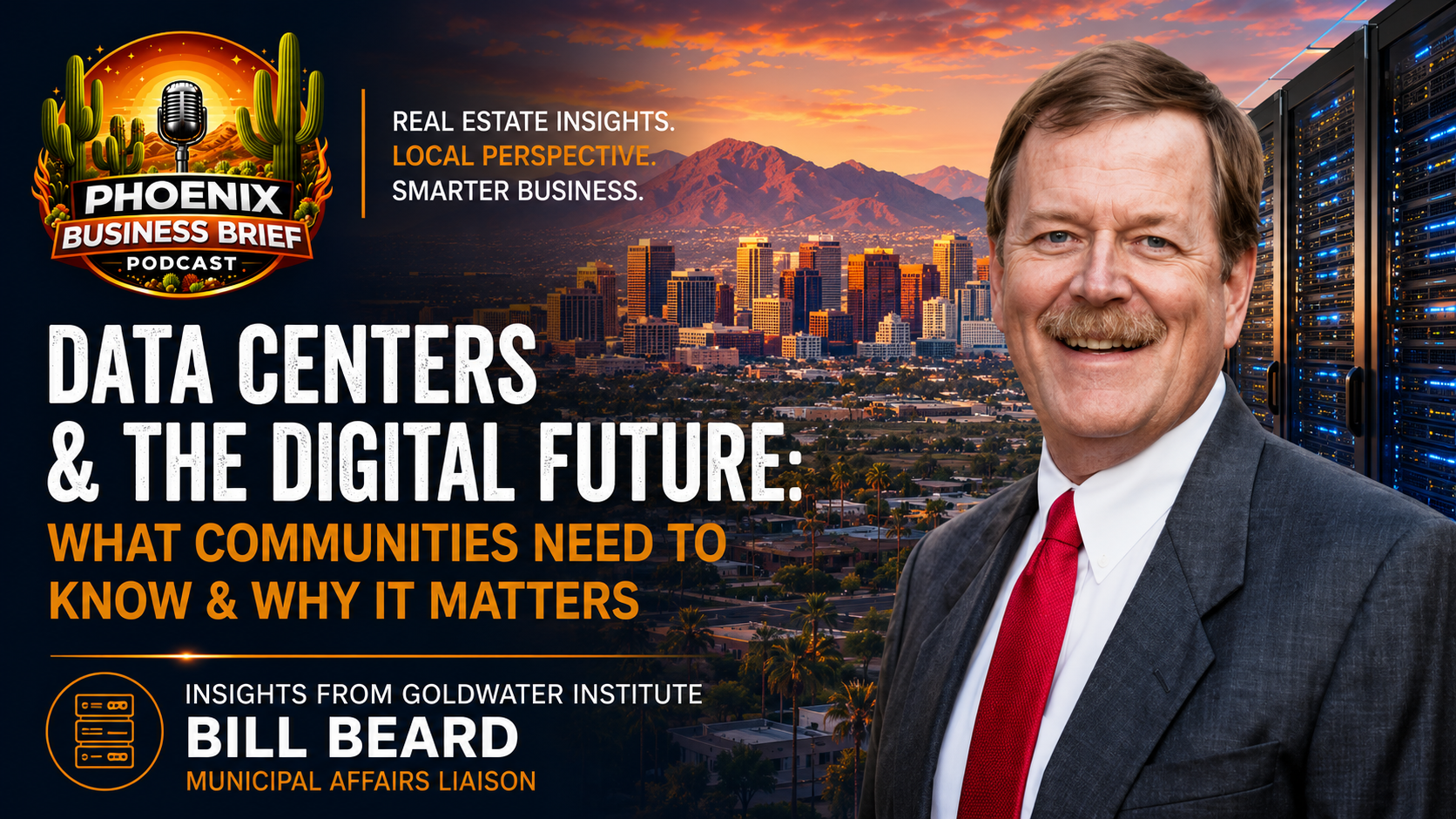
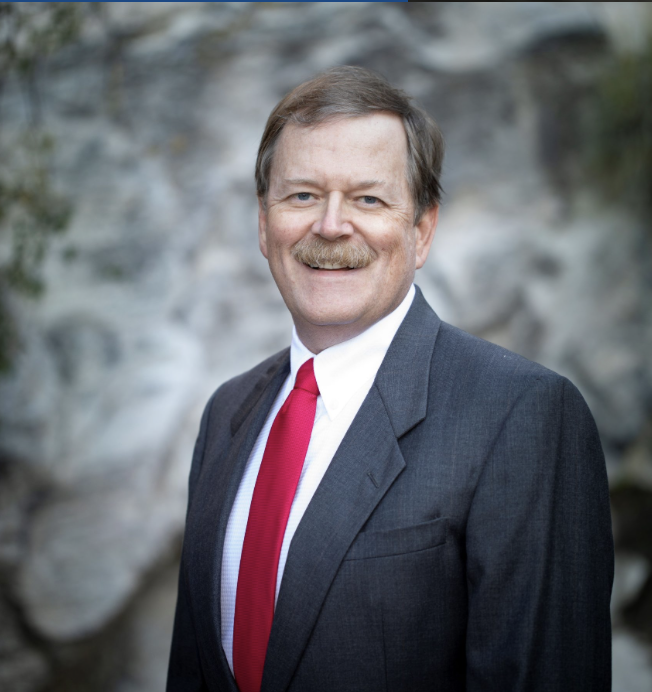
The Goldwater Institute’s William Beard on Phoenix-Area Data Centers and Economic Growth  — William Beard, The Goldwater Institute

In the Phoenix Business Brief podcast, William Beard, Municipal Affairs Liaison at the Goldwater Institute, discusses the importance of local policy in shaping public discourse and the role of data centers in the economy. Beard emphasizes the need for sound regulatory environments to foster development, particularly in Arizona, which has become a hub for data centers due to its favorable geography and legislative support. He also highlights the impact of artificial intelligence on power demands and the potential benefits of data centers in modern society.

The Goldwater Institute’s William Beard Discusses Phoenix Policy and Data Centers at Goldwater Institute

0:00 / 0:00

The Goldwater Institute’s William Beard Discusses Phoenix Policy and Data Centers at Goldwater Institute

William Beard Discusses Phoenix Policy and Data Centers at Goldwater Institute

William Beard, Municipal Affairs Liaison at the Goldwater Institute, spoke about the importance of local policy in shaping communities and the growing significance of data centers in the Phoenix metropolitan area during a recent interview on the Phoenix Business Brief Podcast. Beard emphasized the need for sound public policy that promotes individual rights and economic growth.

Beard has been with the Goldwater Institute for nearly a year, focusing on local government interactions. The Goldwater Institute, named after former U.S. Senator Barry Goldwater, advocates for free-market principles and reduced government intervention.

Local Policy's Impact on Daily Life

Beard highlighted the critical role local governance plays in people's lives. He noted that while national issues often dominate media coverage, local regulations can significantly affect individual property rights and community services, such as education. "The regulation on whether or not you can develop your individual property tends to be focused at the local level," he said.

He criticized the tendency for public discourse to overlook local matters, which can lead to governance that does not reflect the community's desires. Beard argued that effective policy should prioritize local needs and encourage individual freedoms.

The Rise of Data Centers

A significant focus of Beard's discussion was the increasing relevance of data centers in modern economies. He explained that data centers serve as digital libraries, enabling access to vast amounts of information. Beard described the current digital age as transformative, comparable to past technological advancements like the railroad and electrification.

The Goldwater Institute recently published a paper addressing the regulatory environment surrounding data centers. Beard argued that excessive regulations hinder economic development and that policies should be based on logic rather than fear. He stated, "The laws of supply and demand and the laws of a free market will out in the end."

Phoenix as a Data Center Hub

Beard identified several factors that make the Phoenix metropolitan area an attractive location for data centers. He noted that Arizona's legislation following the 2008 recession provided tax incentives, while the state's geography and climate offer advantages such as low risk of natural disasters.

He explained that the region's infrastructure, including fiber optic systems and power availability, supports the development of data centers. Beard emphasized that data centers are large consumers of power but argued that their presence can stabilize energy costs for local communities.

Power Needs and Economic Viability

Addressing concerns about data centers consuming excessive power, Beard clarified that large users of energy, like manufacturing plants, have similar demands. He pointed out that data centers often provide a steady power load, which can benefit local energy providers by leveling out capital expenditures.

Beard argued that the economic viability of power generation often relies on having large consumers to justify investment in infrastructure. He stated, "From a purely economic standpoint, a data center coming into a market... levels out your capital expenditures and your supply problems."

The Future with AI

As artificial intelligence (AI) continues to evolve, Beard acknowledged its potential impact on data centers and energy consumption. He noted that AI can enhance various sectors, including healthcare, by analyzing large datasets more efficiently than traditional methods.

Beard maintained that the benefits of AI could outweigh potential downsides, provided it is used responsibly. He concluded that the ongoing digital transformation necessitates rational policy discussions that consider the long-term advantages of technological advancements.

In summary, Beard's insights underscore the importance of local governance in shaping community dynamics and the role of data centers in fostering economic growth in the Phoenix area. The Goldwater Institute continues to advocate for policies that promote individual rights and free-market principles in the face of evolving technological landscapes.

Interview Q&A

Q&A: The Goldwater Institute’s William Beard Discusses Phoenix Policy and Data Centers at Goldwater Institute

Q&A with William Beard of the Goldwater Institute

Q: Can you tell us about your role at the Goldwater Institute?

A: I am Bill Beard, the Municipal Affairs Liaison at the Goldwater Institute. I've been with the organization for almost a year, focusing on local government interactions, including city, county, and school boards. The Goldwater Institute is a free-market policy institute advocating for smaller government and more individual freedom.

Q: How does the Goldwater Institute influence public policy?

A: We focus on free market principles and advocate for policies that emphasize individual rights and property rights. Our goal is to shape public policy through research and advocacy that promotes these ideas.

Q: Why is local and state policy important compared to national policy?

A: Local regulations have a more direct impact on people's lives than national policies. Issues like property development and education quality are determined at the local level, which is often overlooked in public discourse.

Q: How has the digital age changed public policy considerations?

A: The rise of the digital age, particularly with the advent of the internet, has transformed many aspects of life. One significant topic is the development of data centers, which serve as modern digital libraries and are essential for accessing information.

Q: What are some misconceptions about data centers?

A: Many people misunderstand data centers as unique entities. They are similar to other large power consumers, such as manufacturing plants, and their power needs can be managed effectively within the existing infrastructure.

Q: What makes the Phoenix metropolitan area a hub for data centers?

A: Phoenix benefits from a combination of favorable geography, legislative support, and the absence of natural disasters like earthquakes and hurricanes. Additionally, land and resources for development are relatively affordable.

Q: How do data centers impact local power resources?

A: Data centers require significant power, but their consumption is relatively stable, which can help stabilize local power grids. They often enter contracts with power providers that ensure a consistent supply, benefiting the overall community.

Q: What role does regulation play in data center development?

A: Regulations can create hurdles for data center development. It's important that policies are based on sound reasoning rather than fear, as excessive regulation can hinder economic growth and community development.

Q: How is artificial intelligence affecting power demands and data centers?

A: AI is a tool that can enhance efficiency and productivity. While it increases demand for data processing capabilities, the benefits of AI, such as advancements in healthcare, can outweigh the negatives associated with its energy consumption.

Q: What is the Goldwater Institute's stance on the regulation of data centers?

A: We advocate for a regulatory environment that supports the development of data centers based on logic and reason, emphasizing private property rights and the importance of minimizing unnecessary government intervention.

Q: How can communities benefit from having data centers?

A: Data centers can stimulate local economies by providing jobs and supporting infrastructure. They also help stabilize power costs and can enhance the overall standard of living in the areas where they are located.

Q: What challenges do states face regarding data center legislation?

A: Some states, like Minnesota and Maryland, are considering legislation to limit or ban data centers, which could negatively impact their economies. It's crucial for policymakers to recognize the long-term benefits of fostering a supportive environment for data center development.

Q: How do you see the future of data centers evolving?

A: As technology continues to advance, data centers will play a critical role in supporting digital infrastructure. Communities that embrace this development can thrive, while those that resist may face economic stagnation.

Key takeaways

  • A data center is simply a digital library.
  • The more freedom people have to explore their wants, needs, desires, the better off everyone is.
  • It is the local level that does have the greatest impact on people's lives.
  • The laws of supply and demand and the laws of a free market will out in the end.
  • When government decides to bubble wrap things, you're essentially telling that private property owner don't move.

About the guest

William Beard

Municipal Affairs LiaisonThe Goldwater Institute

Full transcript

Show full transcript
PBBP audio Feb 2 Bill Beard [00:00:00] Welcome to the Phoenix Business Brief Podcast. I'm Brian Hyde. Today I'm joined by William Beard with the Goldwater Institute. Uh, bill, it's great to have you on the program. Uh, let's start, first of all with a little bit about you and who you are and what you do. Tell me about yourself. Well, thank you for the opportunity. Uh, my name as you mentioned. Uh, my name is Bill Beard. I've been with Goldwater Institute now for, uh, almost a year. Uh, I'm the, the Municipal Affairs Liaison. I kind of deal with folks at the local city level, uh, county level school boards, uh, kind of that local government. Uh, Goldwater is a, uh, you know, free market. Uh. Uh, policy Institute that, uh, you know, the smaller, more lesser government means, uh, more freedom for individuals, et cetera. Um, I've, uh, the, the, the whole reason for being was, uh, you know, we were, um, uh, named after the, uh, Barry Go Water, former US Senator, uh, that, uh. As I've, uh, come to be fond of saying that, you know, there's only one state in the union that [00:01:00] could have brought about someone like Barry Goldwater, and that was Arizona. And, uh, we try and embody that, uh, on a, on a daily basis. For people who aren't familiar with the, the nonprofit world or, um, the, the public policy world, um, how can you help them understand what, what do think tanks like the Goldwater Institute do in terms of shaping public policy? Well, you know, as I mentioned, you know, we're, we're very free, free market, uh, oriented, um, kind of a libertarian, smaller, lesser government emphasis on the lesser government, uh, because, uh, you know, we're, we're, we're very keen on the idea that. Uh, you know, the more freedom people have to explore, uh, their wants, needs, desires, uh, the better off everyone is. And as such, um, we try and focus on policies that would, uh, advocate for those ideas and, uh, promulgate them as best we can. Uh, you know, we've, we've developed a reputation over time. Uh, that, [00:02:00] uh, some of those policies are founded in those, you know, free market principles, focusing on, uh, individual rights, property rights, e, et cetera. And we want to make sure that when we, um, uh, issue a policy paper, we do focus on, uh, whatever the topic happens to be, focus through the lens of that conversation. You know, it seems like a lot of our public discourse seems focused on top down policy implementation. Bill. Talk to me about why it's so essential that, uh, that we consider what's happening at the state and local level as well. In fact, maybe put more focus there than at the, at the national level. Well, you know, the, if, if you look at history, the, uh, the, even though the, the, the conversation in media and whatnot tends to focus on the national level, it is the local level that does have the greatest impact on people's lives. Uh, you know, the, the regulation on, uh, whether or not you can, uh, develop your individual property. Those rules and [00:03:00] regulations tend to be focused at the, that local level. Uh, you know, you're, you're concerned about whether or not the, the school that you pay taxes to, that your kid's going to is actually educating the kids, uh, or is it just a, you know, a glorified uh uh. Babysitting service while you go off to work and earn that money to pay those taxes. Uh, it's that local level stuff that does have the greatest impact on people's lives. Unfortunately, a lot of the, the day-to-day conversation tends to focus on more of the national stuff, and as a result, people tend to. Disregard some of that local stuff. And, uh, we end up with folks that are just the, the, the loudest voices tend to occupy those, uh, political seats, uh, at that local level. And sometimes, uh, gets a little, uh, uh, off kilter from where folks would, uh, normally want them to be. Let's talk a little bit about how, no matter how good a particular public policy is, um, we do not live [00:04:00] in a, in a world where things can, can simply stay the same. Uh, forever. And, and the, the best example I can think of of is this is, uh, when we came into the digital age, particularly when the internet came along and, and became a daily part of our lives roughly 30 years ago, um, it changed a lot of things. Talk to me about, uh, as, as we are moving forward with, with greater speed into the digital age, what are some of the things we need to be aware of that, uh, that are still constantly affecting change? Well, you know, something that is, uh, is, uh, hot and heavy in the conversation these days is data centers. Uh, go Water. Uh, published a paper last week on data centers and if you look at, uh, what a data center is, uh, number one, it's not something that dropped in from outer space last week. Number two, uh, it is simply a digital library. You know, um, back in the day, a library was somewhere that you went to, uh, you know, route through the, the, the shelves to find some books that would give you the information you needed. Um, [00:05:00] you can now do that at your fingertips, sitting at your keyboard, be it at home or at work. And it is the data center that has that digital library of information that you can now access from basically anywhere in the world. Uh, you know, we all walk around, well, most of us do with this. Smartphone thing, uh, in our pocket or in our hands that we don't, uh, uh, easily, uh, uh, leave, uh, just casually sitting around because it has become an extension of us in how we access information. A lot of it true is, you know, popcorn for the brain, if you will, uh, social media, et cetera. But there is a large component of that, that data center, uh, world, that business relies on to, uh, do all the things that today's modern world, uh, requires of us. And supply and demand will always out in the end. Um, unfortunately we've got, uh, a number of folks in the policy world, um, and in the government world that believe that, uh, you know, rules and [00:06:00] regulations on what a data center can be, where it can exist, et cetera. Um, are, are putting, uh, a lot of hurdles in place that, you know, a natural marketplace would say you don't need those hurdles. The, the, the, the, the, the laws of supply and demand and the laws of a free market will out in the end. The, the guy or gal that builds the better mouse trap. Is the one that's probably going to succeed as a result. We published a paper that basically said, you know, if you're gonna develop a data center, um, the, the, the regulatory environment, be it the federal, state, and, and especially at the local level, you wanna make sure that policy is based in sound. Um, decision making process using logic and reason. Unfortunately, a lot of the conversation has, um, been based in fear. Uh, it has been based in a lot of misinformation and, uh, our policy paper piece, uh, hopefully puts out some [00:07:00] sound logical reasons why. A data center conversation should be based in the rational, uh, you know, pesky things like private property rights. Uh, it doesn't matter who you are. You do have in this country the right to develop your property as you see fit. Now you don't put the, you know, the nuclear waste up next to the elementary school, but at the same time, your ability to maximize the profitability of your chunk of dirt should not be. Adversely impinged or infringed upon by government. Um, that's not the way it's supposed to work in this country. Uh, but we've got a bunch of, uh, elected and policy people out there that seem to believe that, well, no, for the benefit of all, we're gonna wrap the world in bubble wrap. Well, if you think about what bubble wrap is supposed to do, it is to hold things in place during transport. But when government decides to bubble wrap that. Things. [00:08:00] You're essentially telling that private property owner don't move. We don't want you to do anything. And unfortunately, what happens when that occurs in this modern world, those communities that have these added restrictions. Tend to be the communities that don't benefit from the overall economy advancing. Uh, they tend to stagnate and even in, uh, many instances regress, uh, you know, the, the, the overall standard of living in those communities tends to fall quickly. Um, and, uh, you, you, you end up with a lot of bad negative consequences. Uh, history proves that when you have lower hurdles to developing and maximizing the profitability of your chunk of dirt. As an individual, be they a business owner or just a, you know, average guy or gal that wants to, you know, do what they will with their. Their piece of property. You have a situation where you just [00:09:00] don't have a thriving economy. And in today's world, that digital economy you referenced, we are in a a situation not unlike what happened when railroads came about. Uh, or when electrification occurred across the country, it was transformative in a way that, you know, even a year or two before those things really got, uh, going in the world, uh, people couldn't imagine a different world from what happened. After those, uh, technologies came about and brought about new possibilities, were at a similar transformative age in my belief. And as such. States, and I mean right now as I understand it, the state of Minnesota and the state of Maryland, they've got legislation pending before their legislatures to actually say, we don't want data centers in our state. Period. As a result, their economies and their communities are going to suffer. We [00:10:00] are, we are truly on the edge of a new world where, you know, uh, I referenced the, the, that smartphone a few minutes ago. You know, think back even, you know, 20 years ago to anybody listening to this thing, the idea of a smartphone. That was maybe in the imagination of only a handful of people, but today, you have literally in your pocket something that can access all of the information that's ever been produced in the world. If you've got the time and energy to sit there with your thumbs typing on your screen to find that information out, imagine what's going to happen in the next 10, 20, 50 years with that technology. Advancing and moving forward in a, at a speed we can't even contemplate today. And that's the kind of thing that if you're making good sound policy from a government standpoint, you wanna base it in the real world, not [00:11:00] based on fear, not reactive to, oh my God, um, you know, this big thing is going to be in my neighborhood and I'm going to do everything in my power to stop it. Rather than, okay, what is the cost benefit analysis in a rational, clear-minded way that really lays out all the pros And yeah, there's gonna be some cons, but that's true of development of any property. So. With this pe, this data center piece we've put out, hopefully the conversation at the national level, the state level, and the local level. Can, you know, rebalance so that a little bit more logic and reason is part of the conversation rather than dismiss, discarded or completely ignored. Bill, what is it that makes the, uh, greater Phoenix metropolitan area kind of a focal point as far as, uh, the development of, of data center hubs here in North America? It, it's a number of factors. One, um, [00:12:00] it, there was a, a, a a, a strange, um, uh, set of circumstances that a, after the great recession in 2008, uh, the state of Arizona passed some legislation that, uh, uh, provided some tax incentives. Now, Goldwater in, uh, institute does not advocate for Goldwater centers. Just speaking from the, a historical standpoint. Uh, but it also was a matter of, uh, geography and geology. Uh, we don't have things like earthquakes here. We don't have things like hurricanes here, uh, by and large. And as a result, um, you know, land for development purposes relative to other places around the world is cheaper. Uh, you have the resources and, uh, you know, taking just into consideration what human beings have always done when new ideas come along. Uh, they find a way to, uh, concentrate resources in one location, maximize the efficiency and effectiveness of those resources [00:13:00] to not just maximize profit, but maximize the outputs across the board. In the case of data centers, we have a large. Um, capacity to, uh, both develop and, uh, connect to the, the worldwide web, uh, the, the fiber optic systems. We do have power, uh, that is available in this, uh, market here. Uh, so just a, a combination of, uh, both happenstance, some legislative things that, uh, were put in place and, you know, just the, the, the, the, the dumb luck, if you will, of, uh, good geography, good geology, and uh, good climate. You had mentioned, you know, that, uh, uh, power is, is one of the, the concerns, you know, when it comes to, to these data centers. And I, I think I, I probably have heard that as one of the scary things, you know, the fearful things. Well, they're gonna, they're gonna use up all the power, they're gonna drive up the cost of power and so forth. Um, realistically though, what kind of power needs does a data center have? And, and is that, is that a benefit or a, [00:14:00] a drag on the communities where they're located? Uh, one of the, the, the common misunderstandings of data centers is they're, people are trying to treat them as somehow different than any other large user of resources. Uh, if you were a manufacturing plant, a large warehouse, uh, let's say you were a smelting facility, uh, et cetera, you're going to use a lot of power. Period. There, there's no ifs, ands, or buts about it. What maybe is a little bit different about a data center and you gotta look at the historical, um, uh, reality of large consumers of power. Um, going back even a hundred years. Uh, let, let's, let's take the historical example, uh, in, in terms of electrifying the countryside. It was from a power generation standpoint, it really wasn't economically viable until that particular marketplace had. One or several large consumers of power. You know, if you just had a community that you know, just was a bunch of residential and small businesses. [00:15:00] Economic viability wasn't probably worth the investment of capital, et cetera, to generate power and then transmit it to that particular location. In the case of data centers today, while they may require a large amount of, uh, power, and I'm just gonna throw out a number just for discussion purposes here, let's say they need a hundred gigawatts of power. Okay, fine. Um. What is their power consumption on a 24 hour basis? Is it got peaks and valleys or is it pretty static? It's pretty static. So from a power generating standpoint, and you're trying to figure out how to provide power for your community that you provide power to, you wanna have as many static users of power throughout the day because that levels out your can, your capital expenditures and your supply problems. So. From a purely economic standpoint, a data center coming into a market, as long [00:16:00] as the generating capacity of that power provider is such that it can handle that additional load in a way that static amount of power being generated actually in a way subsidizes the power needs of those smaller rate. Uh, consumers, uh, that would otherwise be the case. Um, and, and, and that's not speculation on my part. That's basic common sense economics. Um, again, you got some, you got a large volume of consumers needing X amount of power, uh, be it one large user or a bunch of mo moderate and a couple of bigger ones. They have a static amount throughout the day. The economies being what they will, they're going to, uh, be a, uh, they're gonna absorb a lot of the overhead costs and a lot of the generating, um, costs associated with getting power to that area. Uh, the other issue is, frankly. From a regulatory standpoint, having conversations with some of the utility, uh, [00:17:00] regulators, et cetera, and some of the, uh, um, power generating companies when they find a large user of power, be it a data center or other consumer in, in this. C current market, a lot of them are signing contracts with that, uh, uh, uh, data center or other large, uh, power consumer that basically says, again, using that a hundred gigawatt, um, figure, uh, we're gonna, um, use, um, that amount of power. We'll sell it to you and whether you use it or not. You're gonna pay for it, and if, uh, it's not being used, it will be sold on the free market. So again, whether or not you're using that power or not, uh, and, uh, the, the, the, the misapprehension amongst the public out there and elected officials, it, it's frankly a, a red herring to a large extent. Um, one final question for you, bill, and that is, um, AI is changing so much around us and, and quite rapidly in, in many [00:18:00] cases. I mean, AI improves so quickly, I can't keep up with the latest update. How is it affecting, um, the, the growing, uh, demands for power as well as the advantages? Uh, you know, as we move forward in the digital age? We didn't, in, in our paper, we didn't dive into the ai, um, uh, too deeply. Uh, other than the fact that, you know, AI is something that it, it is no different than any other tool that humanity has ever, uh, brought to the, the, the, the, the foreground. Uh, it is only as good or as bad as the person utilizing. The tool in the case of ai, the opportunities are there that, you know, I, I believe from what I've been able to tell in doing the research, uh, we're only scratching the surface some of the stuff that they've already started to see with, um, determining treatments for cancer, heart disease, et cetera. Uh, but just by analyzing the data from hundreds or thousands of patients that, um, you know, a, a medical doctor [00:19:00] might have been able to divine. On their own, but only after years and years of, uh, uh, studying all of that data, uh, in the case of ai, it's able to sort through that and find things that the human eye. Would miss on the first two, three, or a hundred passes. Uh, so there's opportunities out there that I think if you've got somebody in your life that, uh, you know, has a, a medical condition, uh, and AI can speed along either a cure or a treatment that allows you to live a longer, more healthy life. I don't think a data center's really going to be something you're going to be object objecting to. Uh, so, uh, you know, ai I think again, it's only gonna be as good or as bad as the person utilizing it. And, uh, yes, human beings do use our tools for truly bad things, but, uh, just because that happens doesn't mean you toss it out, uh, because the benefits. We will tend to outweigh those negatives, uh, in the long run. Again, we are visiting with Bill Beard. He's the [00:20:00] municipal affairs liaison at the Goldwater Institute. Bill, thank you so much for joining us today on the Phoenix Business Brief Podcast. Thank you.

Filed under