Phoenix Business Brief Podcast logo
← Phoenix Business Brief

The Brief · Neate Dupey Insurance Group

Greg Cook on Why Commercial Insurance Matters for Arizona Businesses

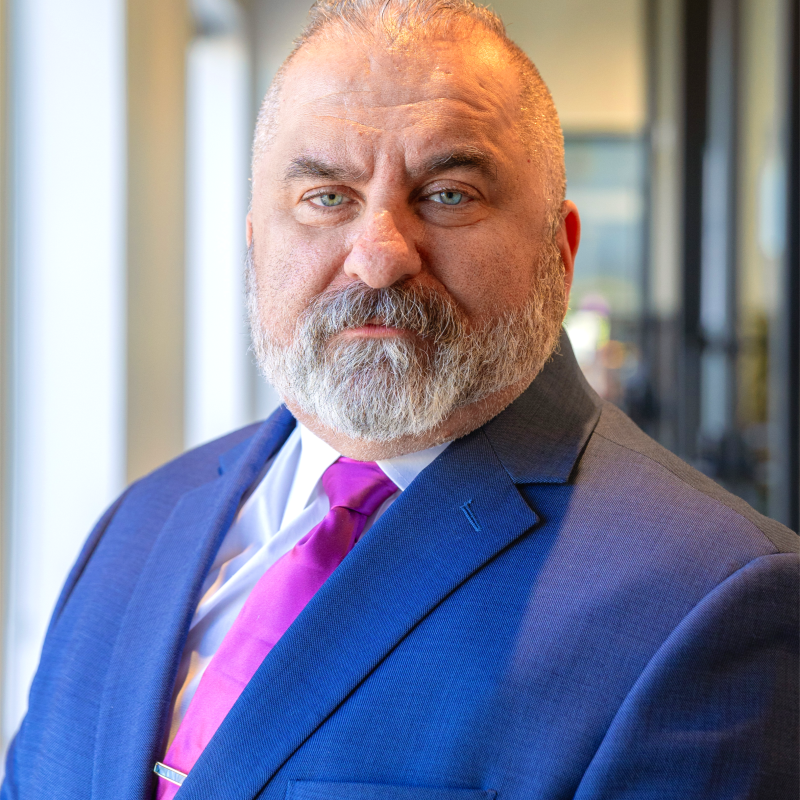
with Greg Cook, Commercial Insurance Advisor — Neate Dupey Insurance Group
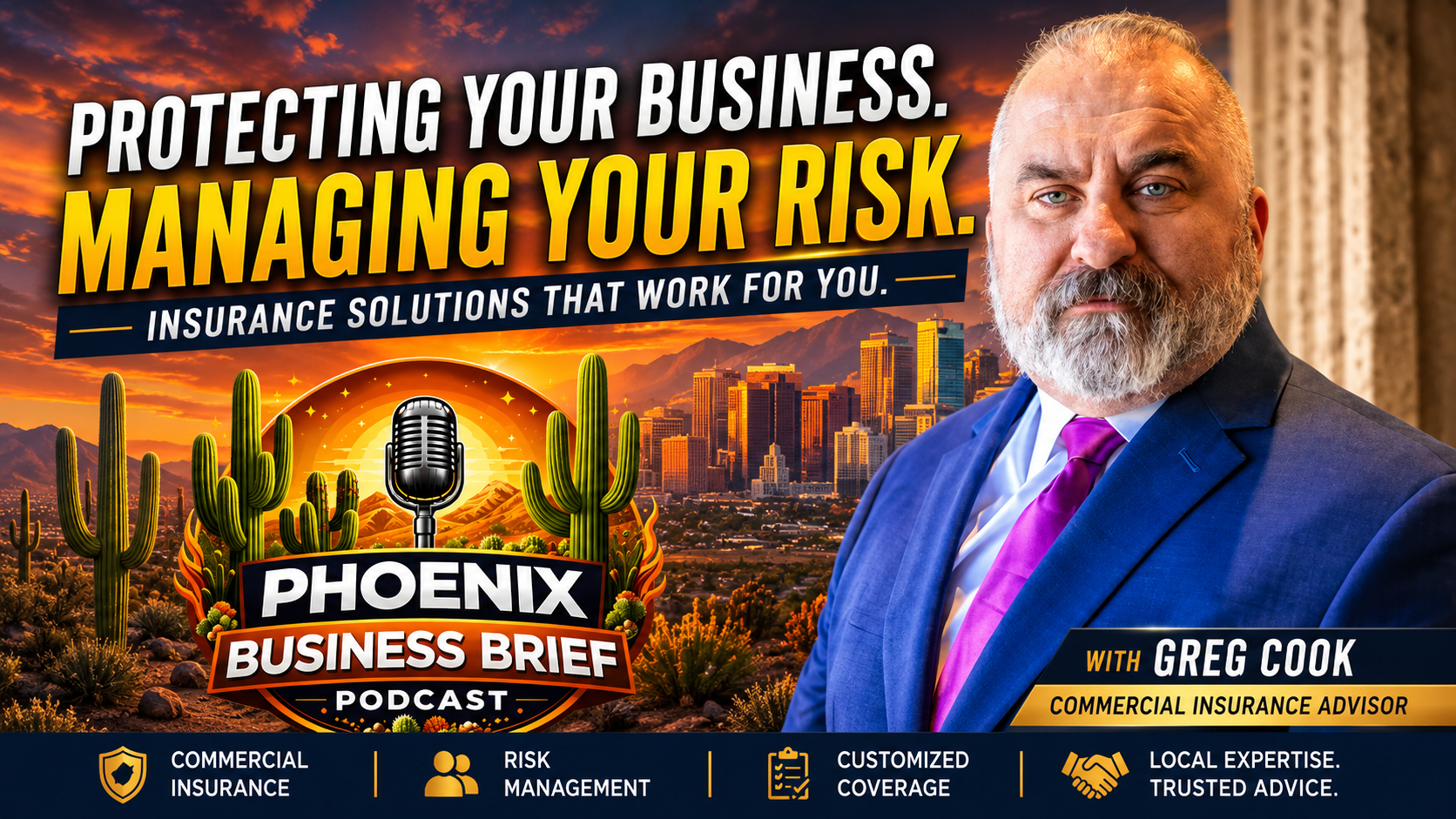
Greg Cook on Why Commercial Insurance Matters for Arizona Businesses — Greg Cook, Neate Dupey Insurance Group

In the latest episode of the Phoenix Business Brief podcast, Greg Cook, a commercial insurance advisor at Neate Dupey Insurance Group, discusses the importance of tailored insurance solutions for businesses. He highlights the challenges faced by small businesses in Arizona, including the rise of cyber threats and the necessity of comprehensive coverage, such as general liability and workers' compensation. Cook emphasizes the need for strong client relationships and understanding the unique risks associated with various industries.

Greg Cook Discusses Commercial Insurance at Phoenix-based Neate Dupey Insurance Group

0:00 / 0:00

Greg Cook Discusses Commercial Insurance at Phoenix-based Neate Dupey Insurance Group

Greg Cook Discusses Commercial Insurance at Phoenix-Based Neate Dupey Insurance Group

PHOENIX — Greg Cook, a commercial insurance advisor at Neate Dupey Insurance Group, discussed the importance of tailored insurance solutions for businesses during a recent episode of the Phoenix Business Brief podcast. The conversation, hosted by Brian Hyde, highlighted the evolving landscape of commercial insurance and the unique risks faced by businesses today.

Cook emphasized that insurance is often misunderstood as a one-size-fits-all solution. He stated, “Insurance agents always get painted as being dry, bland, and one-track minded. In insurance, though, it’s actually the opposite. It has a lot to do with caring about people.” He noted that commercial insurance is particularly crucial as it protects not just assets but also the livelihoods of business owners.

Neate Dupey Insurance Group, based in North Scottsdale, serves a variety of clients across Arizona and other states, focusing primarily on contractors and small businesses. Cook explained that many clients come to them with specific requirements, such as general liability and workers' compensation, often mandated by job contracts. However, he also highlighted the need for additional coverage options, including employment practices liability and professional liability insurance, to safeguard against a broader range of risks.

The conversation turned to emerging threats in the business landscape, particularly cyber risks. Cook noted that cyber threats, including data breaches and ransomware attacks, are becoming increasingly prevalent. “Small businesses get hit by this, but then large businesses, like banks or hospitals, can also be severely affected,” he said. This shift in risk underscores the necessity for businesses to reassess their insurance needs regularly.

Cook's journey into commercial insurance began in a captive agency, where he focused primarily on personal lines. Transitioning to Neate Dupey Insurance Group allowed him to engage more deeply with clients about their businesses. “People change their houses every few years, their cars every few years, but a lot of people hold onto their businesses for a long time,” he said.

For new business owners or those looking to expand, Cook recommends a comprehensive approach to risk management. Key components include general liability, property insurance, business income coverage, and workers' compensation. He explained that understanding their anticipated revenue is often a challenge for new business owners, who may not have considered how insurance fits into their overall budget.

Cook also discussed the complexities of insuring businesses that operate across multiple states. Each state may have different regulations, particularly regarding workers' compensation and liability laws. “We have to narrow down how much exposure we’re going to have in that state,” he said, emphasizing the need for ongoing education to stay informed about these variations.

Continuing education is a significant part of Cook's role. He participates in seminars and industry associations to understand the latest trends and risks affecting various sectors. This commitment to learning helps him provide clients with the most relevant and effective insurance solutions.

Feedback from clients often reflects the personal relationships Cook builds with them. He noted that being welcomed into a client’s business feels like becoming part of their family. “That’s the fun part about being in insurance,” he said, referring to the trust and rapport developed over time.

For those interested in learning more about commercial insurance or seeking guidance, Cook encourages them to reach out. He can be contacted at Neate Dupey Insurance Group via phone at 480-391-3000 or by email at greg@neatedupey.com.

As the conversation concluded, Cook's enthusiasm for his work and dedication to his clients were evident. He reiterated the importance of understanding the unique risks businesses face and the value of having a trusted advisor in navigating the complexities of commercial insurance.

Interview Q&A

Q&A: Greg Cook Discusses Commercial Insurance at Phoenix-based Neate Dupey Insurance Group

Q&A with Greg Cook on Commercial Insurance

Q: What is your official title at Neate Dupey Insurance Group?
A: I am a commercial insurance advisor.

Q: Why is insurance a topic that more people should engage with?
A: Insurance is about caring for people and understanding their potential risks. In commercial insurance, I protect clients' livelihoods, which can be a significant part of their lives.

Q: Who does Neate Dupey Insurance Group serve?
A: We are a boutique insurance broker based in North Scottsdale, Arizona, serving contractors and small businesses across the state and in several other states.

Q: What types of coverage do clients typically seek?
A: Clients often look for general liability and workers' compensation. We also provide additional protections like employment practices liability and professional liability.

Q: What trends or challenges are you seeing in the insurance industry today?
A: Cyber threats, including data breaches and ransomware attacks, are becoming increasingly significant, affecting both small and large businesses.

Q: How did you transition to your current role in commercial insurance?
A: I started in the captive insurance arena and switched to commercial insurance in 2018. I enjoy working closely with clients regarding their businesses.

Q: What are some essential components of insurance protection for business owners?
A: Business owners should consider general liability, property insurance, business income protection, workers' compensation, and cyber liability coverage.

Q: Can you customize insurance programs for clients?
A: Yes, as a broker, I can customize packages by selecting coverage from multiple insurance companies to find the best price and coverage for clients.

Q: What common misconceptions do clients have about insurance?
A: Many new business owners do not anticipate their expected revenue, which is crucial for determining their insurance needs and premiums.

Q: Is it possible to eliminate all risk in business?
A: No, no policy can cover everything. Risks evolve, and insurance companies must adapt to those changes.

Q: What challenges arise when dealing with multi-state enterprises?
A: Different states have varying laws for workers' compensation, auto liability, and other insurance requirements, which can complicate coverage.

Q: How do you stay updated on insurance trends and regulations?
A: I meet continuing education requirements, attend seminars, and participate in industry associations to stay informed.

Q: What feedback do you receive from clients that indicates you are doing your job well?
A: Clients often express appreciation for the personal connection and trust they feel, indicating that they see me as part of their business family.

Q: How can potential clients reach you?
A: They can call the main office at 480-391-3000 or email me at greg@neatdupey.com.

Key takeaways

  • Insurance agents always get painted as being dry, bland, and one track mind. In insurance though, it's actually the opposite.
  • Nobody appreciates insurance so much as when they need insurance, when something unexpected happens.
  • Cyber threats are becoming a really big thing... these are affecting small businesses, but then large businesses too.
  • There's no policy anywhere that's going to cover everything, especially now that we're seeing risks evolve and emerge over time.
  • One of the most important sections of an insurance policy are the exclusions and losses not insured.

About the guest

Greg Cook

Commercial Insurance AdvisorNeate Dupey Insurance Group

Full transcript

Show full transcript
[00:00:00] Welcome to the Phoenix Business Brief Podcast. I'm Brian Hyde, and today I'm joined by Greg Cook. He's a commercial insurance advisor and a part of the Neate Dupey team. In fact, what is your official title? I, I feel like there's a title I'm missing out on here, Greg. Well, I am a commercial insurance advisor, so I can both sell, but also, you know, after I sell it, I can work with you, uh, and continue to Okay. To grow, uh, your account. I mean, you, this was a prime opportunity for you to tell me grand pah of all creation, but no, if, if you're gonna be modest, that's, that's fine with me. Actually, you know, it's, it's fun in, in talking with you, I can see right now you bring a lot of energy and excitement, um, to, to the conversation here. Insurance is just not one of those subjects that a lot of people would get excited about. If you said, Hey, come on over, let's talk about insurance. Most people are kinda like, oh, oh, actuarial tables and stuff. But for, for the sake of people who, who tend to, to lump insurance as kind of a one size fits all puzzle piece, talk to me about [00:01:00] why this is a topic more people need to sink their teeth into. And then let's talk about what your company does and, and who you provide insurance to. Sure. Uh, insurance agents, uh, they always get. Painted as being dry, bland, and a one track mine. Um, in insurance though, it's actually the opposite. It has a lot to do with caring about people. And imagining what their potential risk, uh, could be and, and trying to care for it. And then in commercial, it's so much more instead of just being tied to a person's home and their vehicles, I've, I'm, I'm looking after their livelihood, maybe something they. Uh, inherited from their parents, uh, a trade or a business. Uh, maybe they went to, uh, to school for it for four or 5, 6, 7, 8 years. Um, and so I'm taking care of their, their life. Uh, you know, a big piece of it. [00:02:00] Is it safe to say, Greg, that nobody appreciates insurance so much as when they need insurance, when something unexpected happens? And that's a tough, that's a tough thing because most people pay more to an insurance agent or to an insurance company every year than they probably do for a doctor or a lawyer or other professionals. And yet they may only use it once every few years, once every five years, once every 10 years. Um, so you have to have that relationship with the customer. So that they know that the, that there's something that's going to be there for 'em when they, you know, when it, when it, when that event arises. So talk to me about, uh, who exactly does NEAT dup Pay Insurance Group serve? Uh, we are a, uh, kind of a, a boutique, uh, insurance broker in the North Scottsdale area. Uh, we write for all of Arizona. We're actually in several states, uh, that we can write business in. [00:03:00] Um. But, uh, we like to focus on, uh, the, the Arizona in particular, uh, uh, contractors and, uh, other, uh, small businesses like that. And, and typically what kind of, uh, coverage are, are, are people who, who come to you as a potential client? What, what are they looking to, to ensure either for or against? Usually people come to us with, uh, if it's a, if they're a contractor, they're coming to us with, uh, maybe the requirements that a job is asking them for. You need to have general liability. You need to have, uh, workers' compensation. But along with, uh, those vital things, uh, that are needed for a job. We offer other things that protect the business. Uh, employment practices liability, uh, for, uh, maybe discrimination or harassment, uh, type, uh, suits that could come against, uh, maybe professional or errors in [00:04:00] omissions liability, not just for the slip and trip of a general liability, but the actual planning and then executing of, uh, of some sort of, uh, uh, of something professional, uh, something technical. And then something goes wrong. And, and what are some of the things that you're seeing? I mean, um, it's a wide world. There's a lot of possibilities out there. Is there a trend or, or a challenge that, uh, that you are seeing today that maybe wasn't there a few years ago? Cyber, uh, threats are, are becoming a really big thing. First, there was data breach where companies would make a mistake and let out information, but now the, uh, malware, uh, the, uh, all the, the cyber attacks, uh, the ransom. Attacks. Uh, these are affecting, uh, you have small businesses, um, small businesses get hit by this, [00:05:00] but then large businesses, maybe your, all of a sudden your, you know, your bank or your doctor's office, uh, or a hospital, uh, gets knocked out because of a, a cyber attack or a malware attack, or a, a ransom. You're right. I mean, that's, uh, it's one of those things which, uh, I think, did we even think about that kind of stuff 20 years ago? Prob, probably not. Um, so talk to me about your role with NEAT DUP Pay Insurance group. Uh, tell, tell me how those paths intersected. Well, um, I, uh. Started off, uh, in insurance in the, um, in the captive, uh, um, arena, uh, working for one single company. Um, back in 2018, I switched over to, uh, being a captive and focusing mostly on personal lines to, uh, going over to commercial insurance. Um, I've. I've always enjoyed the part [00:06:00] of, uh, working with somebody, uh, with regards to their business. People change their houses every few years, their cars, every few years, but, uh, you know, some people sell businesses, buy and sell businesses, but generally a lot of people. They, they, that's, that, that's that trade that they got from their parents or that business that they started up after school. Um, and so I, I feel a part of that life, uh, that, that they've got and it's really fun. So let's, uh, let's talk a little bit about, um. Let's say, you know, a, a person is, is either starting a business or they have a successful business and they want to keep it that way. What are some of the things that they're going to come and talk to you about? What would you, um, help them understand are, are necessary components of what they need in terms of their protection? Well, they, they, uh, general liability, again, that's in case, uh, there's a slip and trip type event. Uh, you wanna have your, uh, your, your property insured, whether it's your [00:07:00] building that you're operating in or your furniture, your equipment, your inventory. Um, you've got your business income. Let's say if your office catches fire. Um, does it shut down your operations? Does it affect your payroll of your employees? Um, then there's the, there there is the workers' compensation. Um. So if you don't carry workers' compensation for your employees and there's an injury that gets reported to the industrial commission there, you've got a big fine and it can, uh, and it can also affect, uh, your, your business itself. Then we mentioned the cyber, the data, um, employment practices liability. Professional liability. So there's a lot of things, uh, even bonding for permits and, and licenses that professionals need. So there's a lot of things that I can, uh, can round out for people and, and get taken care of for 'em. I mean, that is a lot to stay on top of. I'm just, I'm thinking of this like from the business owner's point of [00:08:00] view, um, you know, to, to understand all of the workings. How much do I need? How much is too much? Or, you know, what are some of the things I might overlook? Um, talk to me a little bit about, uh, you know, you, you had mentioned you worked for, for, I think you called it a captive agency. Do you have like a lot of freedom to customize when, when you put together a program for, for a given, uh, you know, commercial entity? Yeah, that, that's a, that's a great point. I can, um. With, uh, working as a broker, I can go to a carrier and I can do a lot of things. Um, I can, uh, get a, get a package put together, um, that might be a la carte from one insurance company or another insurance company. Um. I might be able to get something all at the same insurance company, but, um, so I can, it gives me a lot more leverage to find, um, a price, uh, for the customer as far as premium, but then also [00:09:00] the best coverage available that. The, the, the client can, can afford, um, within their, their business operations expenses. And I, you know, I'm, I'm not trying to scare people by asking you this, but I bet you have encountered in, in your career, um, people who thought they were covered and then after the fact found out that, oh, well. Actually that was a gap. Um, I mean, are there any good examples you could share with us, you know, of, of lessons learned? I mean, here's an, here's a chance for us to learn from somebody else's pain and hopefully avoid it ourselves. Are there any that stand out to you? Well, what was a big help to me was, um, one of my managers in the past, uh, really got it into my mind. I used to be, I, I've been very good at reading insurance policies, but, uh, to really drive it home. That your insurance policy, the most important sections are the ones that say exclusion [00:10:00] and losses, not insured. If you start off with in an insurance policy, it's, it's, it's basically telling you there's a lot of things that are covered in page one and two, and then you have to get to those other pages. Well, except for this. Situation. And so when you look at those situations, well, if this insurance carrier has those exclusions, can I go someplace else? Can I minimize the number of exclusions? And so that's the nice thing about being a broker is I can, uh, instead of being just captive to one policy, uh, I can go and and try to find one that works the best for the customer. Greg, I, I'm curious, do you find that there's a, uh, either a misconception or, or a mistake that, that people, um, tend to, to make maybe something that, that they just don't know because they don't know, you know, the questions to ask when it comes to, to insurance and, and, and I'm curious, what would, [00:11:00] what would you encounter more common, more commonly than not, you know, among, um, among people going, oh, I, you know, I didn't realize I needed that one of the first questions. That's usually. A tough one for people when I'm initially talking to them is what their anticipated revenue for their business is going to be for a year. And they tell me, I hadn't thought about that, and then I have to reason with them. Well, I. What got you into wanting to do this business? Um, really kind of go, you know, have to sit down with them and figure out what, what's your, what is your plan? Um, I more, it, it, it happens quite often where a new business owner. Hasn't really thought that that part of it out how much they are actually going to make, because then they have to figure out how much they're going to spend in their payroll, in their rent and their taxes. And sometimes I have to sit there with them and, and kind of sort those [00:12:00] things out. And my premium for insurance has to fit in there someplace too. No, I mean, it, it makes sense. It's, but again, you, you and, uh, Neate Dupey Insurance Group are there to, to help answer the questions, you know, that, uh, most people aren't going to come to themselves, you know, just walking down the street. Um, when it comes to managing risk, I know that, uh, you know, as a society we're, it, it feels like sometimes we're becoming more and more risk averse. Is it possible to completely eliminate risk or are there some places where we just have to admit, look. The world can, can be unpredictable, but you know, you can still have confidence that you've covered the, the bulk of, of what could possibly go wrong. Yeah, there's. There's no policy anywhere that's going to cover everything. Um, especially now that we're seeing, like we had been talking about earlier, uh, risks, um, evolve and emerge over time. Uh, then [00:13:00] insurance companies have to figure out what, what they're going to take on, what they're not going to take on as far as, as a risk. But you know, like you mentioned, we, we experienced that maybe we go to a trampoline park and we sign a waiver and, um. You know, we, we realize that if, yeah, if I'm monkeying around at, at a trampoline park, it's my problem. Um, if, uh, if it turns out that they haven't been taking care of some, um, some of the trampolines and I fall down and break a leg, well then it's more likely their problem. So there's that give and take in in the world. It's kind of the nice thing about, you know, it sounds a little scary, but the nice thing about living in a free society is. We do have that risk also. Yeah. Yeah. You can't, you can't have the freedom without having some associated risk. Now what about, uh, I, I know you mentioned that, you know, you work with, um, uh, large multi-state enterprises. Are there challenges when it comes to addressing insurance requirements [00:14:00] or needs when, when you're dealing with the, you know, businesses that, that may be located in several different states? How, how big are the differences between the states? Well, there are some states that, um, uh, maybe their workers' compensation laws are different. There are some states where, uh, maybe their auto accidents, uh, liability and medical work differently. Uh, so we have to kind of narrow down. How much exposure are we gonna have in that state? Uh, we have to be licensed in those, uh, those states, which we are. Um, and, but I have to know the difference between, um, uh, what happens to the vehicle and or the person or the, the, the injury that takes place in one state versus the other. It, it, uh, it, it can be, it can be a little complex. Um, but, uh, but that's where it's fun. It sounds like, uh, it would require a pretty [00:15:00] fair amount of, um, ongoing training in order to stay on top of all the, the, you know, the various aspects that, that you're expected to know and, and address. Um, does, does that, uh, does that require a considerable investment of your time each year, you know, to, to be on top of those things? We have, uh, normal, uh, continuing education requirements, uh, with a life, uh, with a, with a, uh, an insurance agent license. Um, but then meeting with carriers, going to seminars. Um, and then what I do is I also go to, um, maybe seminars or associations of different types of, uh, industries. So I'll go to a, a construction. Company seminar. Um, I just went to a, an autism seminar, uh, last week. Um, so I'll go to seminars of various risks, risks, see what's going on in their world, and then make sure that [00:16:00] the insurance world that I'm working with them on can meet that. Alright, Greg, I want to ask you this. When, when you get feedback from a client. What kind of comments do you hear from your clients that tell you you are, you are absolutely, you know, doing the job that you set out to do. Wow. You know, I, uh, I, I, you know, it's, it's, it's really nice. I, I like going face-to-face, meeting people and, um, uh, that's the. Uh, that's the fun part. And, and you know, when you get a handshake and, and you get welcomed into a business and it's kinda, there's one that I just went to a, a few weeks ago and it's, it's like you're a part of the family, um, when you get welcomed in. And, and so that, uh, that's the, that's the fun part about, about being in insurance is [00:17:00] when you kind of become, you know, part of the family of that business. They know Greg's looking out for him. Yeah. Okay. So let's, let's talk about how do we put people in touch with you? Let's assume someone's hearing this and going that Greg sounds like a pretty decent fellow. Maybe I need to, to reach out to him. What's the best way to reach you at neat dup pay insurance group? You can just give, uh, give a call here to the main office, 4 8 0 3 9 1 3000. My email is greg@neatDupey.com and that's N-E-A-T-E-D-U-P-E-Y. Dot com, greg@needtopay.com. Um, and uh, go to find me on LinkedIn and, uh, all sorts of places. Alright, I look, you just did it. You, you, you've done what, what, uh, some would've considered, you know, a difficult challenge. You've actually made insurance interesting and relevant and, and I hope this, this brings some people in, in your direction. Greg Cook with NEAT to DUP [00:18:00] Pay Insurance Group. Thank you so much for joining us on the Phoenix Business Brief Podcast. Thanks for having me.

Filed under

Related episodes