Show full transcriptHide transcript
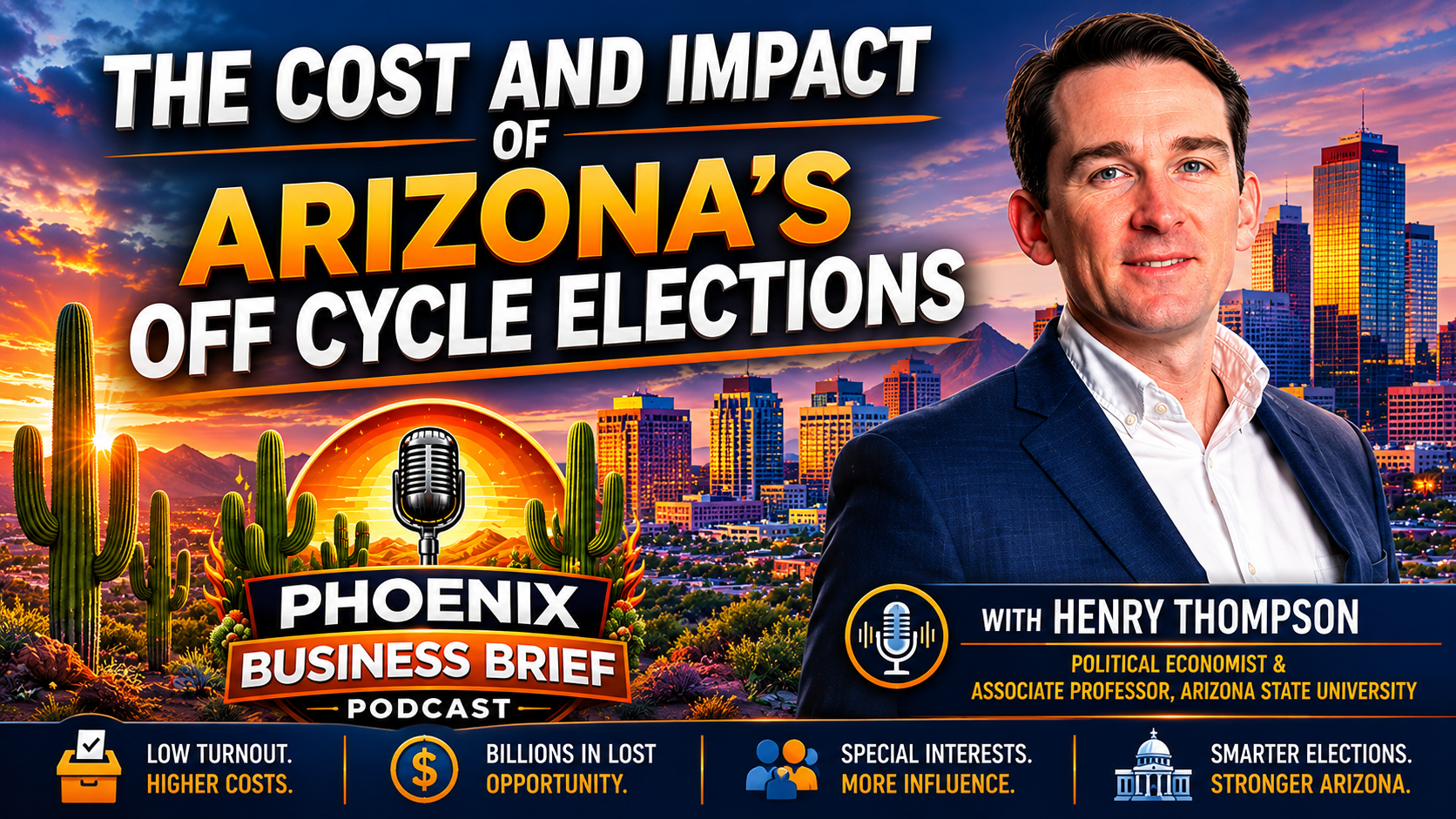
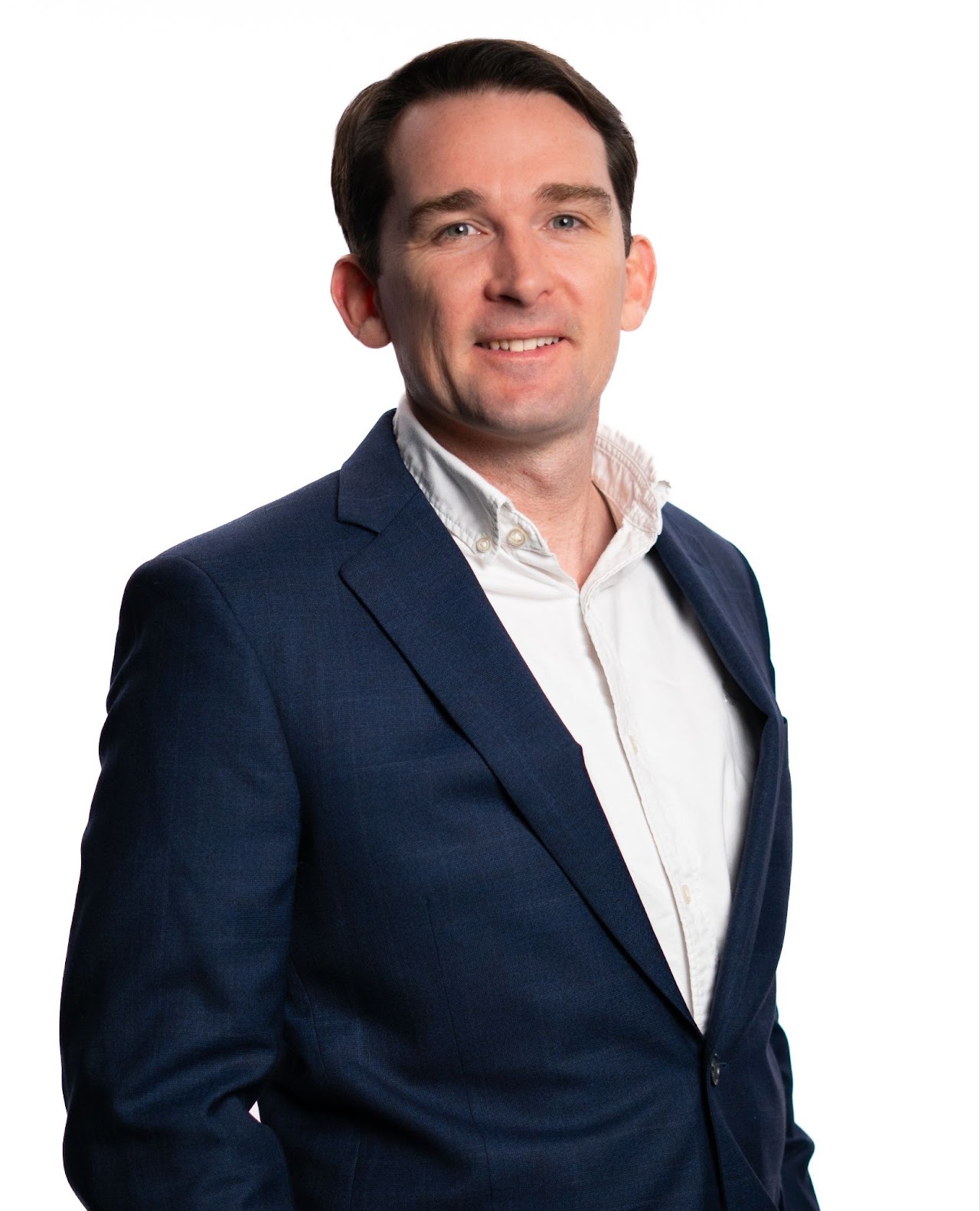
[00:00:00] Welcome to the Phoenix Business Brief Podcast. I'm Brian Hyde. I'm joined by Henry Thompson. He's a political economist and associate professor at Arizona State University. Um, Henry, welcome to the program. Would you mind taking just a moment to tell us just a little bit about yourself, who you are, and what you do?
Yeah. Great. Thank you, Brian, for having me on the show. My name is Henry Thompson. I'm originally from New Zealand. I'm a political scientist, actually, at Arizona State, and I work on topics related to political economy of economic development, uh, why some countries transition to democracies, that sort of thing.
And so I have, um, a lot of interest and expertise in elections, economics, um, that kind of thing, and especially the intersection between politics and economics is kind of where I try and do most of my work. Well, this is a very timely, um, period to have you on as a guest, as, uh, you've, you've penned a report.
I noticed th- this- I saw this on the Goldwater Institute site, "Off-Cycle [00:01:00] Elections Cost Arizona Billions and Empower Special Interests." And you've got my attention there, because I know- ... we don't seem to take, as a society, we don't take these, these off-cycle elections quite as seriously as we do the general elections.
Talk to me a little bit about, uh, what inspired this report, and then let's, let's dig into it about what we can learn from it. Well, I think that's actually a great way to start, is your observation that people don't seem to take the off-cycle elections as seriously as the on-cycle elections. So we all know that every second year, right, even-numbered years, in early November, there's an election.
And, uh, I'd say everybody in America knows that they turn out as pretty good, pretty high, you know, around 70 or 80% in most cases, and, um, people take those elections seriously. But there are these other elections happening off-cycle, as we call it, meaning either not in November of even-numbered years, right?
So in Arizona, they can have elections in March, May, August, um, [00:02:00] and November as well. And so you could be having elections all through an election, a major election year, or you could even be having them in 2023, for example, 2025, off the year when people even think that the major elections are happening.
And what happens is, during those election cycles, turnout is just much, much lower. And, um, it's been seen by political scientists as a pretty major problem nationwide, you know, sort of a systematic problem with the American, uh, electoral system, that you just have a much nu- smaller number of people voting in those elections, and there's just not as much interest, which means there's not as much accountability for the elected officials.
Now, I've heard, and you can, you can tell me if I'm in the right ballpark or not, but I have heard just as, as kind of an average number of voters that show up during these off-cycle elections, we're talking about 20% of registered voters, you know, compared to, you know, during general elections that can be much, much higher.
Um, is, is that even, is that pretty close to, to what you have seen? That's a [00:03:00] little lower than what I found. I went back and collected data for, I think, um, a year or two, the last off-cycle election cycle or two, and I think the average number I found was 27% off-cycle versus, um, I think it was over 70%, uh, for on-cycle.
So the difference was about 40 percentage points. You have about four in 10 registered voters that just don't show up at these off-cycle elections, even though they do show up for the on-cycle elections. Um, and I think that's a major problem really when you think about, uh, accountability, people having their voice heard, and policymakers, you know, policymakers' mind and in the policymaking process.
If you've got four out of 10 people who just aren't showing up, and maybe even another group that don't really show up for general elections, the big elections, but maybe they show up for the local elections off-cycle, you never know, right? You could have a very different voter pool showing up for [00:04:00] the local level elections versus the, um, versus the national and state level elections.
Talk to me about how during these, these off-cycle elections, this is when it seems like a lot of the, uh, the fiscal questions are put to the voters. Uh, now, i- is that by accident, or is, is there some strategy in let's, let's put this out when we know there aren't going to be as many voters turning out and likely to, to say no to it?
Well, it's complicated, you know, because obviously the state, in the case of Arizona, the state has a big budget, and that's decided by the legislators who are elected in November. And then the federal government, all our representatives from the president on down, are all elected on-cycle as well. And actually, in Arizona, the state constitution stipulates that the counties have to be elected on-cycle too, and the counties have big budgets in, um, in Arizona.
So there's a lot of layers where it's decided by the on-cycle elections. But what really kind of amazed me was how [00:05:00] much money was being spent either by people elected off-cycle, right? So, um, your city, uh, council elections in Tempe, in Tucson, sometimes in Phoenix, and most of the major cities actually in, in Arizona, they're elected off-cycle, and the city budgets can be very large and make a big difference to people's everyday lives.
But then also you have these school district elections that are happening off-cycle, and school districts spend a lot of money. And then you have these other special elections for bonds, rezoning decisions, um, special expenditure plans, and some of those run into the hundreds of millions of dollars in a single election cycle, or even on a single item on the ballot.
I was frankly amazed to see that, uh, you know, something like 800-and-something million dollars in Tucson was decided on a off-cycle election ballot. Um, you had a Phoenix, uh, [00:06:00] Phoenix budget decision, a sort of a special bond decision, that was also $450 million decided at one of these off-cycle elections.
And again, you had sort of between 20 and 30% turnout at these things. I was really amazed at how much money is on the ballot at these off-cycle elections. Henry, when it comes to these, these, um, kinds of decisions that you've just described, um, this is being made by a very tiny percentage of the voting public, but it sounds like this, this gives the necessary cover to those who want those either funding decisions or levies or whatever.
Um, it gives them the cover to say, "Well, this is what the people want." Is, is that kind of their strategy? Well, you know, we'll never have, like, a smoking gun to know why the cities hold their elections off-cycle, why the school districts decide to have these elections off-cycle to decide on their budget overrides and things like this.
But the reality is that they choose to have them off-cycle. There are [00:07:00] some cities, not many, but a few, I think Surprise, Peoria, a few others, uh, in the state that just don't have off-cycle elections. Um, and there are others that try to have most of their elections on-cycle, the most important elections, right?
So it is, there is a decision being made somewhere to have the elections off-cycle. The, the state legislature also tried to pass legislation to have the elections on cycle. Mm-hmm. But it was contested by the city of Tucson, uh, in front of the state Supreme Court, and they found that they were allowed to have them on cycle according to the...
sorry, off cycle according to the state constitution. So not only are they deciding to have the elections off cycle, but when the state legislatu- legislature tried to force them to have them on cycle, they resisted it. And so we'll never have a smoking gun about why they choose to have these off-cycle elections.
And to be fair, the cities have their arguments. The cities claim [00:08:00] that they don't want their funding decisions, their local matters to be dragged into federal politics and federal partisan politics. That's, I think, their major argument, that they would like people, when they go to the voting booth about city matters, to be thinking about the city, not about national politics.
And that's a legitimate argument, I think, up to a point. But the problem is that the number of voters that are turning out that are thinking about those city issues is so small that you really have to wonder, is this a legitimate trade-off, right? If you're making a trade-off between the number of people voting and the amount that they're focusing on local rather than national issues, you're getting pretty far to one end of that trade-off towards the small number of people who are turning out.
So obviously, I don't have any, uh, you know, um, inside information about, uh, confidential closed-doors discussions among officials about when to hold their elections. Of course not. But, um, it's [00:09:00] clear that they really want these elections to be off cycle, because they have fought initiatives to try and have them on cycle.
Well, and I think, you know, i- if it's not intentional, your warning still holds that it's still a very small fraction of the voting public that's making big decisions or spending commitments at the expense of, of the other voters. So it's not like, well, it only affects them. No, this affects, you know, every taxpayer.
Oh, absolutely. Um, so your property tax bills are being affected by this, I would say primarily because of the city taxes that are, that are included in those property tax bills, and also the school district spending that is funded through property taxes. So your property tax bills are being affected by this, and maybe to some extent even, uh, uh, local sales taxes to the extent that cities are able to impose local sales taxes.
So they matter to everyone. Uh, policy decisions, especially school district and city policy decisions, are affected by the turnout of the, and the [00:10:00] sorts of people that turn out. And so a lot of things that affect people's day-to-day lives at the local level are being decided by these very small groups.
And I, I didn't do a lot of analysis of who votes at the local versus the, um, federal elections. On the Arizona level. But there's a huge amount of political science literature looking at different parts of the country and at the country nationwide, and the finding is quite unsurprising, which is that when you have these small numbers of people voting, it tends to be the special interests.
That means well-organized groups, uh, whether it's non-profits or especially local and, uh, municipal employees that turn out to these elections 'cause they have so much at stake, right? So the city employees, uh, the school district employees turn out at much higher rates at these elections. So that's the danger is that as regular people don't know the election's happening or they don't sh- they don't show up because they're busy and they don't, um, see the stakes [00:11:00] as they do in, in November of an even-numbered year, right, um, that other people show up that have more of a vested interest in the outcomes, and they kinda get to control things.
That's the danger. Henry, let's talk a little bit about how this affects businesses. I mean, it's one thing that it affects the taxpayers generally, but when, when these kinds of decisions, particularly spending decisions, are made, uh, by such a small amount of people, um, how do businesses end up, uh, maybe disproportionately affected?
I think probably through, like, as I mentioned, through taxes, but also through, uh, things like zoning policies, permitting and planning policies, that those sorts of issues that affect businesses very directly, right, whether it's in construction or hospitality or other issues that are dealing with local ordinances, uh, a lot, that those issues just won't be as prioritized or the, or business interests won't be as [00:12:00] prioritized, but instead, the interests of, say, city employees or, um, municipal, uh, functionaries, uh, well-organized groups, you know, community groups, et cetera, will have more say than, than business people because you have fewer regular voters, uh, showing up who care about, you know, the cost of housing, uh, uh, livability and walkability of the cities and the, uh, and the, um, perhaps, you know, the price of things downtown or in bars and restaurants.
Those people are maybe n- not showing up to vote at the same rate at the margin. So you had mentioned, you know, the, the Arizona State Legislature had tried, you know, or had floated the idea of, of, uh, basically putting all the, the Arizona, nearly all the Arizona elections in line with the major general elections.
Um, the Supreme Court, the Arizona Supreme Court said no. The, the city charters will, will actually, you know, have, have the, the preeminence here. Talk to me about some of the [00:13:00] reform, though, that, that could be done, um, you know, short of amending the state constitution. What... Are there some ways that, uh- That, that, that imbalance might be addressed or at least public awareness be, be raised about what's at stake?
Yeah. Uh, that's a really good question. So I think the fact that not many people turn out tells you something about these elections, which is that, um, if only a certain number of people turn out, there's not a big groundswell of public interest in these elections. And so it's not surprising that the pressure to try and get them on cycle came kind of from the top down, right?
From the legislature. Um, and so it's possible that a groundswell of opposition from the public, that they could basically demand of their city councils that they move these elections on cycle. But of course, that is really tricky because with any institutional reform, the incumbents [00:14:00] are generally against it because the incumbents are the ones who benefited from the previous institutions by definition, right?
You got elected under a certain set of rules. Somehow it worked for you. Do you really wanna change it? The answer is often no. So I think that the groundswell of public, hmm, pressure for a change like that would have to be s- really, really significant, and it would be, um, it would be probably very difficult to organize.
It's possible, but it would be difficult to organize. I think what's more viable is that there's a smaller groundswell of well-informed public opinion that tries to get a amendment to the Constitution on the, um, on the ballot at an on-cycle election. I think that you have to be able to appeal to that bigger electorate and essentially have a ballot question where you say, you know, "You, you, many of you who did not vote in the off-cycle election, [00:15:00] um, do you think that the questions should be on this ballot," right?
"In November." And that could potentially be successful. So I think that, um, because of the nature of this issue, a bottom-up initiative on the mass, mass level is gonna be tricky. But I think a, uh, a, a well-organized effort that appeals to, to a mass interest in November one year on cycle is probably the most promising, probably the most promising way to go.
You know, in the, in the piece on the Goldwater Institute website, uh, it talks about, uh, unions and other, you know, organized, uh, political movements that are very good at, at taking advantage of, you know, that small voter turnout because they, they know they have, um, uh, larger than, than normal influence in, in how they can steer it.
How do we convince the voting public that they too have a stake in the matter? 'Cause it seems like there's a disconnect there where, where for some reason people like, "Ah, you know, this, this issue doesn't really affect [00:16:00] me." Um, how do we help them see that it does? Right. Yeah, there's kind of this irony that, uh, a relatively small group of voters could probably, uh, if they turned out, completely change the dynamic of these elections 'cause the turnout is so low.
You, you know, you have a few thousand people essentially making these decisions. Yeah, so it's a classic example of what we call a collective action problem, that if my neighbors and I banded together, even a few hundred of us, we might be able to have a big influence in these local elections. But the problem is that that's much more difficult than you realize because, uh, I don't wanna turn out at these local elections.
It's like in March, uh, or, or here in Tempe, we're having a runoff election in May. Um, I m- again, I may even have to turn out twice because, uh, because the first time when they had the election in March, they only got down to a shortlist of four, and so you have to turn out again. And so the, I don't know who the [00:17:00] candidates are, right?
I have to get informed. The candidates might not diff- be diff- easy to differentiate from one another. Uh, it might not be clear exactly how to get the change that you want, right? Um, and so you sort of think, "Oh, it's so much work for me. Let someone else do it." Now, the well-organized groups are in a different position because they have someone coordinating that, that is paid to tell their members, "This is who you vote for, this is why, and this is what we're gonna get in return."
And so you know why you're, you know, opening up that envelope and filling out the form, and you know exactly who to vote for. It takes no time at all, and there's no uncertainty about the outcome. Whereas for just regular individuals, you just don't know. You just don't know what to do, and it's very, very difficult to coordinate around that, around that candidate that will get you the outcome that you need.
So that's, I think, basically the problem here, and that's why I think that, um, it would be great to [00:18:00] see more of a groundswell, right, of people, uh, getting organized to basically demand a little more of a say in these local elections. And it's not, it's not completely implausible. But it would need some sort of a centralized, um, coordinating organization, right?
So some sort of a, a political action committee or, um, some sort of a grassroots movement that basically put up candidates who wanted to change the, change the electoral cycle and made it very clear to people that that's what they were gonna do and that that would be what they would get in return. So, uh, so it's, it's feasible, but it's kind of a heavy lift.
And, and, in political science, we would say it's a, it's a heavy lift be- it's a, uh, a challenging collective action problem. Okay, one final question for you, Henry, and that is where can people access this report that you've compiled? Just go to the Goldwater Institute's website. Uh, I know that it went out in their latest newsletter.
I saw it in [00:19:00] my inbox, but I think it's on the Goldwater website featured pretty prominently, uh, right now. So take a look. I'd be interested if anyone has any feedback or thoughts about it. You know, you can always find me. I'm a professor at Arizona State, henry.thompson@asu.edu. Um, and, uh, I'm always interested to hear from people with their thoughts or comments or critiques about, about my work.
Again, we've been talking with Henry Thompson, political economist and associate professor at Arizona State University. And Henry, thank you for joining us on the Phoenix Business Brief podcast. Thank you for having me, Brian