Phoenix Business Brief Podcast logo
← Phoenix Business Brief

2026-05-27 · Arizona Loves ESAs

Jenny Clark Discusses Arizona's ESA Program Transforming Education

with Jenny Clark, Founder, Love Your School — Arizona Loves ESAs
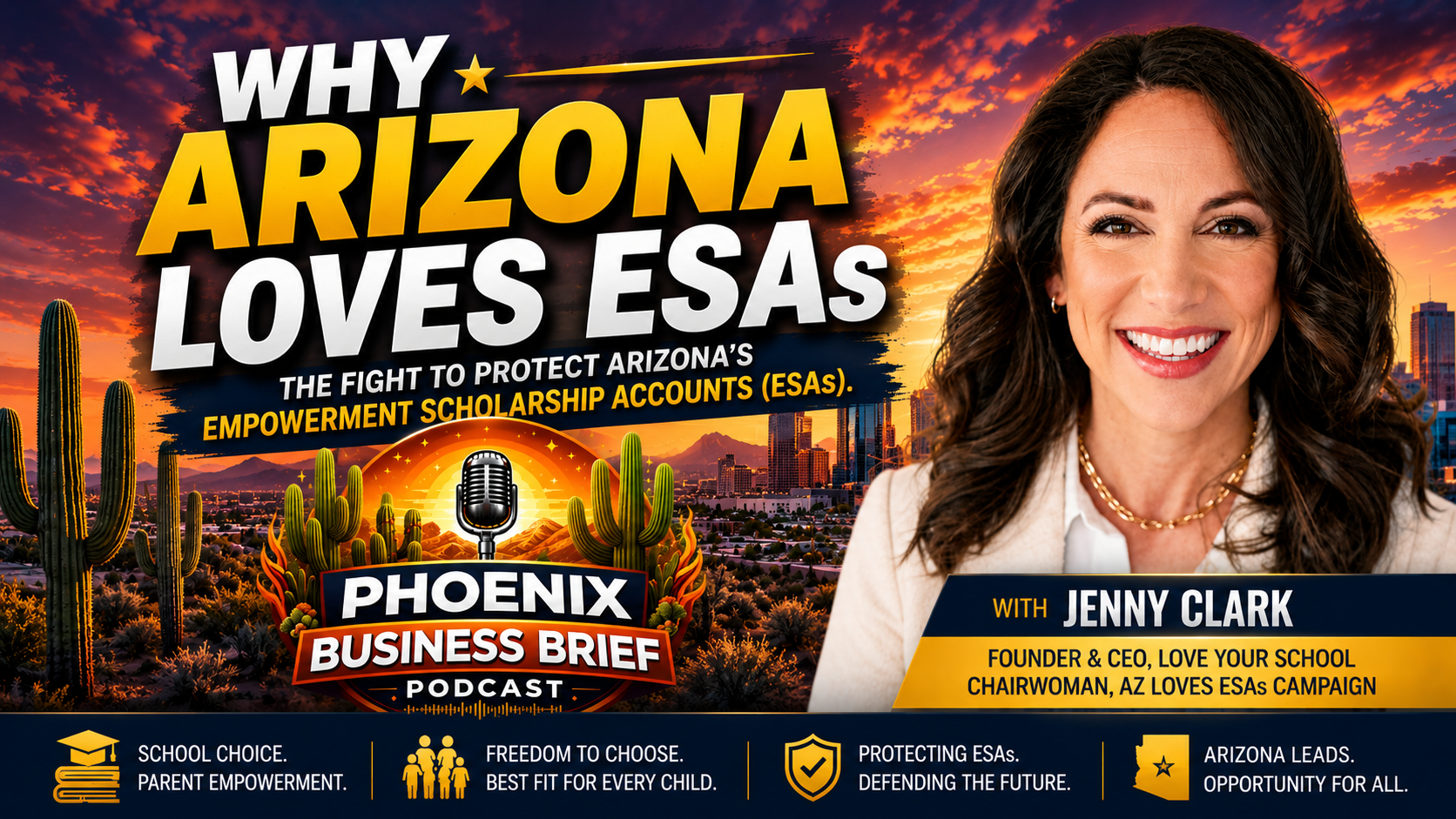
Phoenix Business Brief Podcast episode featuring Jenny Clark discussing Jenny Clark Discusses Arizona's ESA Program Transforming Education

In the latest episode of the Phoenix Business Brief podcast, host Brian Hyde interviews Jenny Clark, founder of Arizona Loves ESAs, about the impact of Arizona's Empowerment Scholarship Account (ESA) program on education. Clark discusses the program's history, its expansion to universal eligibility in 2022, and the challenges posed by opposition groups, including the National Education Association. The conversation highlights the importance of school choice for Arizona families and the ongoing battle to protect the ESA program from potential regulatory changes.

Jenny Clark on How Arizona's ESA Program is Changing Education for Families

0:00 / 0:00

Jenny Clark on How Arizona's ESA Program is Changing Education for Families

Arizona's ESA Program: A Game Changer for Education

In a recent episode of the Phoenix Business Brief podcast, Jenny Clark, founder of Arizona Loves ESAs and chairwoman of the campaign, discussed the transformative impact of Arizona's Empowerment Scholarship Account (ESA) program on educational choices for families. The program, which allows parents to direct education funding for their children, has become a focal point in the ongoing debate over school choice in the state.

Arizona has been a leader in educational choice since the introduction of ESAs in 2011. The program enables families to access 90% of the state’s per pupil funding to use for various educational options, including private school tuition, home education, and tutoring. Clark emphasized that Arizona’s ESA program is unique in that it has no student or dollar cap, making it accessible to all students from kindergarten through 12th grade.

Clark noted that Arizona's robust history of school choice includes charter schools and tuition tax credit scholarships, positioning the state as a model for others. "We are really the gold standard here in Arizona when it comes to school choice," she said, highlighting the program's growing popularity among families.

However, the ESA program has faced significant opposition, particularly from teachers' unions. In 2022, an attempt by Save Our Schools Arizona to halt the expansion of the ESA program failed, with the group falling short of the required signatures to place the issue on the ballot. Clark pointed out that the recent push against the program is being heavily funded by the National Education Association, which has contributed over $4 million to efforts aimed at regulating ESAs.

The stakes are high as Arizona approaches the 2026 election cycle. Clark described the situation as a "David and Goliath" battle, with grassroots efforts striving to protect the ESA program against well-funded opposition. "We need families and businesses to engage and protect Arizona's Empowerment Scholarship Account program," she said.

Critics of the ESA program argue that it siphons funds from public schools, a claim Clark disputes. She explained that the funding follows the student, meaning that public schools do not retain funding for students who leave for alternative educational options. "If a family moves out of state or switches districts, the public school does not keep those dollars," she noted.

Clark also addressed concerns that ESAs primarily benefit wealthy families. She stated that the majority of families utilizing the program are middle-income, countering the narrative that only affluent households can take advantage of school choice. "It is a piece of rhetoric that has been thrown out and picked up in the news... that's just completely untrue," she asserted.

The implications of the ESA program extend beyond individual families. Clark argued that the educational landscape in Arizona is in need of improvement, citing data that shows less than 30% of fourth graders in the state are reading at grade level. She emphasized that empowering parents to choose the best educational environment for their children is crucial for the future of Arizona's economy and society.

Clark urged all Arizonans, regardless of whether they have children in the education system, to pay attention to the ongoing debate over school choice. "If you care about the business community and the economy in Arizona, it should be concerning to you that students are graduating without the skills they need," she said.

For those interested in learning more about the ESA program and its implications, Clark recommends visiting the Arizona Loves ESAs website, which offers resources and information about the campaign's efforts to protect school choice in the state.

As the battle over educational funding and choice continues, the future of Arizona's ESA program remains uncertain. Clark's advocacy highlights the importance of community engagement in shaping educational policies that impact families across the state.

Interview Q&A

Q&A: Jenny Clark on How Arizona's ESA Program is Changing Education for Families

Jenny Clark on How Arizona's ESA Program is Changing Education for Families

Q: Can you tell us about yourself and your involvement with Arizona's education system?

A: My name is Jenny Clark. I am an Arizona native, born and raised here. I attended public schools and later graduated from the University of Arizona. I have five children who benefit from Arizona's School Choice Program, specifically the Empowerment Scholarship. I am passionate about informing families about their school choice options and advocating for their expansion.

Q: What is Arizona's Empowerment Scholarship Program?

A: Arizona has had Empowerment Scholarships since 2011, allowing families to use 90% of their child's education funding for various educational options, including home education, micro schooling, tutors, and private school tuition. Our program is considered the best in the country due to its lack of student and dollar caps, making it accessible to all students from kindergarten through 12th grade.

Q: What challenges has the ESA program faced?

A: In 2022, Arizona's ESA program became universal, allowing every student to qualify regardless of income or zip code. Save Our Schools Arizona attempted to stop this initiative but failed to gather enough signatures. Currently, the National Education Association and the Arizona Education Association are trying to roll back school choice with significant funding.

Q: What is the current status of opposition to the ESA program?

A: The National Education Association has provided over $4 million to the Arizona Education Association and Save Our Schools Arizona to regulate the ESA program. This funding poses a significant challenge to our grassroots campaign to protect school choice in Arizona.

Q: How likely is it that the opposition will succeed?

A: It's difficult to predict. The $4 million is a substantial amount, and these organizations have a history of mobilizing resources effectively. However, we are focused on grassroots efforts to protect the ESA program and educate voters about its benefits.

Q: What arguments do the teachers' unions use against the ESA program?

A: The unions argue that the ESA program takes money away from public schools. However, we contend that funding follows the student. If a student leaves a public school, that school no longer receives funding for that student. In fact, the ESA often results in taxpayer savings since the scholarship amount is less than the total funding allocated to public schools.

Q: Who benefits from the Empowerment Scholarship Program?

A: The majority of families using the ESA are middle-income families. The notion that only wealthy families benefit from this program is unfounded and not supported by data. The program is designed to provide educational choices for all families, regardless of income.

Q: Why should families pay attention to the ESA program?

A: The ESA program represents a significant shift in education policy, emphasizing parental control over children's education. This competition can lead to improved educational outcomes, which is essential for the future of Arizona's students and the state's economy.

Q: What is the funding source for the opposition to the ESA program?

A: The funding primarily comes from teacher dues and large left-wing organizations. It can be difficult to track the exact sources of this funding due to its complex nature, but it often originates from national activist groups.

Q: What resources are available for those wanting to learn more about the ESA program?

A: The official campaign website, AZ Loves ESAs, provides detailed information about the ESA program and the ongoing efforts to protect it. Families can also engage with grassroots groups on social media platforms like Facebook and Instagram.

Q: What outcomes have been observed since the ESA program's implementation?

A: Over 100,000 students are currently benefiting from the ESA program. This policy allows families to quickly find educational environments that meet their children's needs, especially for those who may not thrive in traditional public schools.

Q: How does the ESA program impact students with special needs?

A: The ESA program provides options for students with disabilities, such as dyslexia or autism, to access educational environments that are more suited to their needs. This flexibility is crucial for families seeking the best educational outcomes for their children.

Q: What is the overall importance of the ESA program for Arizona?

A: The ESA program is vital for promoting educational choice and competition, which can lead to better outcomes for students. It empowers families to make decisions about their children's education, which is essential for the future of Arizona's workforce and community.

Key takeaways

  • Arizona has had empowerment scholarships since 2011, allowing families to take a portion of their student's education funding and use that scholarship for home education, micro schooling, tutors, therapists, and even private school tuition.
  • Our ESA program is considered the best in the country because it has no student cap, it has no dollar cap, and every student in Arizona, kindergarten through 12th grade, qualifies.
  • Empowerment scholarships are changing people's lives. They're changing kids' lives.
  • The majority of the families that are presently receiving an empowerment scholarship are middle-income families.
  • We are creating an environment that is very quick, that is very fast, where if a student isn't learning, if a student is being bullied, if a student is going through some type of trauma and needs to be home educated, they actually have a choice.

About the guest

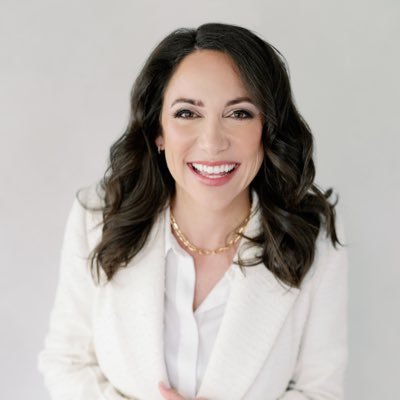
Jenny-clark-arizona-esa

Jenny Clark

Founder, Love Your SchoolArizona Loves ESAs

Jenny Clark is an Arizona education advocate and founder of Love Your School, a nonprofit organization that helps families navigate school choice options, including Arizona’s Empowerment Scholarship Account (ESA) program. Clark serves on the Arizona State Board of Education and is a national speaker on education freedom, school choice, and parent empowerment. A mother of five, she has become a prominent voice on ESAs and alternative education models, helping families access public, charter, private, homeschool, microschool, and online learning opportunities.

Full transcript

Show full transcript
[00:00:00] Welcome to the Phoenix Business Brief podcast. I'm Brian Hyde. Today I'm joined by Jenny Clark. She is an Arizona native and also the chairwoman of the AZ Loves ESAs campaign, and, uh, you also are the, uh, current founder and CEO of Love Your School. Jenny, take a moment here to tell us a little bit about yourself and, and any other hats you may happen to be wearing. Well, thank you, Brian. I'm so glad to be joining you today. Thank you for all of the listeners that are tuning in. Uh, my name is Jenny Clark. I am an Arizona native. I was born and raised in Arizona. There's a few of us. Uh, went to public schools here, kindergarten through 12th grade, and then on to the University of Arizona. I have five children, um, who are all benefiting from Arizona's School Choice Program, the Empowerment Scholarship, and am really, really passionate about making sure that Arizona families know what their school choice options are, and expanding and defending those options. Jenny, if I [00:01:00] remember correctly, Arizona has, has really led out as far as, uh, your... This is one of the states that's been pioneering educational choice. Can you give us kind of a brief synopsis of, of what kind of a, a battle that has been to get school choice in your state? Yeah, absolutely. So Arizona has had empowerment scholarships since 2011. Sometimes you may hear them referred to as ESAs. And what that scholarship does is allows families to take a portion of their student's education funding, 90% to be exact, of what the Arizona State per pupil spending is, and they can choose to opt out of public school and use that scholarship for home education, micro schooling, tutors, therapists, and even private school tuition. Uh, so again, we started the Empowerment Scholarship in 2011. Arizona has a very robust history of school choice. Of course, we've had charter schools for almost 30 years now, and also [00:02:00] tuition tax credit scholarships, allowing families to go to private school with a tax credit scholarship. So we are really the leaders. We are really the gold standard here in Arizona when it comes to school choice. Our program right now is considered, our ESA program is considered the best in the country because it has no student cap, it has no dollar cap, and every student in Arizona, kindergarten through 12th grade, qualifies. So we really have the best school choice programs, including our Empowerment Scholarship Program, uh, in the country. Now, I understand that is something that, uh, at least every other state I've looked at, the teachers unions don't really care for that as much. Uh, you got some pretty good pushback a few years ago, correct? Yes, we did. So Arizona, some of your listeners may remember back in 2022, that is when Arizona's ESA program went universal, meaning that every student now qualified regardless of their income or their zip code or kind of other qualifying [00:03:00] categories that the law used to have. Well, back then in 2022, Save Our Schools Arizona attempted to stop the universal Empowerment Scholarship Account program. They went out, they tried to gather signatures. They turned them into the Secretary of State's office, they made a big to-do, and they failed miserably. They were tens of thousands of signatures short, and that's because so many families now saw the benefit of the ESA program and the ability of families to direct their child's education dollars to the education environment that works for their student. Now, this time around, it's a little bit of a different story. It's 2026, and unfortunately, the National Education Association, so the largest kind of umbrella to the teachers' unions, they are flush, uh, with cash over all of these years, and they spend their money on all sorts of crazy political activism-type things. They have now given the Arizona Education Association and Save Our Schools [00:04:00] Arizona over $4 million to try to crush and roll back school choice in our state by regulating the ESA program in the state. It's very, very bad news, bad deal for Arizona kids and families. What's the likelihood that they're going to succeed in turning this back? Oh, man. Well, if I had a crystal ball, I would love to, to give you that answer, but I can tell you this. You know, $4 million is a lot of money, and that's kind of what these activist groups do. They come in, they take their dollars that they've gotten funneled from all sorts of places, and they attempt to, uh, you know, stop and roll back really common-sense policies that are very what we would call free market-type policies, right? Finally giving families control, giving parents control, and not politicians. Um, so we are up... Uh, it's very David and Goliath situation. I know that term is used quite often, but really we are a small campaign that's raised a small amount of money up against the [00:05:00] National Education Association. But that's why this is so important. That is why the grassroots is so important in this battle to protect Arizona's Empowerment Scholarship Account program. That is why we need families and businesses and individuals not only to give to our campaign, which is right now, uh, declined to sign any of the signature gatherers that are out gathering signatures to put this on the ballot. And if they get the number of qualified signatures that they need, those are due July 2nd to the Secretary of State's office, then it will go on the November ballot, and it will turn into a prop, a proposition with a number. Then our campaign will shift to "No on Prop," whatever it is, and we will spend a lot of time Fundraising and educating Arizona voters about why they should vote no, and why Arizona's ESA program should not be controlled by out-of-state special interest groups. We need to protect the free market that we have built around empowerment scholarships. I, I'm very [00:06:00] curious. What, uh, what's the justification that the teachers unions, uh, from the national or the state level are offering as to why they want to do away with these ESAs? Well, it's very, uh, very twisted, as these arguments often are. And the other unfortunate thing that, um, that I would argue is that it's extremely misleading, right? Like, we can have, you know, as adults, common sense arguments about policies and whether they are good or not good for taxpayers and voters and families. Empowerment scholarships are changing people's lives. They're changing kids' lives. Arizona, um, has ranked in the nation's report card based on the last one that came out in 2024. Less than 30% of Arizona fourth graders are reading proficiently at grade level. That is tragic. That is an absolute crisis for our kids, and also for our state and for our economy. So one of their big arguments against empowerment scholarships is that it supposedly takes [00:07:00] money away from public schools. We would actually say that's completely untrue because in Arizona, the money has always followed the student. For example, uh, if a family moves out of state and they un-enroll from a public school, the public school no longer receives funding for a student that they are not educating. Similarly, if a student switches between public school districts, maybe they go from Paradise Valley Unified to Scottsdale Unified, Paradise Valley Unified doesn't keep those dollars. Of course not. Scottsdale Unified gets the dollars because now they're educating the student. So everything is exactly the same with an ESA. If a student opts out of a public school environment because their parents think that a different environment is better for them, the money follows that student. And there's actually a taxpayer savings because that empowerment scholarship is around $7,500 per student. When you look at how much money the public school receives, all sources included, right? Federal dollars, local dollars, state dollars, it's well over [00:08:00] $15,000 a student. Wow. So overall, taxpayers, and in time there can even be budget adjustments, uh, individuals and taxpayers are saving when kids are utilizing an ESA. Again, that can be debated too, 'cause it takes time to see some of those savings, but ultimately, that's one of their biggest arguments. I think that's a bad argument. I think it falls flat on its face. I think families inherently know, um, that education is a public good. We want kids to get a great education. We want them reading and doing math and going on to college, so we should be supporting any education environment that is gonna help that student achieve that type of success. Sometimes it's the public school, but sometimes it's not. Sometimes it's a private school or a homeschool environment. So to try to rip those scholarships away from these kids just because their parents tend to pay a lot of money in taxes You know, their income is over a certain level and they pay a lot of money in taxes. I think that's wrong. I think it's completely and utterly wrong. It seems like one [00:09:00] of the common objections you'll hear against school choice, and I'm talking everywhere in the country, is, uh, people like to play the envy game. "Well, you know, only the really rich are the ones who benefit from this." So tell me about the types of families that, that are currently using and benefiting from these empowerment scholarships. Absolutely. Well, right now there's no, um, there's nothing that requires an, uh, ESA family to report what their income is, and the reason why that is because it's modeling the public school system. The public school system does not require Arizona families to disclose their income in order for that child to get a free education. Um, taxpayers fund that money through the state government, and more wealthy families actually avail themselves in Arizona of public school at a higher cost to the taxpayer than those families that are on an empowerment scholarship. Uh, the data that we do have that we've been able to analyze based on zip code, the zip [00:10:00] code that a child resides in on their application, 'cause we have to protect the, the names and information of the students, is that the majority of the families that are presently receiving an empowerment scholarship are middle-income families. Uh, so the idea that it's only, you know, wealthy families that are somehow usling, using the empowerment scholarship is not actually rooted in any justifiable or recognizable data source. It is a piece of rhetoric. It is a talking point that has been thrown out and picked up in the news in Arizona and across the country that's just completely untrue. So let's talk about, uh, why- The, the families, and I'm talking private, charter, homeschool. Talk to me about, about why they should be paying attention to this. I, I know sometimes people say, "Well, you know, I don't know if I have a dog in that fight." Let's talk about why this is something that they need to be aware of and maybe even a part of. Absolutely. Well, empowerment scholarships and just this policy idea that parents should be in [00:11:00] control of their child's education and not politicians, this is probably one of the most significant and, and revolutionary policies that we have seen in probably the last 10 to 20 years in Arizona and ac- and across the country because we're finally allowing competition in the education system and environment. And everybody knows, uh, we have a lot of opportunity for improvement when it comes to how we educate kids both in Arizona and across the country, and it's not for lack of dollar investment. The largest part of Arizona's budget right now is spent on K-12 education, but as I mentioned before, we're not doing so great when it comes to how those dollars are being used, uh, for students and their education and in the classroom. There's lots of reasons for that. One of the main ones is, you know, buildings and also administrative bloat. The money is not getting to our incredible teachers in Arizona who deserve to be paid more even though Arizona is spending an astronomical [00:12:00] amount, uh, on, on education. And Arizona public schools right now are actually flush with cash, billions of dollars in their checking accounts and in empty buildings that they refuse to sell, which they could give raises to all of their teachers in certain districts if they actually let go of some of their empty buildings. So Arizonans and Arizona voters, even if you don't have a student you know, right now in the home, or maybe you do or don't have grandkids, you should really care about this policy and be very interested in declining to sign. Because number one, we don't want out-of-state teachers unions and special interest groups coming into Arizona and telling us what we should be doing with our kids and with our state. Number two, if you care about the business community and the economy in Arizona, it should be very concerning to you that students are graduating from public schools in Arizona based on the data that we have, and they are not going to college like we would like to see them. But also, they're not proficient readers. I mean, you [00:13:00] can't have a successful life, you can't be a successful contributor to society, you can't love this country and understand the freedoms that are afforded to you if you are not able to read well, if you are not able to do math well. And so for the sake of your, you know, love for your community, your state, and for your country, everybody should be concerned about wanting more school choice programs so that we can see more competition and ultimately better results for our kids. That's why we're asking Arizonans to stay engaged on this empowerment scholarship issue and to decline to sign any ballot initiative that attempts to regulate our programs. And let's, let's look, too, at the f- the funding, uh, for the, uh, Arizona Education Association and Save Our Schools. Where does that funding come from? Oh my goodness. It comes from, um, lots of different types of dues that oftentimes come out of teacher paychecks, and they have to do all this work to opt out. Um, it comes from extremely, extremely [00:14:00] left-wing organizations nationally, and it's very hard to track often where all of the money is coming from 'cause it gets buried under, um, extreme, uh, activist organizations and sub-granted and sub-granted. You probably know about this, Brian, but I really love the work of Data Republican. She's on X, and she does a phenomenal job allowing everyday individuals to see, where is this money coming from that these organizations are getting? How does our side have to, you know, fundraise from ESA parents, and their side just drops $4 million and can impact policy decisions? That is absolutely terrifying. So they are getting them from very scary large organizations, um, including dues, where a lot of these teachers don't even realize where this money is going to. Your listeners should just go, go look at the social media on Instagram, on Facebook for the National Education Association, the funders of AEA, Arizona Education Association, and Save Our Schools. They have anti-law enforcement [00:15:00] posts on there where they're mobilizing kids against ICE. They have anti-government stuff on there, these No Kings protests, and saying horrible things about the president of the United States. It is, it is truly terrifying. And your listeners should know that in Arizona, this is the number one thing they are hoping to get onto the ballot in November to hopefully shift the election in their favor. That is why this piece of policy is so important. It's not just about the ESA. It's about them getting voter turnout in November. Let's talk about some of the resources available for, for people who wanna be better informed on this. I know you have, you have a couple of, of great websites that, that would be a good place to start. Absolutely. So AZ Loves ESAs, as you mentioned, is the official campaign fighting back from these special interest groups and these politicians attempting to roll back, uh, parents and parent choice. Our website is azlovesesas.com. [00:16:00] Um, that's where you can get summaries of all of these ballot initiatives. You can get detailed, uh, information and stats about how this would actually impact Arizona kids, you know, kicking them off this scholarship and sending them back to public school. You can get lots of information there on our website. We also are trying to stay as active as possible on social media in case they do get their signatures. So we are on Facebook, and we have lots of grassroots groups by, uh, by region and by city that families can engage in because we want you setting up a table next to these signature gatherers and saying, "My kid's on ESA," or, "I love school choice. Decline to sign this ballot initiative." So Facebook, also on Instagram, and also on X @AZLovesESAs. Jenny, I really appreciate how you've also framed this. And I mean, I, I hear this all the time when school choice comes up, you know, oh, it's, uh, you know, the, the we need stronger schools, which usually is, you know, we need more funding and, you know, the school choice takes away our funding. That's the argument, and you debunked that beautifully. But you also [00:17:00] mentioned where students are underperforming. Y- somebody has to ask, you know, what about the outcomes? You know, if we just throw money at it continuously, at what point do we say, "This is not providing the result that, that it's supposed to?" Yeah, ab- absolutely, absolutely, and that is why competition is such a good and beautiful thing. We are only four years into having universal empowerment scholarships in this state, four years into this policy, and we already have over 100,000 students benefiting. And the reason why that is a good thing is because we are creating an environment that is very quick, that is very fast, where if a student isn't learning, if a student is being bullied, if a student is going through some type of trauma and needs to be home educated- My goodness, in Arizona, they actually have a choice. You don't have to be a wealthy family to be able to avail yourself of private school or home education, and they can do that, you know, very quickly. Um, if you were in another state and your only option was actually your local [00:18:00] district public school, your student might be in a very, very bad place. My kids, you know, I always thought the public school would be, you know, what was good for them because I went to public school and I had a great experience. But a couple of my kids had dyslexia, and I've shared this story many, many times, and many of us know a student with a disability, whether it's dyslexia, ADHD, or autism. Those kids need access to other options and other choices, and sometimes the public school can serve those kids and it's a great environment for them. But if it's not, the parent and the student need a quick way where they can get that child a great education, and that is what an empowerment scholarship offers, and that is why we should fight so vigorously to defend our program. And clearly the demand is there. Over 100,000- Yeah ... you say, participating? Wow. That's right. That's right. Again, we're talking with Jenny Clark. She's with AZ Loves ESAs campaign. Jenny, thank you so much for joining us today on the Phoenix Business Brief podcast. Thanks for having me.

Filed under

Related episodes