
Health · Arizona
Phoenix speech therapist says myofunctional therapy looks past pronunciation to breathing and tongue posture
Julie Mercadante, founder of Juniper Speech Therapy, told the Phoenix Business Brief podcast that lingering speech errors can be tied to how a child breathes, sleeps, eats and rests their tongue.
Nov 21, 2026
A Phoenix speech-language pathologist says families often arrive at her practice after years of traditional speech therapy, still searching for why a child's sounds have not improved.
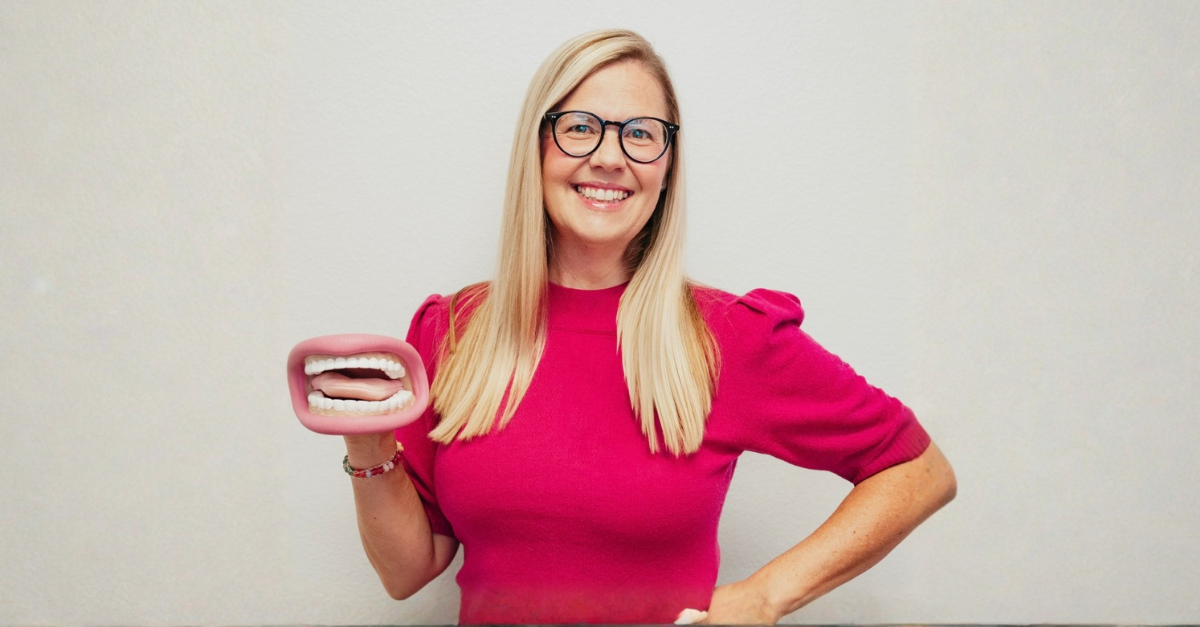
Julie Mercadante, a licensed and ASHA-certified speech-language pathologist and founder of Juniper Speech Therapy, myofunctional therapy in Phoenix, made the comments on the March 4, 2026 episode of the Phoenix Business Brief podcast. Mercadante said she has been a speech-language pathologist for about 25 years and has operated her private practice for almost six years. The practice provides mostly speech therapy, she said, with a specialization in myofunctional therapy.
"Myofunctional therapy is looking at how the tongue functions basically," Mercadante said on the episode. She described an evaluation that looks at where the tongue sits at rest, whether a child breathes through the mouth or the nose, and how the child sleeps and eats. Signs she named included snoring, drooling, waking up stuffy, mouth breathing and a tongue-thrust swallow.
Those patterns can affect speech sounds, she said. A lisp is one example she gave: if the tongue stays low in the mouth during breathing, chewing and swallowing, or pushes forward during a swallow, sounds can be affected. Some speech-sound disorders are developmental, she said, some are motor, and some have a root cause in how the tongue is working.
"Finding the overlap between how a child breathes, eats, sleeps, you know, can really affect how they ultimately speak," Mercadante said.
She said therapy often starts by building those foundational habits — including resting the tongue up in the palate and making nasal breathing consistent — before moving into speech sounds. Mercadante said she has seen children progress after years of speech therapy once those underlying patterns were addressed.
Sleep is one of the first areas she asks families about. "Snoring is never normal for a child to snore," she said. She also looks at whether a child sleeps with the mouth open. The goal, as she described it, is "proper oral rest posture": lips closed, teeth almost together, and the tongue up in the palate.
Feeding can be part of the same assessment. Mercadante said messy eating and picky eating may have an underlying reason. "Picky eating is not their fault and that there could be an underlying reason for why things are difficult for your child," she said. She also said persistent errors on later-developing sounds, including R, can be a reason to consider another approach, especially for older children who have not made progress.
On timing, Mercadante said she does not favor waiting when signs are already present. "I don't love the wait and see," she said. "I get a lot of kids at a point where I think it might be not too late, but I wish they would've come in sooner." She added: "A little snore might look cute or a little drool seems normal, but after a certain age, you know, may it might not be."
As of the March 2026 interview, Mercadante said Juniper Speech Therapy had an office in North Phoenix, therapists in the East Valley and the West Valley, and virtual sessions for families throughout Arizona. The practice offered in-home and in-clinic therapy, with a team of three other therapists besides herself. Families can learn more at Juniper Speech Therapy, myofunctional therapy in Phoenix.
The full interview and transcript are available on the Phoenix Business Brief episode page.